The Complete Guide to Car Detailing at Home
Professional car detailing costs $200 to $500 a pop, and most of what they do isn't magic -- it's just patience and the right products. Here's how to make your car look showroom-clean in your own driveway for a fraction of the cost.
· 12 MIN READ
I took my car to a professional detailer once. It cost me $350. The guy spent about four hours on it, and when he was done, my 2019 Civic looked like it had just rolled off the factory floor in some alternate dimension where cars don't age. The paint gleamed. The interior smelled like a luxury hotel lobby. The tires were so black they looked wet. I was stunned.
Then I watched some YouTube videos, bought about $80 worth of products, and learned to do the exact same thing myself in my driveway. It took me a full Saturday the first time. Now it takes about three hours. And honestly? My results are about 90% as good as what the professional did, which means I'm saving $300 every time I do it.
My neighbor Dave watched me detail my car one weekend and said, "Why are you washing your car with a paintbrush?" I was using a detailing brush on the air vents. He thought I'd lost my mind. Three weeks later, he asked me to detail his truck. I charged him a six-pack and a pizza. That's the power of car detailing knowledge -- it makes you the guy people ask for favors, which is either a blessing or a curse depending on how you feel about Dave.
Here's the complete guide, from someone who went from "I run it through the gas station car wash once a month" to "I have opinions about microfiber towel GSM weight."
What You Need: The Starter Kit
Before you touch anything, you need the right stuff. Using household products on your car is how you end up with swirl marks that haunt you every time the sun hits your hood. Dish soap strips wax. Paper towels scratch paint. That old bath towel you were going to use? It's basically sandpaper with a decorative border.
Here's your shopping list for a basic home detailing setup:
Two buckets. One for soapy water, one for rinse water. This is the "two-bucket method," and it's the single most important thing I'll tell you. One bucket gets dirty water in it, one stays clean. If you're dipping your mitt back into dirty water and then rubbing it on your paint, you're essentially giving your car a bath with gravel.
A wash mitt. Get a chenille or lambswool mitt. Not a sponge. Sponges trap dirt particles against their flat surface and drag them across your paint. A mitt has long fibers that pull dirt away from the surface and hold it deep in the material where it can't scratch anything.
Car wash soap. Not dish soap, not hand soap, not whatever you found under the sink. Actual car wash soap. Meguiar's Gold Class is like $10 and it's what most detailers use. It cleans without stripping your wax or sealant.
Background reading: NHTSA recall database.
A clay bar kit. This sounds exotic but it's just a piece of synthetic clay you rub on your paint to pull out embedded contaminants -- stuff that washing alone can't remove. Your paint feels smooth after washing, but run your hand over it in a plastic bag (yes, really, it amplifies the texture) and you'll feel tiny bumps everywhere. That's industrial fallout, tree sap residue, brake dust, and other nonsense. The clay bar gets it all out.
Microfiber towels. Get a pack of 10-12 good quality ones. You'll use them for everything: drying, applying products, buffing. The thicker the better. Aim for at least 300 GSM (grams per square meter). The cheap ones pill and scratch. Ask me how I know.
A sealant or wax. This goes on after washing and claying. It protects the paint and makes it shine. Turtle Wax Hybrid Solutions Ceramic Spray Coating is absurdly easy to apply and lasts about three months. Spray it on, wipe it in, buff it off. Done. About $13 a bottle.
Interior cleaner, glass cleaner, tire dressing, and a few small brushes. That's the whole kit. Total cost: $80-120 for everything, and most of it lasts for dozens of details.
The Exterior: Wash Like You Mean It
Start in the shade. Direct sunlight dries soap and water on contact, leaving spots and streaks. Early morning, late afternoon, or a cloudy day -- that's your window.
Rinse the entire car first. Just water, no soap. You're knocking off the loose dirt so you don't grind it into the paint when you start washing. Spend extra time on the lower panels, wheel wells, and front bumper -- that's where the nastiest stuff lives.
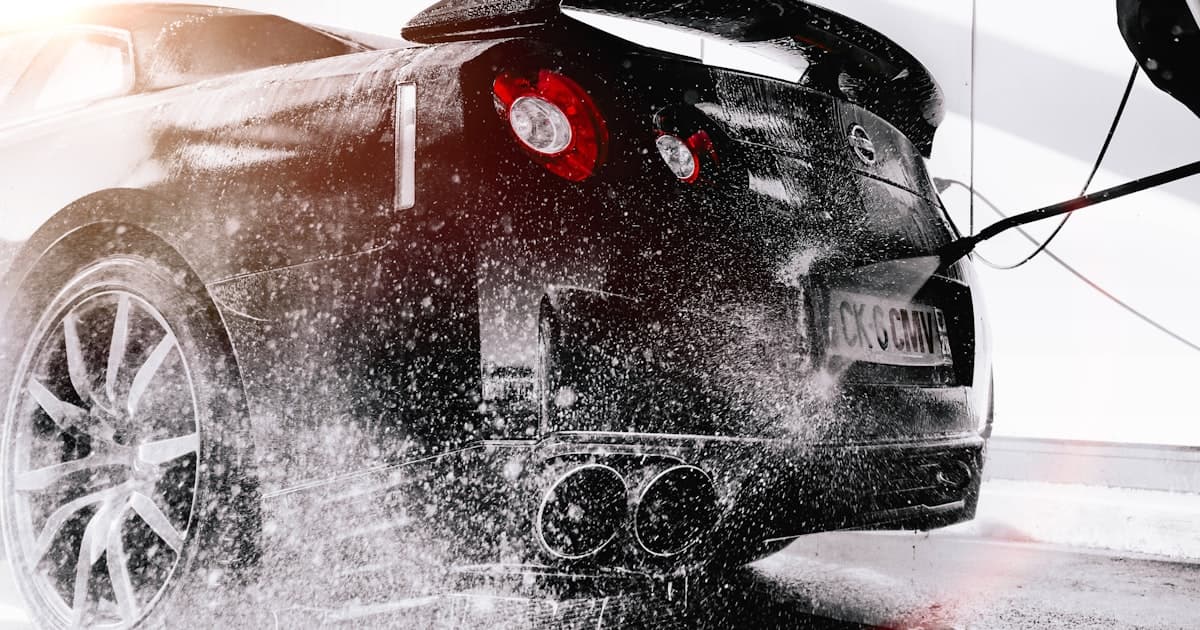
Fill your wash bucket with soap and water. Fill your rinse bucket with clean water. Dip the mitt in the wash bucket, wash one panel at a time (roof first, then work down -- gravity is your friend), and after each panel, rinse the mitt in the clean water bucket before dipping it back in the soap. This keeps the soap water clean.
Work top to bottom because the lower half of your car is always the dirtiest. If you start with the rocker panels and then use the same mitt on the hood, you're spreading road grime, brake dust, and tiny rocks onto the flattest, most visible surface of your vehicle. Don't do that.
Rinse the car again. Then dry it immediately with your microfiber towels. Don't let it air dry unless you enjoy water spots. If you want to get serious, a leaf blower on a low setting is the best drying tool in existence -- it blows water out of crevices, mirrors, door handles, and other spots your towel can't reach. I felt ridiculous the first time I aimed a leaf blower at my car. Now I feel ridiculous when I don't.
The Clay Bar: The Step Everyone Skips
This is the difference between "clean" and "detailed." If you've never clayed your car before, prepare to be equal parts disgusted and fascinated.
(See also: 15 Legendary Cars That Make Gearheads Lose Their Minds.)
Break off a small piece of clay, flatten it into a disc, spray the panel with a lubricant (most clay bar kits come with one, or you can use a quick detailer spray), and gently slide the clay back and forth across the paint. You'll feel it grabbing at first -- that's it pulling out contaminants. Keep going until the surface feels glass-smooth under the clay.
The first time I clayed my car, the clay went from blue to brown-gray after one panel. That was after I'd just washed it. All that embedded grime was invisible to the eye but very much present on the paint, dulling the finish and preventing wax from bonding properly.
Clay your car two to four times a year, or whenever the paint feels rough to the touch. It takes about 30 to 45 minutes and the difference it makes to how the paint looks and feels is extraordinary. This is one of those basic car maintenance things that sounds intimidating but takes almost no skill once you've done it once.
Sealant or Wax: Lock In the Shine
After washing and claying, your paint is clean and smooth but also completely unprotected. Wax or sealant is the shield. It repels water, blocks UV rays, prevents contaminants from bonding to the paint, and makes everything look wet and deep and impossibly shiny.
Traditional carnauba wax gives the warmest, deepest shine. It's what car show guys use. But it only lasts about four to six weeks before it starts breaking down, so you're reapplying often.
Synthetic sealants last three to six months and are easier to apply. The trade-off is a slightly less warm look -- more "glassy" than "deep" -- but honestly, on most cars, the difference is minimal and the convenience is worth it.
Ceramic spray coatings are the newest option and they're what I use. They bond to the paint chemically, last three to six months, and provide insane water beading that makes washing the car easier next time. The hydrophobic effect is genuinely satisfying to watch in the rain. My coworker saw water sheeting off my hood during a storm and asked if I'd gotten my car wrapped. Nope. Just $13 worth of ceramic spray.
The Interior: Where Most Guys Drop the Ball
You can have the shiniest paint on the block, but if someone opens your door and sees an interior that looks like a raccoon lives there, it cancels everything out. The interior is where you actually spend time, and it deserves the same attention as the outside.
Start by removing everything that doesn't belong. All of it. The gym bag, the three pairs of sunglasses, the receipts, the jacket from last winter, the phone charger cable that's been there so long it's part of the car's identity now. Take it all out.
Vacuum everything. Seats, floors, floor mats (remove them first), the crevices between the seats and center console where French fries go to die, and the trunk. Use a crevice attachment. You will find things in your seat crevices that you forgot existed. I once found a hotel key card from a trip I took two years prior.
Wipe down every hard surface with an interior detailer. Dashboard, center console, door panels, steering wheel (especially the steering wheel -- that thing is filthier than you want to know). A small detailing brush is invaluable for air vents, button bezels, and other tight spots where a cloth can't reach.
Clean the glass from the inside. This is the step nobody thinks about, and it makes a massive difference, especially at night when oncoming headlights hit your windshield and scatter through a film of fingerprints, dust, and whatever gases your dashboard plastic is off-gassing. Clean interior glass makes driving at night visibly safer and more pleasant.
For leather seats, use a leather cleaner followed by a leather conditioner. Don't skip the conditioner -- it keeps the leather supple and prevents cracking. For cloth seats, the vacuum handles most of it, but a fabric cleaner and a stiff brush will take care of stains. I got a coffee stain out of my passenger seat that I'd been living with for eight months. It took ten minutes. Eight months of looking at it, ten minutes to fix it. Really makes you think about what else in your life you could just fix if you bothered to try.
Tires and Wheels: The Finishing Touch
Tires are to car detailing what shoes are to an outfit. You can be dressed head to toe in designer everything, but if your shoes look beat, the whole thing falls apart. Same energy here.
Clean the wheels first with a dedicated wheel cleaner -- regular car soap doesn't cut through brake dust effectively. Spray it on, let it sit for a minute, agitate with a wheel brush, and rinse. If your wheels have caked-on brake dust, you might need an iron remover (it turns purple when it reacts with iron particles, which is deeply satisfying in a chemistry-experiment kind of way).
For the tires, wipe them down with an all-purpose cleaner to get the old dressing and brown residue off, then apply a tire dressing. I use a gel-based dressing applied with a foam applicator pad because it gives a controlled, even coat without slinging onto the paint when you drive. One thin coat gives a natural, satin finish. Two coats gives you that wet, show-car look.
Don't get the spray-on tire shine from the gas station. Just don't. It goes everywhere, looks artificially glossy, attracts dirt like a magnet, and turns brown within a week. It's the fast food of car care -- quick, cheap, and you'll regret it later.
How Often Should You Do This?
Full detail (exterior wash, clay, sealant, interior deep clean): every three to four months.
Regular wash (exterior wash and dry, quick interior wipe-down): every two weeks, or whenever the car looks dirty.
Quick touch-ups (waterless wash spray, tire dressing reapplication, glass cleaning): as needed.
This sounds like a lot, but once you have the products and the routine, a regular wash takes about an hour. The full detail is a Saturday morning project that pairs nicely with a podcast and a cold drink. It's weirdly meditative. You start because your car is dirty, and you end up in a flow state, buffing wax off your fender at sunset, wondering if this is what peace feels like.
If you're shopping for a car that's worth detailing in the first place, I've got a whole guide on finding reliable used cars that won't drain your wallet. Because there's nothing sadder than a beautifully detailed car that won't start.
Further reading and primary sources
Background and primary-source references for the claims and recommendations above. Linked references are intended for readers who want to verify a claim, dig deeper into a topic, or check the underlying data themselves.
- NHTSA recall database — official U.S. government recall + safety-defect lookup, by VIN or model.
- IIHS vehicle ratings — Insurance Institute for Highway Safety crash-test and safety ratings.
- EPA fuel economy database — official EPA fuel-economy and emissions data for every model year.

About the writer
Daniel Reyes
Senior writer — Fitness, Cars & Sports
Read more from Daniel — full archive, full bio, and contact on their writer page.
Share this story
More from Daniel
Spot a problem with this piece? Email info@luba.media.