Embarrassing Fitness Trends That Actually Worked
From prancercise to shake weights, some fitness trends look absolutely ridiculous. But a surprising number of the dumbest-looking workouts actually deliver real results -- and I tried enough of them to know.
· 12 MIN READ
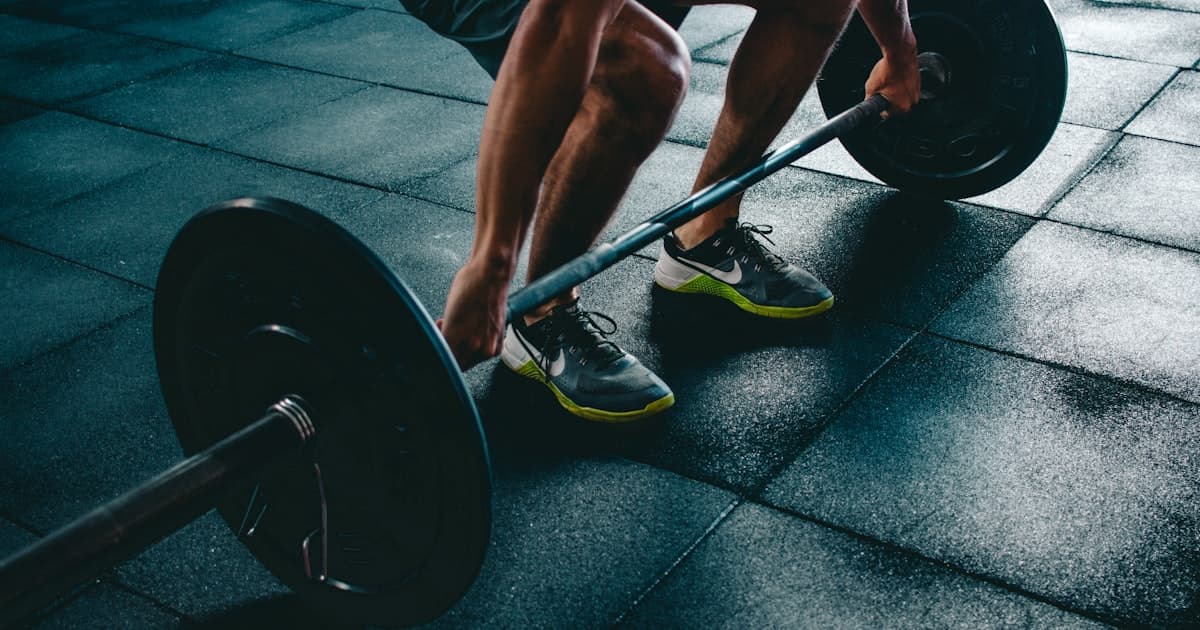
There's a moment in every man's fitness journey where he finds himself doing something so profoundly silly that he has to stop, look around the room, and ask himself: "If anyone I know walked in right now, could I ever recover socially?"
I've had that moment approximately fourteen times. And the annoying part? Most of those ridiculous things actually worked.
See, the fitness industry has this pattern. Someone invents a workout that looks completely absurd. The internet laughs at it. Gym bros dismiss it. And then, quietly, over the next few years, research comes out showing that the ridiculous thing actually has legitimate benefits. By then, of course, nobody wants to admit they were wrong, so the cycle starts over with the next weird trend.
I've been that guy. The one in the corner of the gym doing the weird thing while everyone pretends not to watch. And I'm here to tell you that my ego has taken hits my body has directly benefited from. Here are the trends I'm least proud of trying and most grateful I did.
Yoga: The One That Started My Journey Into Humiliation
I know yoga isn't exactly "embarrassing" anymore. It's mainstream. Every gym offers it. Your mom does it. But let me take you back to 2021, when I was a 26-year-old dude whose entire fitness philosophy was "lift heavy things, put them down, repeat" and whose flexibility was so bad I couldn't touch my toes without my hamstrings filing a formal complaint.
Source for the claims above: CDC physical activity guidelines.
My physical therapist told me I needed to start stretching. I ignored her. She told me again. I ignored her again. Then my back seized up so badly during a deadlift that I spent two days lying on the floor of my apartment like a human starfish, unable to stand without making sounds that concerned my neighbors.
So I went to a yoga class. And I want to be very specific about how that went: I was the worst person in the room. Not the second worst. The worst. There was an 80-year-old woman in the front row bending herself into shapes I couldn't achieve with a team of engineers, and I was in the back, shaking like a leaf in Warrior II, sweating through a pose that literally everyone else was doing while casually chatting with their neighbor.
But I kept going. Once a week, then twice. Within two months, my back pain was gone. Not reduced. Gone. My squat depth improved. My shoulders stopped aching after bench press. I could finally twist to check my blind spot while driving without my entire torso protesting.
The science backs this up completely. Regular yoga improves mobility, reduces injury risk, enhances recovery, and builds the kind of stability that makes every other exercise safer and more effective. But more importantly, the humbling experience of being terrible at something in public was weirdly good for me. Highly recommend.
If you went from couch potato to actually running, you already know the ego hit of starting from zero. Yoga is that same energy, except you're doing it in a room full of people who can put their foot behind their head.
The Shake Weight: Yes, I'm Serious
Okay. Hear me out. I know. I KNOW. The Shake Weight is the single most mocked fitness product in history. The commercials looked like something that should have been flagged by the FCC. Saturday Night Live did a whole sketch about it. Your aunt bought one at a garage sale as a gag gift.
I bought one because I lost a bet. The terms were clear: I had to use it every day for thirty days and post a selfie each time. My friends thought they were punishing me. And for the first week, it was punishment. I looked ridiculous. I felt ridiculous. My roommate walked in on me using it and I genuinely considered moving.
That said, nobody talks about: the Shake Weight actually provides a surprisingly effective isometric workout for your shoulders, biceps, and forearms. The constant oscillation forces your muscles to stabilize in a way that static holds don't quite replicate. After thirty days, my forearm endurance was noticeably better, and my grip strength had improved enough that I could feel the difference on my deadlifts.
Am I telling you to buy a Shake Weight? No. There are better ways to train grip strength. But am I telling you the Shake Weight is a complete joke? Also no. It's a targeted isometric tool wrapped in the most unfortunate marketing campaign of all time. The product works. The branding deserves to be in a museum of regret.
Dance Cardio: Where My Dignity Went to Die
I downloaded a dance cardio app because my then-girlfriend wanted us to "work out together" and I was trying to be supportive. The app was one of those ones where an aggressively enthusiastic instructor leads you through choreographed routines to pop music while you try to follow along in your living room.
I should mention: I cannot dance. I'm not being self-deprecating. I am a man with the rhythm of a malfunctioning ceiling fan. My body does not hear music and respond with coordinated movement. It hears music and panics.
The first session was twenty minutes long and I was drenched in sweat by minute six. Not because the moves were hard in the traditional sense -- there was no heavy lifting, no sprinting -- but because trying to coordinate your entire body in new patterns while maintaining a tempo is shockingly demanding cardio. My heart rate was higher than it got during most of my runs. My calves burned. Muscles in my hips that I didn't know existed made themselves known the next morning.
I kept at it for about three months, twice a week, partly because my girlfriend guilted me and partly because the results were undeniable. My coordination improved. My agility improved. I lost about four pounds of stubborn midsection weight that running hadn't touched. And honestly? It was fun. I'd never admit that to my gym buddies, but alone in my apartment, flailing around to Dua Lipa? Good time.
(For related context, see The Gym Bro Glossary, Decoded.)
Dance cardio works because it combines high-intensity cardio with full-body coordination in a way that traditional exercise doesn't. It's essentially HIIT training disguised as a party. The only downside is that you look like a man being attacked by invisible bees.
Foam Rolling: The Thing That Looks Like a Torture Ritual
If you've never seen someone foam roll, let me paint the picture: a grown adult lying on the floor, slowly rolling their body weight over a cylinder, making faces that alternate between "deep meditation" and "stepping on a Lego." It looks like a very bad massage performed by no one.
I started foam rolling because a trainer at my gym told me it would help with my chronically tight IT bands. I was skeptical. It's a piece of foam. What could it possibly do that stretching couldn't?
Turns out: a lot. Foam rolling is essentially self-myofascial release, which is a fancy way of saying you're giving yourself a deep-tissue massage by using your own body weight as the pressure source. And while it's not exactly pleasant -- rolling over a tight spot feels like finding a bruise you didn't know you had -- the results are almost immediate. My legs felt looser after three sessions. My post-workout soreness decreased noticeably. And that knee pain I'd been ignoring for months? Gone within two weeks of regular rolling.
The research supports it. Multiple studies show foam rolling improves range of motion, reduces muscle soreness, and enhances recovery between workouts. It's boring, it looks weird, and it occasionally makes you produce involuntary groaning sounds that alarm nearby gym members. But it works.
Resistance Bands: The Grown Man's Jump Rope Problem
There's something inherently unserious about resistance bands. They look like giant rubber bands. They come in colors. They're the fitness equivalent of training wheels, or at least that's what I thought when a friend suggested I incorporate them into my warm-up routine.
"I don't need a rubber band," I told him, while loading up a barbell for bench press. "I have weights. Weights are for men. Bands are for physical therapy."
Then I tore a rotator cuff.
During my recovery, bands were basically the only thing I could use for my upper body. And in those months of band work, I discovered something annoying: they're incredibly effective. Bands provide variable resistance -- the tension increases as you stretch them -- which creates a unique strength curve that free weights don't replicate. My shoulder stabilizers got stronger. My warm-ups became more effective. When I finally got back to regular lifting, I was pressing more than before the injury, partly because the band work had strengthened all the little stabilizing muscles I'd been neglecting.
I now use bands in every warm-up, and I've stopped caring that it looks like I'm playing with a giant rubber toy. The no-gym workout approach leans heavily on bands and bodyweight for exactly this reason -- they work regardless of how silly they look.
Breathing Exercises: Somehow the Most Embarrassing One
You'd think breathing would be the least embarrassing entry on this list. You do it every day. Everyone breathes. But there's a difference between regular breathing and sitting in a gym parking lot doing Wim Hof breathing cycles while your face turns red and you make noises that sound like you're either achieving enlightenment or having some kind of episode.
A podcast convinced me to try breathwork. The host claimed it improved his recovery, reduced his stress, and made his workouts better. I thought it was pseudoscience. But I was also going through a stressful period at work and sleeping terribly, so I figured what's the worst that could happen.
The Wim Hof method involves cycles of deep breathing followed by breath holds. It takes about ten minutes. You feel lightheaded. Your hands tingle. Your lips go numb. And then, after the session, you feel a calm alertness that's hard to describe but immediately noticeable. Like your nervous system just got rebooted.
I've been doing some form of breathwork three to four times a week for over a year now, and the effects on my recovery and sleep are genuine. My resting heart rate dropped. I fall asleep faster. And my ability to stay calm during high-intensity sets -- keeping my breathing controlled instead of panicking -- has improved significantly.
But I still do it in my car. Alone. With the windows up.
The Rebounder (Mini Trampoline): The One I Can Never Tell Anyone About
This is the one. This is the entry that costs me whatever remaining credibility I have. I own a mini trampoline. I bounce on it in my living room. I am a grown man who bounces.
My chiropractor recommended it for lymphatic drainage and low-impact cardio. I Googled it. Every result was either a mommy blog or an infomercial. This was not encouraging. But I bought a $60 rebounder from Amazon anyway, set it up in the corner of my living room, and started bouncing for ten minutes a day.
The first thing I noticed: it's genuinely fun. There's something about bouncing that activates a part of your brain that hasn't been engaged since you were nine years old at a birthday party. The second thing I noticed: it's a real workout. Ten minutes of active bouncing gets your heart rate up to about 70 to 80 percent of max, which puts it solidly in the fat-burning cardio zone. And because there's almost no impact on your joints, you can do it every day without the recovery concerns of running or jumping rope.
After two months, my resting heart rate dropped a few more beats per minute, my calves got noticeably more defined, and my overall energy levels improved. NASA actually studied rebounders back in the '80s and found bouncing to be 68 percent more efficient than jogging. NASA. The space people. They endorsed the trampoline.
I still hide it when people come over.
The Lesson in All of This
Here's what I've learned from years of trying things that made me feel stupid: looking cool in the gym is maybe the least important factor in whether something actually works. The exercises that get the most Instagram likes -- heavy barbell work, explosive movements, anything that makes a dramatic noise -- are not inherently better than the quiet, weird, embarrassing stuff done in corners and living rooms.
The best workout is the one that works for your body, produces results you care about, and doesn't injure you. If that means bouncing on a trampoline, rolling around on foam, or doing a choreographed dance routine to a Lizzo song in your boxer briefs, so be it. Nobody at your funeral is going to say, "He always looked really cool at the gym." But they might say, "He was in great shape and seemed weirdly happy about it." And honestly? That's the goal.
Further reading and primary sources
Background and primary-source references for the claims and recommendations above. Linked references are intended for readers who want to verify a claim, dig deeper into a topic, or check the underlying data themselves.
- CDC physical activity guidelines — official U.S. Department of Health and Human Services activity guidelines for adults.
- PubMed — National Library of Medicine bibliographic database of peer-reviewed biomedical literature.
- American College of Sports Medicine position stands — ACSM official position stands on exercise prescription and physiology.

About the writer
Daniel Reyes
Senior writer — Fitness, Cars & Sports
Read more from Daniel — full archive, full bio, and contact on their writer page.
Share this story
More from Daniel
Spot a problem with this piece? Email info@luba.media.