Stretching Routines for Guys Who Sit All Day
My hip flexors were so tight they could have doubled as guitar strings. After three months of stretching routines I actually stuck with, I can touch my toes for the first time since high school and my back doesn't sound like a bowl of Rice Krispies.
· 10 MIN READ
I'm going to tell you something that's going to sound dramatic but is completely true: I once threw out my back reaching for a coffee mug. Not lifting a couch. Not deadlifting. Reaching. For a mug. On a shelf that was at chest height.
I was thirty-one years old. I spent six hours a day minimum at a desk, probably more. I hadn't stretched intentionally since the warm-up laps in high school gym class. My body had the flexibility of a two-by-four, and it was sending me signals I'd been ignoring for years: the lower back stiffness every morning, the hip pain after sitting for more than an hour, the neck tension that turned into headaches by Friday.
The mug incident was my wake-up call. I couldn't put on my shoes without groaning. My girlfriend asked if I needed help putting on socks. I was thirty-one. Thirty-one-year-olds should not need assistance with socks.
Why Sitting Is Destroying You (The Short Version)
I'll keep the science brief because you're here for the stretches, not a lecture.
When you sit for extended periods, your hip flexors — the muscles at the front of your hips that allow you to bring your knees up — are in a shortened position. Over months and years, they adapt to this shortened state. They get tight. When you stand up, those tight hip flexors pull on your pelvis, tilting it forward, which compresses your lower back. That's where the pain comes from. It's not your back that's the problem. It's your hips.
Meanwhile, your glutes — your butt muscles, the biggest muscle group in your body — essentially shut off when you sit all day. They stop firing properly because they're being stretched and compressed for eight hours straight. This is called gluteal amnesia, and yes, that's a real medical term, and yes, your butt can literally forget how to work.
Your chest gets tight from hunching over a keyboard, pulling your shoulders forward. Your upper back muscles get weak because they're constantly stretched. Your neck cranes forward to look at a screen, shortening the muscles at the back of your neck and creating that forward-head posture that makes you look like a vulture at a job interview.
All of this is fixable. It just takes consistency. Not a lot of time — we're talking ten to fifteen minutes a day — but it has to happen regularly. I went from zero flexibility to touching my toes in about three months. My work-from-home setup helped too because I was able to integrate movement breaks into my day, but the stretching is what actually reversed the damage.
The Morning Routine: 7 Minutes Before You're Human
I do this every morning before coffee. It takes seven minutes. I timed it. It's the minimum effective dose to undo eight hours of sleeping in a compressed position, and it makes the first hour of my day dramatically better.
Cat-Cow (1 minute): Get on all fours, hands under shoulders, knees under hips. Inhale, drop your belly toward the floor, lift your head and tailbone (cow). Exhale, round your back toward the ceiling, tuck your chin (cat). Alternate slowly. This wakes up your entire spine. After the first week, I noticed my back stopped making those alarming cracking sounds in the morning. Not because the cracks were bad per se, but because the joints were finally lubricated before I asked them to do anything.
For the underlying data, see CDC physical activity guidelines.
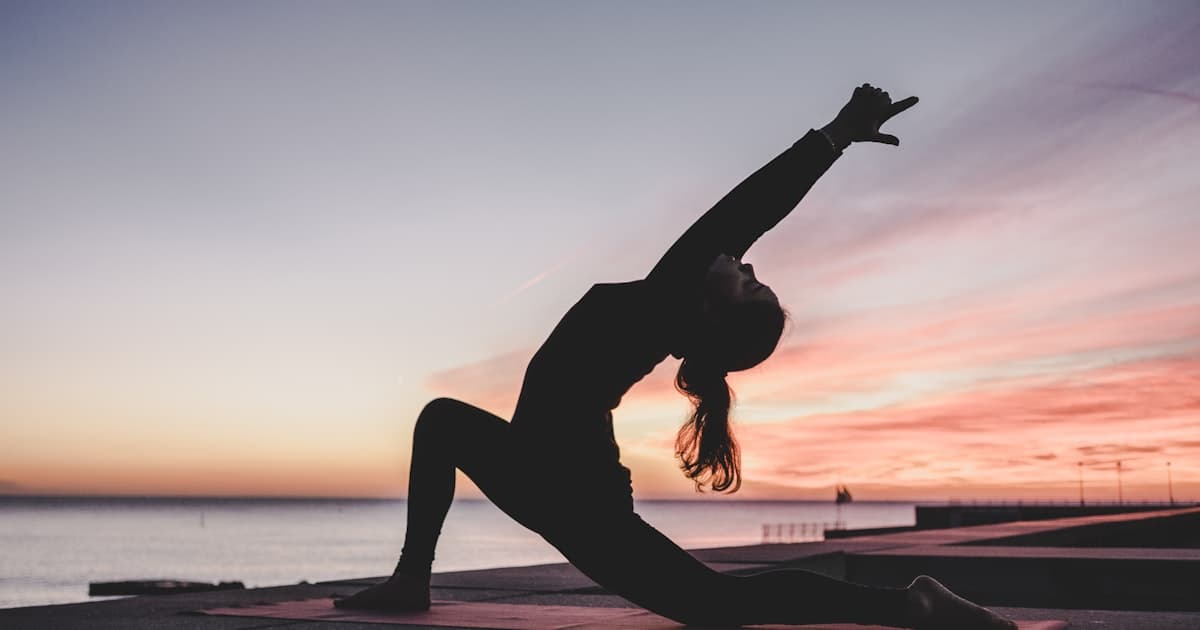
World's Greatest Stretch (2 minutes, 1 each side): Step into a deep lunge. Drop your back knee to the floor. Place the hand that's on the same side as your front foot on the floor inside your front foot. Take the other hand and rotate it up toward the ceiling, opening your chest. Hold for 30 seconds. Then bring both hands to the floor and straighten your front leg, folding over it to stretch your hamstring. This stretch is called "the world's greatest" and it earns the name. It hits your hip flexors, hamstrings, thoracic spine, and chest in one movement.
90/90 Hip Stretch (2 minutes, 1 each side): Sit on the floor. Bend one leg in front of you at 90 degrees and the other behind you at 90 degrees, so you look like a pretzel that gave up halfway. Sit tall and lean forward over the front shin. You'll feel this in the outside of your front hip. This was the stretch that made the biggest difference for me. My hips were so locked up from sitting that the first time I tried this, I couldn't even get into the position properly. After two weeks, I could hold it comfortably. After a month, I could feel my hips moving in ways they hadn't in years.
Standing Chest Opener (1 minute): Stand in a doorway. Place both forearms on the door frame at shoulder height. Step through the doorway until you feel a stretch across your chest. Hold for 30 seconds, then raise your arms slightly higher and hold for another 30 seconds. This counteracts the hunch. After a few weeks of this, I noticed my posture at my desk improved without conscious effort. The muscles just stopped defaulting to the caved-in position.
Neck Circles and Chin Tucks (1 minute): Slowly roll your head in circles — five in each direction. Then do chin tucks: pull your chin straight back like you're making a double chin. Hold for five seconds. Repeat ten times. This looks ridiculous. It works. My Friday headaches disappeared within two weeks of doing chin tucks consistently.
The Desk Break: 3 Minutes Every Hour
I set a timer on my phone. Every hour, I get up and do three things. The whole sequence takes three minutes, and the effect on my afternoon energy is almost as good as coffee.
(We covered the related territory in The No-Gym Workout That Actually Builds Muscle.)
Standing hip flexor stretch (30 seconds each side): Step one foot forward into a lunge. Push your hips forward until you feel the stretch in the front of the back hip. This directly counteracts what sitting does. Sixty seconds total. You can do this next to your desk without anyone thinking you've lost your mind.
Seated figure-four stretch (30 seconds each side): Sit on the edge of your chair. Cross one ankle over the opposite knee. Lean forward. The piriformis — a small muscle deep in your glute — releases, and it's the muscle that, when tight, creates that dull ache in your hip that you've probably been blaming on your chair.
Wall angels (1 minute): Stand with your back against a wall, arms up like you're surrendering. Slowly slide your arms up and down the wall, keeping your wrists and elbows in contact the whole time. This is humbling. The first time I tried it, my arms couldn't maintain contact with the wall. My thoracic spine and shoulders were that restricted. After a month, I could do them smoothly. It's a real-time measure of how much your upper body mobility is improving.
The Evening Routine: 10 Minutes of Actually Relaxing
This one goes before bed, and it doubles as a way to wind down. If you're the kind of person who lies in bed with a tight neck and racing thoughts, spending ten minutes on the floor beforehand genuinely helps. My sleep improved noticeably when I added this routine.
Pigeon pose (2 minutes each side): From all fours, bring your right knee forward behind your right wrist, angle your right shin across your body. Extend your left leg straight back. Sink your hips toward the floor. If you can, fold forward over your front shin. This is the king of hip stretches. The first time I did it, I felt muscles releasing that I didn't know were tight. It borders on therapeutic.
(Reference: PubMed.)
Supine twist (1 minute each side): Lie on your back. Pull one knee to your chest, then drop it across your body to the opposite side. Extend your arm on the same side as the knee. Your lower back will pop and crack and you'll feel a stretch through your entire torso. This is the stretch that made me understand why people do yoga.
Hamstring stretch with a strap (1 minute each side): Lie on your back. Loop a towel or belt around one foot. Straighten that leg and gently pull it toward you. Your hamstrings are probably tighter than you think. Mine were so tight that I couldn't get my leg past 45 degrees initially. Now I can get it to about 80 degrees. Progress, not perfection.
Child's pose (2 minutes): Kneel, sit back on your heels, reach your arms forward, and let your forehead rest on the floor. Breathe. That's it. This is the recovery position. It decompresses your lower back, stretches your hips, and signals to your nervous system that the day is over.
The Truth About Flexibility
Here's what nobody tells you about stretching: it doesn't feel good at first. Not in a "push through the pain" way — stretching should never be painful — but in a "this is boring and uncomfortable and I'd rather scroll my phone" way. The benefits are cumulative and invisible for the first two weeks. You won't feel more flexible on day three. You might not feel a difference on day ten.
But somewhere around week three, something shifts. You notice you can reach the floor when you bend over. You notice your back doesn't lock up after an hour at your desk. You notice you can turn your head to check your blind spot without your neck screaming at you. The changes sneak in.
I'm not going to pretend I'm now some yoga-flexible pretzel person. I'm a regular guy who sits too much and stretches ten to fifteen minutes a day to counteract it. But the difference between where I was — the mug incident, the sock assistance, the Friday headaches — and where I am now is significant enough that I'm writing about it, which is something I never thought I'd do about stretching.
Equipment You Need (Almost Nothing)
A yoga mat or a carpeted floor. That's essentially it.
Optional but helpful: a foam roller for your upper back and IT band (the thick band on the outside of your thigh that gets incredibly tight from sitting). A lacrosse ball for digging into tight spots in your glutes and upper back. A strap or old belt for hamstring stretches.
Total investment: maybe thirty bucks. Total time: fifteen minutes a day. Total return: the ability to put on your shoes without sounding like a haunted house.
Start Tomorrow Morning
Not next week. Tomorrow. Set an alarm seven minutes earlier. Get on the floor. Do the cat-cow, the world's greatest stretch, the 90/90, the chest opener, and the chin tucks. It will feel weird and probably boring.
Do it again the next day. And the next.
Three weeks from now, you'll reach for a mug on a high shelf and realize it didn't hurt. You won't even notice the absence of pain. That's the weird thing about fixing a problem you've lived with for years — the fix is quiet. You don't celebrate feeling normal. You just feel normal.
And that, honestly, is the whole point.
Further reading and primary sources
Background and primary-source references for the claims and recommendations above. Linked references are intended for readers who want to verify a claim, dig deeper into a topic, or check the underlying data themselves.
- CDC physical activity guidelines — official U.S. Department of Health and Human Services activity guidelines for adults.
- PubMed — National Library of Medicine bibliographic database of peer-reviewed biomedical literature.
- American College of Sports Medicine position stands — ACSM official position stands on exercise prescription and physiology.

About the writer
Daniel Reyes
Senior writer — Fitness, Cars & Sports
Read more from Daniel — full archive, full bio, and contact on their writer page.
Share this story
More from Daniel
Spot a problem with this piece? Email info@luba.media.