How to Pick the Right Sunglasses for Your Face
I spent ten years buying sunglasses that made me look like a confused insect. Then I learned three simple rules about face shapes, and now I actually look forward to sunny days instead of squinting through them.
· 10 MIN READ
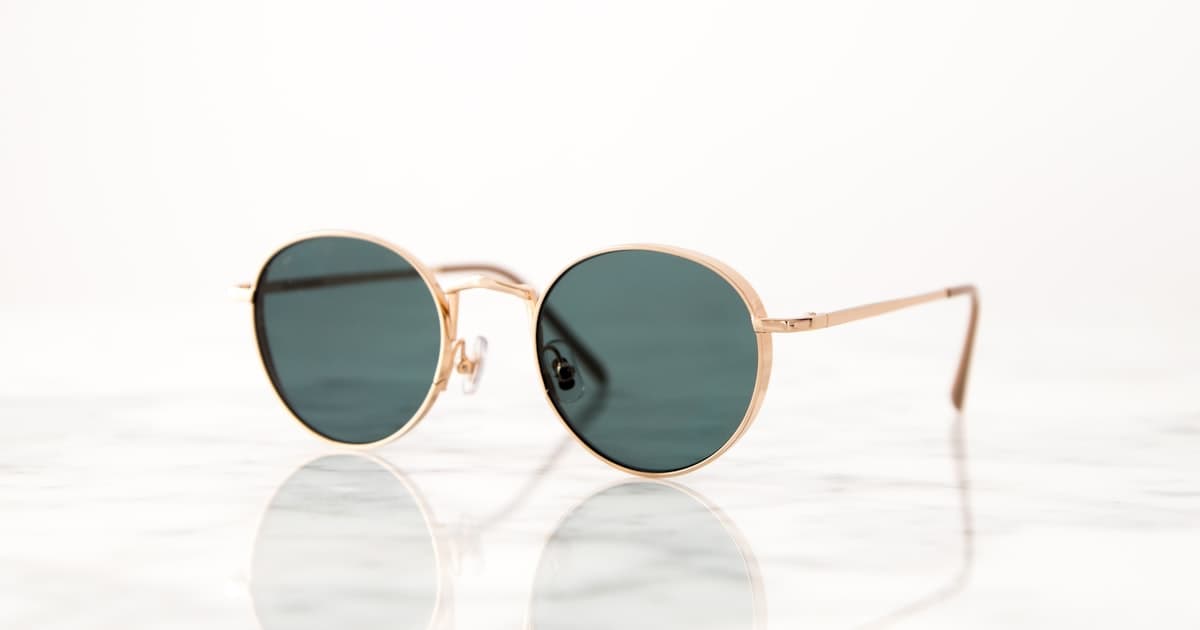
I own a drawer full of sunglasses I never wear. Not because they're broken or scratched, but because every single pair makes me look like some combination of a 1990s cop and a dad who just discovered fishing. I'd buy them on impulse — at gas stations, airport kiosks, that weird sunglasses cart at the mall — try them on for two seconds in a mirror with terrible lighting, think "yeah, those look fine," and then never put them on again once I saw a photo of myself wearing them.
The photo. That's always the wake-up call. You feel great. You think you look great. Then your buddy takes a picture at the barbecue and you look like a completely different species than the person you saw in the mirror.
The problem wasn't the sunglasses. The problem was that I was grabbing whatever looked cool on the rack without any understanding of what actually works with my face. And that's a fixable problem. It took me embarrassingly long to fix it, but here we are.
First, Figure Out Your Face Shape (It Takes 30 Seconds)
I resisted this step for years because "determine your face shape" sounds like something from a women's magazine quiz. But it turns out face shapes are real, they matter for frame selection, and figuring out yours is genuinely easy.
Stand in front of a mirror. Pull your hair back if you have any. Look at the outline of your face.
Round face: Your face is about as wide as it is long. Your jawline is soft and curved. Your cheeks are the widest part. Think Jack Black or Leonardo DiCaprio in his younger years.
Square face: Strong, angular jawline. Your forehead, cheekbones, and jaw are roughly the same width. Think Brad Pitt or Henry Cavill.
Oval face: Slightly longer than it is wide, with a gently rounded jawline and slightly narrower forehead. Think Ryan Gosling or George Clooney. This is considered the "most versatile" face shape, which means most frames will work, and if this is you, congratulations, you have sunglasses privilege.
Heart-shaped face: Wider forehead and cheekbones that narrow to a pointed chin. Think Ryan Reynolds or early Justin Timberlake.
Oblong/Rectangle face: Longer than it is wide, with a fairly straight cheek line. Think Adam Driver or Ben Affleck.
If you can't tell, ask a friend. Or take a photo, trace the outline with your finger, and compare. It doesn't need to be exact. Most people are somewhere between two shapes. You're looking for the general vibe.
The One Rule That Fixes Everything
Here's the principle that governs all of this: your sunglasses should contrast your face shape, not match it.
If your face is round, you want angular frames. If your face is angular, you want softer, rounder frames. The contrast creates balance. Matching your face shape with a similar frame shape exaggerates whatever's already there — round face with round glasses makes you look like a snowman with accessories.
That's genuinely the whole thing. One rule. Everything else is refinement.
What Works for Each Face Shape
Round face: Go angular. Wayfarers, square frames, rectangular frames. The sharp lines add definition to your jaw and cheekbones. Aviators can work if they're on the larger side, because the straight brow bar adds structure. Avoid small circular frames — they'll make your face look rounder. John Lennon glasses on a round face is a statement, and the statement is "I have given up."
Square face: Go round or oval. Round frames soften the strong jawline without hiding it. Aviators are basically designed for square faces — there's a reason every fighter pilot in movie history looks good in them. Clubmasters work great because the rounded bottom half contrasts the angular jaw. Avoid boxy, narrow frames — they match your face shape instead of complementing it.
Oval face: You lucky bastard. Almost everything works. Aviators, wayfarers, round frames, square frames — the proportional balance of an oval face means you can experiment freely. The only thing to avoid is frames that are wider than the widest part of your face, which can throw off the balance. But honestly, if you have an oval face and you're reading this, you've been picking bad frames purely by accident.
Heart-shaped face: The goal is to draw attention downward and minimize the wider forehead. Aviators are your best friend — the wider bottom half balances the narrower chin. Round frames work well. Wayfarers can work if they're not too large. Avoid anything with heavy, decorative elements at the top of the frame, which draws attention upward to your already-wide forehead.
Oblong/Rectangle face: You want to break up the length. Oversized frames work well because they cover more vertical space. Aviators, large square frames, and wraparound styles all work. Round frames can help soften the length. Avoid narrow, small frames — they'll make your face look even longer. Think big. You need the real estate.
Lens Quality Actually Matters
Here's where I have to be the responsible friend and tell you that gas station sunglasses are not protecting your eyes. Some of them are actively making things worse.
Your pupils dilate behind dark lenses because less light is reaching them. If those lenses don't have proper UV protection, you're actually letting more UV radiation into your dilated pupils than if you wore nothing at all. It's like opening the door wider for the thing you're trying to block.
(We covered the related territory in Apartment Upgrades That Impress Without Trying Too Hard.)
Look for lenses that block 100% of UVA and UVB rays. This is sometimes labeled as "UV400." Any reputable brand will have this. It doesn't have to be expensive — plenty of quality sunglasses in the $30-$80 range offer full UV protection.
Background reading: S&P SPIVA scorecards.
Polarized lenses are worth the upgrade if you drive a lot, fish, or spend time on water. Polarization reduces glare from reflective surfaces like roads, water, and car hoods. The difference while driving on a sunny day is dramatic — I didn't realize how much I was squinting until I switched to polarized lenses and stopped.
Lens color matters less than you think. Gray is the most neutral, brown adds warmth and contrast, green is classic (hello, Ray-Ban). For driving, gray or brown is ideal. For outdoor sports, amber or brown enhances contrast. Don't overthink this. Pick a color you like. The UV protection is what matters.
Frame Size: The Part Everyone Ignores
A good frame in the wrong size is a bad frame. This is why trying on sunglasses online is a gamble and why I've returned approximately eleven pairs.
The frame width should roughly match the width of your face. If the frames extend significantly past your temples, they're too wide. If your face extends past the frames, they're too narrow. Both look wrong and you'll feel it even if you can't articulate why.
The lenses should cover your eyebrows. If your eyebrows are visible above the frame, the sunglasses look too small. This is the most common fit issue I see — guys wearing frames that sit too low, making them look like they borrowed a child's sunglasses.
If you wear prescription glasses, you already know your frame measurements — they're printed on the inside of the arm. Those numbers (lens width, bridge width, temple length) translate directly to sunglasses sizing. Use them.
The Three Pairs Every Guy Needs
You don't need a collection. You need three pairs that cover different situations, just like you might think about watches at different price points — the right tool for the right moment.
The everyday pair: This is your workhorse. Something that works with jeans and a t-shirt, looks good driving, doesn't stand out in a bad way. For most guys, this is a pair of wayfarers or aviators in a neutral color. Black, tortoise, or matte brown. This is the pair you grab without thinking.
The sporty pair: For running, cycling, hiking, or any activity where you need a frame that stays put and lenses that enhance contrast. Wraparound or semi-wraparound frames with rubber grips. I use these when I'm being active and I don't care how they look. Function over form. Though for what it's worth, there are sporty frames now that don't look like you're auditioning for a NASCAR pit crew — the running gear guide covers the ones that balance performance and aesthetics.
The statement pair: This is the pair that's a little bolder. Round frames, colored lenses, thick acetate, whatever expresses your personality. You wear these to brunches, festivals, vacations — situations where standing out a little is the point. This is where you can experiment and have fun.
Materials: What You're Actually Paying For
Acetate is what most quality frames are made from. It's a plant-based plastic that can be cut into thicker, more colorful shapes. It's durable, hypoallergenic, and looks good. Most designer frames are acetate.
Metal frames — stainless steel, titanium, aluminum — are lighter and thinner. Aviators are traditionally metal. Titanium is the premium option: extremely light, strong, and corrosion-resistant. Also expensive.
Nylon/TR-90 is what most sport frames use. It's flexible, lightweight, and nearly indestructible. You can sit on these and they'll bounce back.
The difference between $30 sunglasses and $300 sunglasses is mostly lens quality, hinge quality, and brand markup. A $30 pair from a company that focuses on UV protection and decent build quality will serve you well. A $300 pair from a luxury brand will be marginally better in construction and significantly better in making you feel like you've made an important purchase.
I split the difference. My everyday pair cost about $80. My sport pair cost $120 (because good polarized sport lenses actually matter). My statement pair cost $45 from an indie brand that makes genuinely cool acetate frames. Total investment: $245 for every sunglasses situation I'll encounter for the next several years.
The Quick-Reference Guide
Just in case you scrolled to the bottom looking for the cheat sheet:
- Round face: Angular frames. Wayfarers, rectangles, square frames.
- Square face: Soft frames. Aviators, rounds, clubmasters.
- Oval face: Almost anything. You're annoying.
- Heart face: Aviators, round frames, bottom-heavy designs.
- Oblong face: Oversized frames, aviators, large rounds.
- Always: UV400 protection, proper fit at the temples and bridge.
- Never: Gas station sunglasses as your daily pair, frames that show your eyebrows, and tiny circular lenses unless you're a blues musician or John Lennon's ghost.
The next time you try on a pair and something feels off but you can't explain why, it's probably a face shape mismatch. Now you'll know. And the drawer of abandoned sunglasses will finally stop growing.
Further reading and primary sources
Background and primary-source references for the claims and recommendations above. Linked references are intended for readers who want to verify a claim, dig deeper into a topic, or check the underlying data themselves.
- S&P SPIVA scorecards — S&P Dow Jones Indices' semi-annual scorecard comparing active funds against benchmarks.
- IRS publications — official U.S. Internal Revenue Service publications on tax treatment of every account type.
- Bureau of Labor Statistics — official U.S. labor, wage, and inflation data.

About the writer
Marcus Hale
Senior writer — Tech & Money
Read more from Marcus — full archive, full bio, and contact on their writer page.
Share this story
More from Marcus
Spot a problem with this piece? Email info@luba.media.