Productivity Systems That Actually Work for Normal People
You don't need a color-coded Notion dashboard or a second brain to get stuff done. Here's what actually works when you're a regular person with a job, a phone addiction, and finite willpower.
· 12 MIN READ
I Was the Guy With 47 Tabs Open
A year ago, I was the most productive-looking unproductive person alive.
I had a Notion workspace with databases nested inside databases. I had a Todoist setup with labels and filters that would make a librarian weep. I had a physical planner, a digital calendar, two different note-taking apps, and a kanban board pinned above my desk like a war room strategy map.
I also hadn't finished a single important project in three months.
Every Sunday night, I'd spend an hour "doing my weekly review" --- reorganizing tasks, updating project statuses, moving things between "In Progress" and "Up Next" and "Someday/Maybe." I'd close the laptop feeling deeply accomplished. Then Monday would roll around and I'd stare at my beautiful system, feel vaguely overwhelmed by how much was in it, and open YouTube instead.
The system wasn't helping me get things done. The system was the thing I was doing. I was productivity-procrastinating, which is the most insidious kind because you feel busy the entire time you're accomplishing nothing.
The Productivity-Industrial Complex Is Lying to You
Somewhere along the way, getting things done became its own hobby. There are YouTube channels with millions of subscribers dedicated to showing you how to set up task management systems. There are $300 courses on building a "second brain." There are people who have turned organizing their to-do list into a full-time career.
And look, I'm not saying those people are scammers. Some of that content is genuinely interesting. The problem is when a regular person with a regular job watches those videos and thinks, "That's what I need. I need a linked database with relational properties and a custom formula that calculates task urgency based on deadline proximity and energy levels."
No. You need to do the thing. The thing you've been avoiding. The thing that's been sitting on your list for two weeks while you redesigned the list.
I know this because I lived it. I spent more time reading about productivity than actually being productive. It's like spending six months researching the perfect running shoe and never going for a run.
What Actually Works: The Boring Stuff
After blowing up my entire system (literally deleted the Notion workspace --- it felt like setting fire to a failed relationship), I rebuilt from scratch using the simplest possible approach. It's not sexy. Nobody's filming a "day in my life" video about it. But I get more done now than I ever did with the fancy setup.
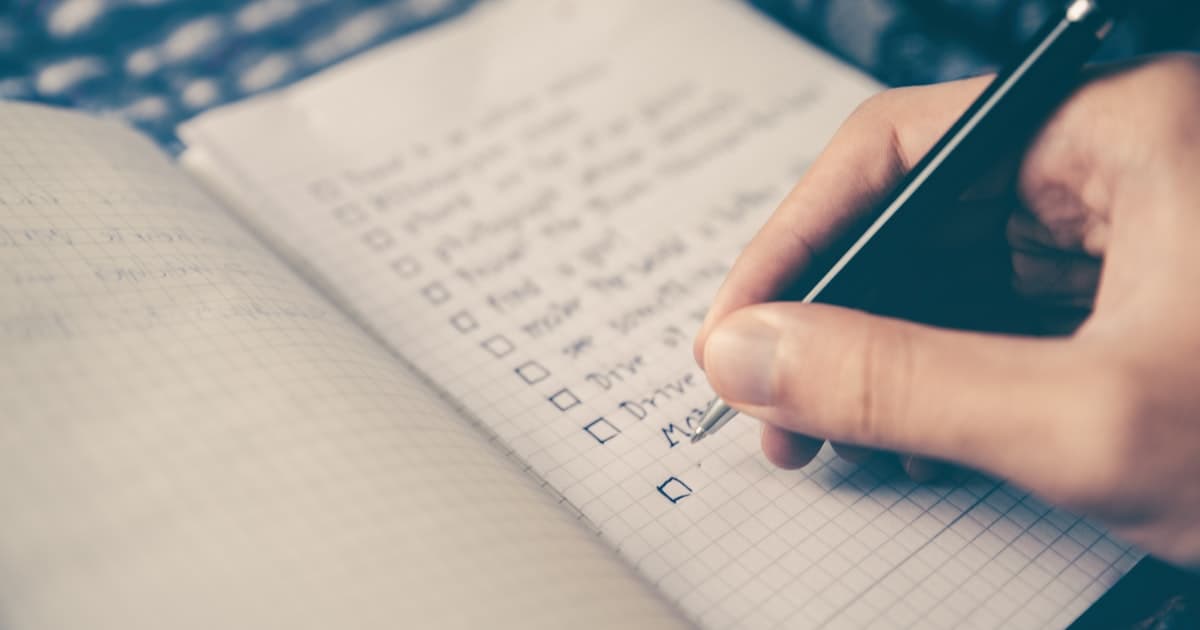
A paper to-do list with three items on it. Every morning, I write down the three things that would make today a win. Not ten things. Not a backlog. Three. If I get all three done and still have energy, great, I'll do more. But the bar is three. Most days I clear them by 2 PM, and the rest of the day feels like bonus time instead of an endless slog through a list that never shrinks.
I actually picked this up from the morning routine I've been running for months now, and it's the single habit from that routine that had the biggest impact on my workday.
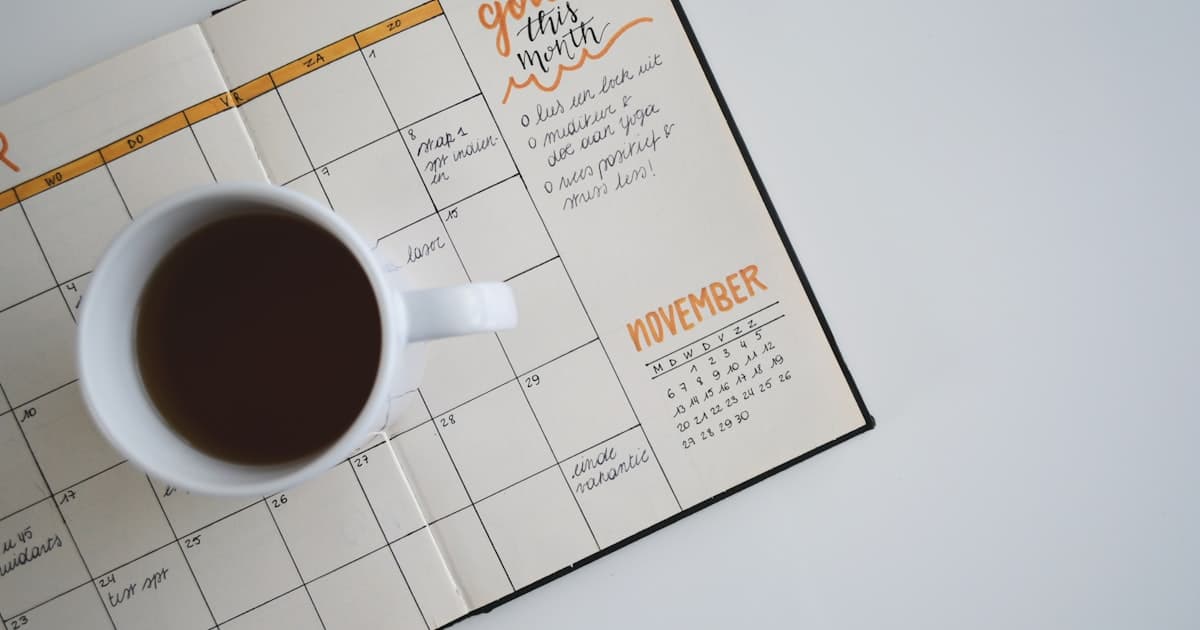
A calendar with time blocks, not tasks. Tasks on a to-do list are wishes. Tasks on a calendar are commitments. If I need to write a report, I block 9:00 to 10:30 on my calendar. During that block, I write the report. That's it. If someone tries to schedule a meeting during my block, I decline. "I have a conflict" is a complete sentence. Nobody asks what the conflict is.
One notebook. Not one for work, one for personal, one for "creative ideas," one for journal entries. One notebook. Everything goes in it. Meeting notes, grocery lists, random thoughts, phone numbers. When it's full, I start a new one. I don't index it. I don't transfer highlights to a digital system. The act of writing things down helps me remember them, and that's 90% of the point.
(Primary source: The Verge reviews.)
The Two-Minute Rule Is the Only Productivity "Hack" Worth Knowing
David Allen's Getting Things Done system is 300 pages long and I fell asleep twice trying to read it. But buried in there is one genuinely brilliant idea: if something takes less than two minutes, do it right now.
Reply to that email. Put the dish in the dishwasher. Fill out that form. Sign that document. Text your mom back. If it takes less than two minutes, the time you'd spend adding it to a list, categorizing it, and eventually getting around to it is longer than just doing the damn thing.
I started applying this about six months ago and it eliminated maybe 60% of my to-do list overnight. Most of the stuff I was "tracking" was two-minute tasks I was hoarding like a dragon sitting on a pile of minor inconveniences.
Focus Is a Muscle, Not a Switch
Here's what nobody tells you about focus: you can't just decide to focus. Especially not when your phone is sitting right there, glowing with notifications, promising you that something more interesting than your spreadsheet is happening somewhere else.
I know this because I tracked my screen time for a month and discovered I was averaging over seven hours a day on my phone. Seven hours. That's a part-time job dedicated to accomplishing absolutely nothing.
So here's what actually helped me focus:
Phone goes in another room. Not on silent. Not face-down on my desk. In another room. The research on this is wild --- just having your phone visible on your desk reduces your cognitive capacity even if you don't touch it. Your brain is spending resources resisting the urge to check it. Remove the temptation entirely and suddenly you have brainpower you didn't know existed.
(We covered the related territory in How I Started Reading Again After Years of Doom-Scrolling.)
Work in 45-minute blocks. I tried the Pomodoro Technique --- 25 minutes on, 5 minutes off --- and it drove me insane. Just when I'd get into a flow state, the timer would go off and tell me to take a break. Twenty-five minutes isn't enough for real deep work. But 45 minutes is perfect. Long enough to make meaningful progress, short enough that your brain doesn't start melting. I do 45 on, 15 off. During the 15, I walk around, get water, check my phone (it's been in the other room, remember, so this is when I retrieve it). Then back to work.
Batch similar tasks. Monday morning is emails and admin. Tuesday afternoon is meetings (all of them, back to back --- terrible, but it quarantines the damage to one afternoon instead of spreading meetings across every day like a virus). Wednesday morning is writing and creative work. When your brain doesn't have to constantly switch between different types of thinking, it works dramatically better.
Procrastination Isn't a Character Flaw
I used to think I procrastinated because I was lazy. Turns out I procrastinated because the task was either too vague, too big, or too boring. Once I figured that out, I could actually fix it.
If the task is too vague, make it specific. "Work on the presentation" is not a task. It's a category of suffering. "Write the first three slides of the Q1 presentation" is a task. Your brain knows exactly what to do with it. Vague tasks create anxiety because your brain can't plan for them, so it avoids them entirely.
If the task is too big, break it into pieces so small they feel stupid. "Renovate the bathroom" is a project that could take months. "Measure the bathroom and write down the dimensions" takes ten minutes and is step one. I've found that once I do the stupidly small first step, momentum carries me into the next three or four steps without effort. Starting is the hard part. Always.
If the task is boring, pair it with something enjoyable. Expense reports get done while I listen to a podcast. Data entry happens with music. Cleaning the apartment is accompanied by a phone call with a friend. This isn't groundbreaking psychology --- it's just making unpleasant things slightly less unpleasant so your brain stops treating them like threats.
The Myth of "Eating the Frog"
You've heard this one: do the hardest task first thing in the morning. "Eat the frog," as they say.
I tried this for about three months and I'm calling nonsense.The reason: it doesn't work for me, and I suspect it doesn't work for a lot of people: if the first thing I face every morning is the most miserable task on my list, I start dreading mornings. I'll delay starting work because I know what's waiting for me. The frog doesn't get eaten --- it just sits there, croaking, making me anxious.
What works better for me is starting with a quick win. Something I can knock out in 15-20 minutes that gives me a sense of momentum. Answer a few emails. Review a document. Clear a small task. Now I'm warmed up. My brain is in "getting things done" mode. Then I tackle the hard stuff, because I've already proven to myself that I'm capable of completing things today.
It's like going to the gym. You don't walk in and immediately try to deadlift your max. You warm up. Same principle.
Energy Management Beats Time Management
This was the biggest mindset shift for me. I used to obsess over managing my time --- filling every hour with tasks, maximizing every minute. The problem is that an hour at 9 AM when I'm sharp and caffeinated is not the same as an hour at 3 PM when I have the cognitive capacity of a potato.
Now I schedule based on energy, not just time:
- High energy (morning, usually 9-12): Deep work. Writing, strategy, problem-solving. Anything that requires me to actually think.
- Medium energy (early afternoon, 1-3): Meetings, collaboration, tasks that require effort but not creative genius.
- Low energy (late afternoon, 3-5): Admin, emails, organizing, mindless tasks I could do with half my brain tied behind my back.
Fighting your natural energy cycle is like swimming upstream. Stop it. Figure out when you're sharp, and protect those hours ruthlessly. Everything else can fill in the gaps.
What I Stopped Doing (And Don't Miss)
Sometimes productivity is less about adding systems and more about removing the things that were quietly destroying your focus.
Stopped checking email constantly. I check email three times a day: morning, after lunch, end of day. If something is truly urgent, people call or text. Nothing in email is so time-sensitive that it can't wait three hours. My inbox used to feel like a slot machine --- pull the lever, maybe there's something exciting. There never was.
Stopped saying yes to every meeting. "Does this meeting have an agenda? Could this be an email? Do I actually need to be there?" If the answer to any of those is no, I decline. I probably decline 30% of meeting invites now and nobody has noticed or cared.
Stopped consuming productivity content. This is the ironic one. I unfollowed every productivity YouTuber, unsubscribed from every "optimize your life" newsletter, and stopped reading books about Getting Things Done. The information was fine. The problem was that consuming it made me feel productive without actually producing anything. It was a sugar high of motivation that crashed every time I closed the browser tab.
The System That Doesn't Look Like a System
Here's my entire productivity "system" as it exists today:
- Three tasks on a sticky note every morning.
- Calendar blocks for focused work.
- Phone in another room during deep work.
- Two-minute rule for small tasks.
- One notebook for everything.
That's five things. It fits on an index card. There's no app to maintain, no weekly review to dread, no template to update. It works because it takes approximately zero effort to sustain, which means I actually use it instead of admiring it.
The Bottom Line
The best productivity system is the one you'll actually use. For most people, that means something so simple it barely qualifies as a system. The obsessive optimizers and second-brain architects will tell you that you need more structure, more tools, more processes. What you probably need is less.
Write down three things. Do them. When you get distracted, put your phone in another room. When a task feels overwhelming, make it smaller. When you're tired, do easy stuff. When you're sharp, do hard stuff.
That's it. It's not a TED Talk. It's not a $300 course. It's just a guy who spent two years building elaborate productivity systems before realizing that the most productive thing he ever did was throw them all away.
Further reading and primary sources
Background and primary-source references for the claims and recommendations above. Linked references are intended for readers who want to verify a claim, dig deeper into a topic, or check the underlying data themselves.
- The Verge reviews — long-form consumer-tech reviews with measured performance data.
- Ars Technica — technical consumer-tech and computing journalism, deeper than mainstream tech press.
- Wired — established consumer-tech and digital-culture publication.

About the writer
Marcus Hale
Senior writer — Tech & Money
Read more from Marcus — full archive, full bio, and contact on their writer page.
Share this story
More from Marcus
Spot a problem with this piece? Email info@luba.media.