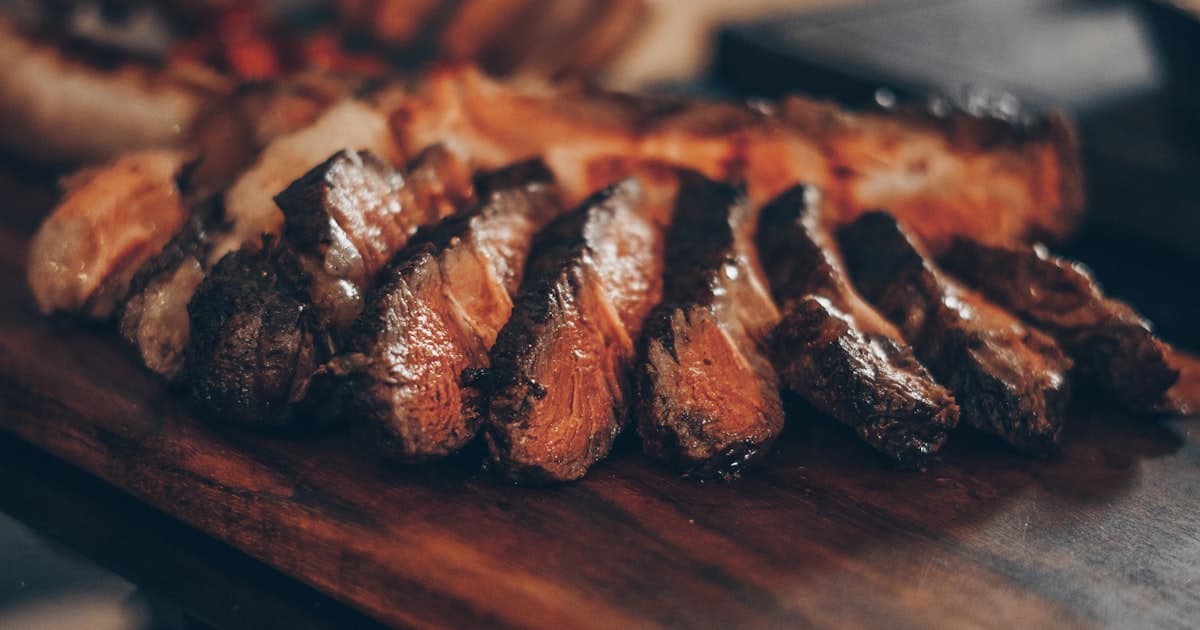
The Only Grilling Guide You'll Ever Need (From a Guy Who Burned a Lot of Chicken First)
I ruined a criminal amount of meat before I figured out how grilling actually works. Here's everything I learned so you can skip the learning curve and go straight to the compliments.
· 9 MIN READ
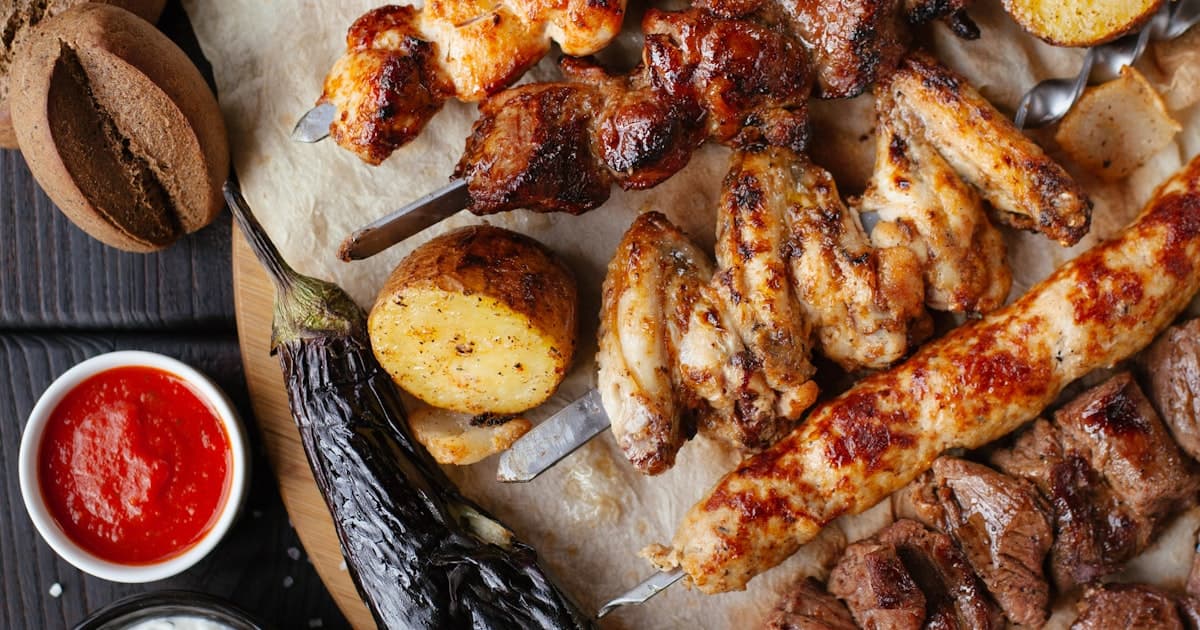
My neighbor still brings up the Fourth of July incident. I'd invited eight people over, bought a whole rack of ribs, confidently told everyone dinner would be ready at 6. At 8:45 PM we ordered pizza. The ribs were simultaneously burned on the outside and completely raw on the bone. I served them anyway. People were polite about it. Nobody came back for seconds.
That was five summers ago. These days I'm the guy people ask to cook at their parties. Same guy, different results.
Here's everything that changed in between.
The Charcoal vs. Gas Debate (I'm Taking a Side)
Everyone has this argument eventually. Gas guys say it's convenient and controllable. Charcoal guys say it tastes better and they're not wrong.
I'm a charcoal guy. I'll admit it has a learning curve and yeah, it takes longer to get going. But the flavor difference is real — that slight smokiness you can't replicate with a gas burner — and there's something about the process that makes you actually pay attention. You can't just crank a knob and walk away. Charcoal forces you to be present, which it turns out is most of what good grilling requires.
If you're cooking for a weeknight dinner and time is tight, gas is fine. I'm not going to fight you. But if you want to understand grilling — like actually understand it — start with charcoal. It teaches you fire management in a way gas never will.
One non-negotiable either way: a chimney starter. It's a metal cylinder you fill with charcoal, stuff newspaper underneath, and light. Twenty minutes later you have perfectly ashed-over coals without a drop of lighter fluid. Lighter fluid makes your food taste like lighter fluid. Chimney starter costs about fifteen bucks. Just get one.
The Two-Zone Fire: The Thing That Fixed Everything
Here's the single technique that took me from "why is this chicken pink in the middle and black on the outside" to actually competent. It's called the two-zone fire, and it's embarrassingly simple.
When you pour your coals, push them all to one side of the grill. That's your hot zone — direct heat, searing, crust formation. The other side, with no coals under it, is your cool zone — indirect heat, gentle cooking, finishing.
Everything goes on the hot side first to get color. Then it moves to the cool side to cook through without burning.
That's it. That's the whole technique.
Before I learned this, I'd pile coals in the middle, put chicken thighs directly over them, and then panic as the outside incinerated while the inside remained raw. I didn't know there was a solution. I just thought I was bad at grilling. The two-zone fire didn't make me a genius — it just gave me a place to hide the food when things got scary, which is most of what cooking is anyway.
Stop Touching Your Meat
I know. Sounds like obvious advice. It isn't, apparently, because I had to learn it the hard way about forty times.
When you put a steak on the grill, leave it there. Don't press it with your spatula. Don't move it around. Don't flip it every thirty seconds because you're nervous. Set it down, walk away, come back in three to four minutes.
(More on this in our piece on How to Cook a Steak That Makes Steakhouses Jealous.)
Pressing the steak squeezes out the juices — the thing you're trying to keep inside. Constant flipping prevents crust formation, which is the thing that makes grilled meat worth eating.
Put it down. Trust the process. Flip it once. Done.
The same applies to burgers. I used to press them flat with the spatula constantly, watching the fat drip out into the flames while wondering why my burgers were dry. Now I make a slight indent in the center with my thumb before they go on (prevents the puff-up), put them on the hot grate, and genuinely do not touch them for four minutes.
Internal Temperatures: Just Get a Thermometer
This is the other thing that fixed everything. An instant-read thermometer costs about $25-$35 and completely eliminates guessing. The Thermapen is the gold standard and worth the money. The ThermoPop is cheaper and also great. Either one will change how you cook.
(Primary source: Britannica.)
Numbers to know:
- Chicken — 165°F. Non-negotiable. Always. I don't care if it "looks done." Check it.
- Burgers — 160°F for well-done (food safety), 155°F if you're a medium guy. Ground beef has pathogens throughout, not just on the surface, so this matters.
- Steaks — 125°F for rare, 130-135°F for medium-rare (the correct choice), 140-145°F for medium, 150°F+ if you want to make a butcher cry.
- Pork — 145°F, and it can have a little pink. This is fine and not 1987 anymore.
Pull the meat a few degrees before your target. It keeps cooking for a minute or two off the grill. This is called carryover cooking. I felt smart the day I learned that term.
Then let it rest. Five minutes for steaks, ten for big cuts. The juices redistribute. Cutting into it immediately sends those juices onto your cutting board instead of your mouth.
Marinades vs. Rubs vs. Dry Brining
You don't need all three. Here's when to use each.
Marinades work well for tougher, thinner cuts — skirt steak, chicken thighs, pork chops. The acid (citrus, vinegar, yogurt) breaks down muscle fibers and helps flavor penetrate. The downside: marinades make the surface wet, which fights against getting a good sear. Pat the meat dry before it hits the grill.
Dry rubs are for anything you want a bark or crust on — ribs, brisket, pork shoulder. It's just spices pressed onto the surface. Good rub, low and slow heat, and you get that dark exterior that looks like you know what you're doing.
Dry brining is what I do most often now for steaks and chicken. Salt the meat generously — and I mean generously, more than feels comfortable — and leave it in the fridge uncovered for at least an hour, ideally overnight. The salt draws out a little moisture, then it gets reabsorbed, seasoning the meat all the way through. The surface dries out, which means incredible sear when it hits the grill.
For a good steak on a weeknight, dry brining beats a marinade every time.
The Gear That Actually Matters
Short list. Don't overthink it.
Instant-read thermometer — already covered. Most important tool on this list.
Long tongs — 16-inch, spring-loaded. Not the flimsy kind. You want the ones that feel substantial. These are how you move everything on the grill without getting burned, without piercing the meat like a fork does.
(For related context, see Basic Car Maintenance Every Guy Should Know How to Do.)
Chimney starter — already covered. Fifteen bucks. Buy it now.
Cast iron grate or griddle — if your grill grate is thin and cheap, consider a cast iron insert. Better heat retention, better sear marks, easier to clean.
That's it. You don't need a $300 set of grill tools with matching leather case. You need a thermometer, tongs, and a way to start your coals.
Mistakes I Still See Constantly
Grilling cold meat. Take it out of the fridge 20-30 minutes before cooking. Cold meat cooks unevenly. Outside overcooks before inside reaches temperature.
Not cleaning the grate. A hot, clean grate prevents sticking. Preheat your grill, then scrub the grate with a grill brush. Then oil it lightly — a paper towel dipped in oil, held with tongs.
Opening the lid too much. Every time you open it, you lose heat and add time. Open it when you need to flip. That's mostly it.
Grilling chicken breasts instead of thighs. Look. Chicken breasts are unforgiving. They dry out in a four-minute window. Chicken thighs have more fat, more forgiveness, more flavor. If you're new to this, grill thighs. Nobody's going to be disappointed.
Not letting the grill get hot enough first. Fifteen minutes minimum with the lid closed. You want it roaring before anything goes on.
Why Any of This Actually Matters
Grilling is learning to cook in its most social form. It's the one cooking format that happens outside, in front of people, with everyone watching. There's something about it that's fundamentally communal — people gather around the grill, beer in hand, half-listening to whatever story you're telling while they watch the coals glow.
When you're good at it, you become the person who gets asked to run the grill at every party. That's a role I underestimated before I had it. People trust you with their dinner. They're relying on you. There's a quiet confidence that comes from knowing you can feed a group of people and have them leave satisfied.
The Fourth of July pizza incident was embarrassing. But it was also the thing that made me actually learn. Five summers of practice, a thermometer, and a chimney starter later, I can cook a proper dinner for twelve people without breaking a sweat.
Start with one chicken thigh. Learn the two-zone method. Buy the thermometer. The rest fills itself in.
Further reading and primary sources
Background and primary-source references for the claims and recommendations above. Linked references are intended for readers who want to verify a claim, dig deeper into a topic, or check the underlying data themselves.
- Britannica — encyclopedic reference for historical and cultural background.
- Library of Congress — U.S. Library of Congress historical archives and primary sources.
- National Archives — U.S. National Archives primary historical documents.

About the writer
Jordan Shaw
Senior writer — Culture, Style & Relationships
Read more from Jordan — full archive, full bio, and contact on their writer page.
Share this story
More from Jordan
Spot a problem with this piece? Email info@luba.media.