How I Built a Coffee Setup That Makes My Barista Nervous
I used to spend $6 a day on lattes. Now I make better coffee at home for about 50 cents a cup. Here's the gear that got me there and the mistakes I made along the way.
· 10 MIN READ
Let me start with the math, because the math is what broke me.
Six dollars a day on coffee. That's what I was spending — one medium latte from the shop downstairs, sometimes two if the afternoon hit hard. Doesn't sound like much until you run the numbers. Six bucks times 365 days is $2,190 a year. Two thousand, one hundred and ninety dollars. On coffee. That I drank in paper cups while staring at my phone.
I'm not the kind of guy who clips coupons or brings lunch from home to save money. But something about that number — roughly the cost of a decent used motorcycle — genuinely bothered me. So I did what any reasonable gear-obsessed person does when confronted with a problem: I went down a rabbit hole and came out the other side with a slight hoarding problem and genuinely excellent coffee.
Here's how it went.
The French Press Phase (aka "I'm Basically a Barista Now")
The first thing I bought was a Bodum Chambord French press, $35 on Amazon. I used it for about three weeks and felt extremely smug. I was making coffee at home! I was saving money! I had transcended the need for the coffee shop!
The coffee was fine. Muddy, a little gritty, tasted like it was always slightly overextracted — but fine. I told myself I just needed to get better beans. The beans were not the problem.
The problem was that I had no idea what I was doing and no real control over any variable. French presses are forgiving, which is great if you want an easy morning, but they also kind of mask what's actually happening with your coffee. You can't really improve if you can't isolate anything.
I used the French press for about four months. I was still buying coffee at the shop maybe three times a week because, if I'm honest, mine wasn't actually better. Just cheaper.
The AeroPress: Where It Got Interesting
A friend who works in tech (so, a man who has opinions about everything) handed me an AeroPress at a housewarming party and told me it would change my life. I thanked him, put it in a closet, and forgot about it for two months.
Then one Sunday I had nothing to do and dug it out. Forty-five minutes of YouTube later, I understood why people are obsessed with this thing. The AeroPress ($35–$45) gives you real control — over temperature, steep time, grind size, pressure. It's fast, it's nearly indestructible, and it produces coffee that's somewhere between French press and espresso. Rich, smooth, no grit.
This is when I started actually enjoying the process, which I hadn't expected. I'm a gear person by nature — I get into things through the equipment before I get into the thing itself. The AeroPress gave me enough variables to tinker with that it held my attention.
I used it for about six months. Then I bought a V60.
The Pour-Over Detour
The Hario V60 is a $20 plastic cone that will make you feel like you're performing surgery every morning. You need: a gooseneck kettle (I got the Fellow Stagg EKG for $165, which is absurd but also I love it), a kitchen scale, filtered water heated to exactly 205°F, a timer, and about seven minutes you don't feel like rushing.
(We covered the related territory in Best Wearables for Men Who Hate Wearing Things.)
For verification, see S&P SPIVA scorecards.
The results are genuinely beautiful — clean, bright, complex in a way that espresso isn't. I could taste the difference between beans from different regions for the first time. Ethiopian naturals taste like blueberries, I am not making this up.
That said, about pour-over: it rewards patience and punishes bad mornings. If you're running late, if you're tired, if you just want coffee without a production — you will mess it up, drink mediocre coffee, and be annoyed at yourself. I went back to the AeroPress on weekdays and reserved the V60 for weekend mornings when I had time to enjoy it.
The Espresso Machine (The Boss Level)
About fourteen months into this journey I bought a Breville Bambino. It was $300 on sale, up from the usual $350, and it took me a week of deliberating spreadsheets to pull the trigger.
This is the machine I'd been building toward without knowing it. Semi-automatic, 54mm portafilter, heats up in three seconds (actually three seconds — not the claimed three seconds that takes 45 seconds like most machines). It produces real espresso: 9 bars of pressure, proper crema, the whole deal.
The learning curve on espresso is steep in a way the other methods aren't. You're dialing in grind size, dose weight, and extraction time simultaneously, and if any one of them is off, the shot is either sour or bitter or both. I pulled probably 60 bad shots before I started pulling consistently good ones. My roommate thought I was losing my mind.
But when it clicks, it really clicks. A double shot from the Bambino — with beans I like, dialed in correctly — is genuinely better than what I was getting from the café downstairs. That's not pride talking. It's an objective improvement.
The Thing Nobody Tells You: The Grinder Is the Machine
If there's one thing I'd go back and tell myself, it's this: the grinder matters more than the brewer. A lot more.
I started with a $25 blade grinder. Blade grinders don't actually grind coffee — they chop it, randomly, into pieces of wildly different sizes. Big chunks extract slowly, small chunks extract fast, and you end up with a cup that's simultaneously under and over-extracted. It tastes harsh and flat at the same time, which sounds impossible but isn't.
The Baratza Encore is the entry-level burr grinder that basically everyone recommends, and for good reason. It's $175, it has 40 grind settings, and it produces a consistent particle size that makes a dramatic, immediately audible difference in your coffee. I bought one after two months of suffering with the blade grinder and genuinely could not believe the improvement.
If you're starting from scratch: buy the Encore first. Brew with whatever method you have. The grinder will matter more than anything else you buy.
Fresh Beans Aren't a Luxury, They're the Point
Grocery store coffee is, I say this with love, garbage. By the time it hits the shelf it's been roasted weeks or months ago, and coffee is best in the first two to four weeks after roasting. After that it goes stale, loses its aromatics, and tastes flat.
(More on this in our piece on Smart Home Gadgets That Are Actually Worth the Money.)
Local roasters are the move if you have access to one. I started buying from a small shop about a mile away — they roast twice a week, I can see the roast date stamped on the bag, and a 12oz bag runs about $18–22. That sounds expensive until you do the math: a 12oz bag makes roughly 17–20 cups of coffee, which puts you at about $1–1.20 per cup. Still wildly cheaper than the café.
(Primary source: IRS publications.)
If you don't have a local roaster, subscription services like Trade Coffee or Atlas Coffee Club do a solid job of sourcing and shipping fresh beans directly from roasters nationwide. I use Trade as a backup and it's consistently good.
Water Quality: The Boring Part That Actually Matters
Tap water is fine in some cities and terrible in others. Coffee is 98% water, which means bad water makes bad coffee regardless of everything else. I live somewhere with decent tap water and I still use a Brita filter because chlorine taste is real and it's not subtle.
If you're in a hard water area, you might want to look into something like Third Wave Water — mineral packets you add to distilled water to get the ideal mineral composition for coffee brewing. This is the part where coffee nerdery becomes genuinely self-aware, and I'm fine with that.
The Milk Frothing Learning Curve Is Real
The Bambino has a steam wand. Learning to actually use a steam wand — to create silky microfoam rather than a pile of giant bubbles — took me probably three weeks of practice. The technique is counterintuitive: you want to keep the wand at the surface, just barely submerged, and rotate the milk in a vortex. Too deep and you get hot milk. Too shallow and you get foam that looks like shaving cream.
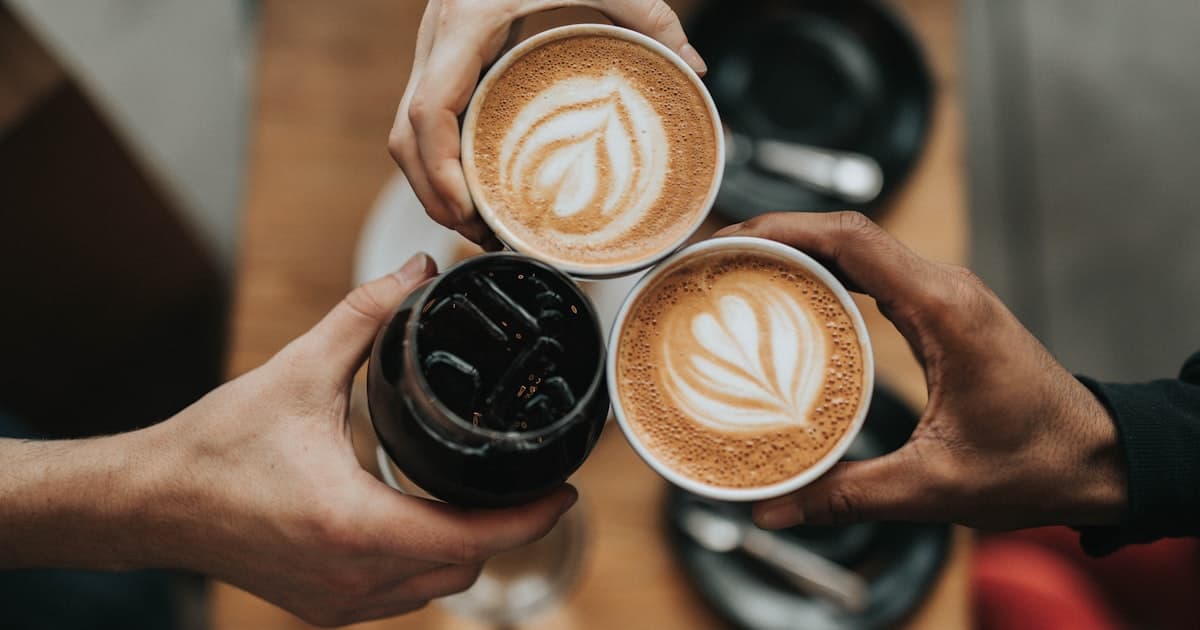
Once you figure it out, though, latte art becomes a real possibility. I can do a basic tulip most mornings. My barista at the café asked me once why I hadn't been coming in as much, and I told her I'd been making coffee at home. She asked what I was using. I told her. She nodded slowly in the way you nod when you realize someone has gone somewhere you maybe didn't expect.
The Setup Cost Breakdown
Here's where I landed, total investment:
- Baratza Encore grinder: $175
- Breville Bambino espresso machine: $350
- Fellow Stagg EKG kettle: $165
- Hario V60 + filters: $25
- AeroPress: $40
- Kitchen scale: $25
- Miscellaneous (tamper, distribution tool, milk pitcher): $60
Total: ~$840
That sounds like a lot. And it is — upfront. But at $6/day in café spending, that's five months of coffee until you're ahead. I've been running this setup for over a year. The math stopped being the point a long time ago.
What I'd Buy If I Started Over
If I were starting fresh tomorrow, I'd skip the French press and the blade grinder entirely. I'd buy the Baratza Encore first ($175), then the AeroPress ($40), then a basic gooseneck kettle ($40). That's $255 total and you'll be making genuinely excellent coffee immediately.
If you want espresso eventually, save up for the Bambino instead of buying a cheaper machine — the cheaper semi-automatics in the $150–200 range are consistently frustrating and don't produce real espresso pressure. Better to wait and do it right.
The one thing I wouldn't skip is fresh beans from a local roaster. Everything else is just equipment. The beans are actually what you're drinking.
Six dollars a day was a lot of money to spend on something I didn't particularly love. Fifty cents a cup for something I make myself, exactly how I want it, on my own timeline — that's a trade I'd make again without hesitation. Even if it did require learning what a burr grinder is.
Further reading and primary sources
Background and primary-source references for the claims and recommendations above. Linked references are intended for readers who want to verify a claim, dig deeper into a topic, or check the underlying data themselves.
- S&P SPIVA scorecards — S&P Dow Jones Indices' semi-annual scorecard comparing active funds against benchmarks.
- IRS publications — official U.S. Internal Revenue Service publications on tax treatment of every account type.
- Bureau of Labor Statistics — official U.S. labor, wage, and inflation data.

About the writer
Marcus Hale
Senior writer — Tech & Money
Read more from Marcus — full archive, full bio, and contact on their writer page.
Share this story
More from Marcus
Spot a problem with this piece? Email info@luba.media.