Every Gadget in My EDC Kit and Why I Can't Leave Home Without Them
I've spent an embarrassing amount of money dialing in my everyday carry over the past five years. Here's what survived the cut and what got relegated to the junk drawer of shame.
· 20 MIN READ
Everyday carry — the wallet, phone, knife, light, keychain, and miscellaneous tools that go in a pocket each morning — has graduated from utilitarian habit into a quiet design obsession over the past decade. The EDC subreddit alone has 1.3 million subscribers; specialty retailers like Massdrop and Huckberry built entire categories around it. Spend any time inside the community and the same pattern shows up: a small, intentional kit that holds up to daily abuse outperforms a sprawling collection chosen for novelty.
What follows is a working inventory — every item carried daily, the actual price paid, and an honest assessment after months or years of use. Where a product is no longer recommended, that is called out. Where something failed in real-world use, that is in the review too.
What follows is every single item I carry on a daily basis, how much each one cost, honest reviews after months (or years) of use, and the specific moments where they proved their worth. I'll also get into the stuff that didn't make the cut -- because for every great EDC purchase, there are two regrettable ones collecting dust.
Let's get into it.
1. The Ridge Wallet (Burnt Titanium) -- $125
I carried a fat leather bifold for the first 30 years of my life. The kind that was three inches thick and gave me a visible lean when I sat on it. My chiropractor actually mentioned it once, which was the wake-up call I apparently needed.
I switched to the Ridge Wallet in burnt titanium about three years ago and I'm never going back. It holds 12 cards comfortably, has a money clip on the back for cash (which I rarely carry anymore, but it's there for the occasional taco truck), and it's legitimately indestructible. I've dropped it on concrete, sat on it ten thousand times, and it still looks almost new -- the titanium develops this nice patina over time that actually improves the look.
The honest downside? The first two weeks are annoying. You have to break the elastic, and pulling cards out feels clumsy until you develop the muscle memory. Also, if you're someone who carries receipts, loyalty punch cards, or photos of your kids, this isn't your wallet. It forced me to go minimal, which was the whole point, but the transition period is real.
I bought mine directly from ridgewallet.com. They run sales fairly often, usually around holidays, and the titanium version is worth the premium over aluminum if you plan to carry it for years.
2. Caseology Parallax Case for iPhone 15 Pro -- $16
I've tried every category of phone case. I did the ultra-thin minimalist thing (cracked my screen at a barbecue). I did the OtterBox tank thing (couldn't fit it in my pocket without looking like I was smuggling a Pop-Tart). The Caseology Parallax hits the sweet spot I've been chasing: it's slim, it has a textured geometric back that actually grips well, and the raised bezels have saved my screen at least four times that I can count.
Sixteen bucks on Amazon. I've been using this exact case style since the iPhone 12 -- I just buy the new version whenever I upgrade. The 3D geometric pattern on the back isn't just aesthetic; it genuinely makes the phone less slippery. I was doing yard work last summer, hands covered in sweat, and the phone stayed planted on a tilted patio table where it would've absolutely slid off in any other case.
Downside: it doesn't have MagSafe built in. You can slap a MagSafe ring on it (which I did), but if native MagSafe matters to you, look elsewhere. For the price though, I just can't justify spending $50+ on a case for a device I'm going to replace in two years anyway.
3. Benchmade Bugout 535 -- $155
Here's where the EDC community either nods knowingly or rolls their eyes so hard they sprain something. Yes, I carry a knife every day. No, I'm not cosplaying as a survivalist. I open packages, cut loose threads, slice apples, break down cardboard, and do about forty other mundane tasks that would be annoying without a blade.
The Benchmade Bugout is absurdly light -- 1.85 ounces, per Benchmade's official 535 spec sheet. You genuinely forget it's in your pocket. The AXIS lock is smooth, the S30V steel holds an edge well, and the whole thing just disappears into your carry. I've had mine for about two and a half years and I sharpen it maybe once a month on a Worksharp Precision Adjust.
The story that sold me on always carrying it: I was at a friend's kid's birthday party and the parents were trying to open about thirty toy packages with those diabolical plastic zip ties and clamshell packaging. I became the most popular person at that party in about four seconds. Multiple dads asked me what knife it was before the cake was served.
Important note on legality: Know your local knife laws. The Bugout has a 3.24-inch blade, which is legal for everyday carry in most US states and cities, but some jurisdictions have blade length limits or restrictions on locking mechanisms. I looked mine up before I bought it. You should too.
Downside: the stock blue Grivory handles feel a little cheap for the price point. You can buy aftermarket scales (I put G-10 ones on mine), but that's another $30-40. Also, Benchmade's quality control has been the subject of some internet debate -- mine came perfect, but I've heard stories. Inspect yours when it arrives.
4. Olight Baton 4 -- $80
Yes, I carry a flashlight. Every single day. Fight me.
Before you write this off as paranoid, let me tell you about the last week alone: I used it to look under my car seat for a dropped AirPod, to check a weird noise in the garage at night, to navigate a poorly-lit parking garage, and to help my neighbor find her dog's toy that rolled under the deck. Your phone flashlight is a dim, battery-draining joke compared to a proper pocket light.
The Olight Baton 4 puts out 1,300 lumens, which is genuinely startling when you first fire it up on turbo mode (Olight's published Baton 4 spec sheet confirms the figure). It's about the size of your index finger, charges via magnetic USB-C, and has a moonlight mode so dim you can use it to check on a sleeping kid without waking them up. I've been carrying an Olight of some variety for about four years -- upgraded to the Baton 4 last year.
The one that really drove home its value: I was driving on a rural highway at night and hit a pothole hard enough to worry me about tire damage. Pulled over, and without the flashlight I would've been squinting at my tire by the glow of my phone like some kind of caveman. Instead, I had a full 1,300-lumen spotlight and confirmed everything was fine in about ten seconds.
Downside: the magnetic tail cap is strong, and it will occasionally stick to your keys or other metal items in your pocket. Mildly annoying. Also, you will become "the flashlight guy" among your friends, and they will mock you right up until the moment they need to borrow it.
5. Seiko Presage SRPD37 "Cocktail Time" -- $340
I went through a phase where I thought I needed a Rolex. Spent months browsing Chrono24, calculating how many months of ramen it would take, even tried one on at an AD where the sales associate looked at me like I'd wandered in from the bus stop. Then I discovered Seiko's Presage line and realized I could get a genuinely beautiful automatic watch with an in-house movement for the price of a Rolex service appointment.
The SRPD37 has this blue-gradient "cocktail time" dial that catches light in a way that makes people think it cost ten times what it did. The 4R35 movement is a workhorse -- not a COSC chronometer, but it keeps time within about 15 seconds a day, which is perfectly fine for a guy who checks his phone for the exact time anyway. I've been wearing it almost daily for about two years.
(We covered the related territory in Best Wearables for Men Who Hate Wearing Things.)
It gets compliments constantly. At a work dinner last year, a VP who was wearing an actual Omega Seamaster asked me about my watch. When I told him the price, he looked almost offended -- like I'd cheated somehow.
Downside: the stock bracelet is mediocre. I immediately swapped it for a brown leather strap from Barton Watch Bands ($20), which completely transforms the look. Also, at 41.7mm it might wear large on thinner wrists. And no, it's not water resistant enough for actual swimming despite what the 50m rating might suggest -- that's a "splash resistance" rating in practice.
6. Sony WF-1000XM5 -- $278
I'm going to catch heat for this from the AirPods Pro crowd, but the Sony WF-1000XM5 earbuds are, in my opinion, the best wireless earbuds you can buy right now. The noise cancellation is noticeably better than the AirPods Pro 2, the sound quality is warmer and more detailed, and the battery life is roughly comparable.
I've had mine for about eight months. I use them on every flight, every gym session, every lawn-mowing marathon, and during the sacred 20-minute window after my kids go to bed when I sit on the couch and pretend the world doesn't exist. The multipoint connection means I can seamlessly switch between my phone and laptop, which is genuinely useful when a call comes in while I'm watching something.
The moment that justified the price: I was on a cross-country flight sitting next to a couple who argued the entire time. Put the XM5s in, turned on noise cancellation, and they might as well have been mimes. Absolute silence except for my podcast. Worth every penny for that flight alone.
Downside: if you're deep in the Apple ecosystem, the AirPods Pro 2 integrate more seamlessly -- the auto-switching between Apple devices is genuinely better, and the spatial audio with head tracking is a neat party trick. The Sony carrying case is also larger than the AirPods case, which matters in a pocket. And the touch controls on the Sony buds are occasionally finicky -- I'll go to adjust volume and accidentally skip a track about once a week.
7. Leatherman Squirt PS4 -- $43
This tiny multitool lives on my keychain and handles all the jobs that don't warrant pulling out the Bugout. It's got pliers, scissors, a flat and Phillips screwdriver, a file, and a small blade. The whole thing weighs one ounce and is about the size of your thumb.
I've carried a Squirt for close to four years now (I'm on my second one -- lost the first in a couch cushion at a rental house, which is the most EDC way to lose something). The pliers alone make it worth carrying. I've used them to pull a splinter, tighten a loose screw on my sunglasses, and extract a stripped SIM card tray more times than I can count.
Best moment: I was assembling a piece of flat-pack furniture at a friend's apartment and realized the included Allen key was missing from the hardware bag. The Squirt's pliers were able to grip and turn the bolt just enough to get the job done. My friend called me MacGyver for the rest of the night, which I accepted graciously.
Downside: the scissors are tiny and a little awkward. The screwdriver tips are small enough that they strip easily on larger screws. And the blade is honestly so small that it's more of a letter opener than a knife. But for a keychain tool, the compromises are the whole point -- it's always there, which is what matters.
8. Anker Nano Power Bank 10,000mAh (Model A1259) -- $30
Battery anxiety is real, and I refuse to participate in it. The Anker Nano 10,000 lives in my bag and has saved me from the dead-phone walk of shame more times than I want to admit.
This specific model has a built-in USB-C cable (so you can't forget to bring a cable -- genius), a foldable AC plug for direct wall charging, and enough capacity to charge my iPhone 15 Pro about twice. It's roughly the size of a deck of cards and weighs about half a pound. I picked it up on Amazon about a year ago and it's been in my daily rotation since.
The defining moment: I was at an all-day music festival last summer, using my phone for navigation, photos, and coordinating with friends. By 2pm I was at 8%. Plugged into the Anker, kept going until midnight, and still had juice left in the bank. Meanwhile, the people around me were huddled around a communal charging station like it was a campfire.
Downside: the built-in cable is USB-C only. If you're still rocking a Lightning device (no judgment... okay, a little judgment), you'll need an adapter or a separate cable. Also, the foldable AC plug makes it slightly thicker than competing power banks that charge via cable. It's a trade-off I'm happy with, but it's worth knowing.
9. Fisher Space Pen Bullet (Raw Brass) -- $32
I carry a pen every day, and yes, people think it's weird until they need to write something down. The Fisher Space Pen Bullet in raw brass is the one I settled on after trying about six different "EDC pens" of varying degrees of tactical ridiculousness.
It writes upside down. It writes in extreme cold. It writes on wet paper. It writes on greasy paper. It writes on the back of receipts, on your hand, on a napkin at a bar when you're scribbling down a phone number because your phone died (see item #8 for why this shouldn't happen anymore). The pressurized cartridge is genuinely a marvel of engineering for what is ultimately a $32 pen.
The brass develops a gorgeous patina over time. Mine has gone from shiny gold to a deep, warm amber after about a year of daily pocket carry. It looks like something Indiana Jones would write field notes with.
Story time: I was closing on my house and the real estate agent's pen died mid-signature. I handed over the Space Pen and he looked at it like I'd just pulled Excalibur from my pocket. Signed the rest of the documents with it. He asked where to buy one. I have since converted three people to the Space Pen lifestyle.
Downside: it's a ballpoint, and the ink flow is a little inconsistent compared to a quality rollerball. The writing experience isn't luxurious -- it's utilitarian. And the cap can be a little stiff to post on the back, especially when the brass develops patina. Minor gripes for something that literally works in space.
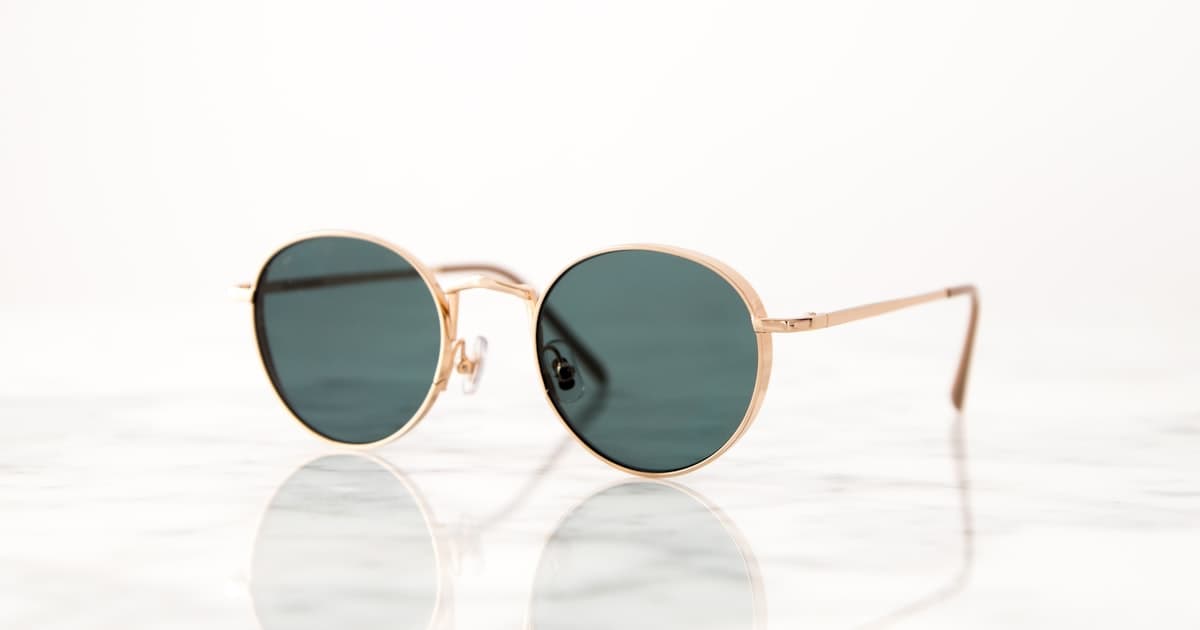
10. Ray-Ban New Wayfarer (Polarized) -- $183
I tried the Goodr thing. I tried the Pit Viper thing (ironically, then somewhat unironically, then back to ironically). I tried cheap Amazon polarized sunglasses that were fine until the coating peeled off after four months. Eventually I just bought a pair of Ray-Ban New Wayfarers with polarized lenses and accepted that sometimes the classic choice is the right one.
I've had this pair for about a year and a half. They fit my face shape well (the New Wayfarer is slightly smaller and more forgiving than the original), the polarized lenses make driving genuinely safer, and they're sturdy enough that I'm not paranoid about tossing them in my bag.
(More on this in our piece on The Dumbphone Comeback Isn't What You Think.)
They earned permanent carry status during a road trip through Utah last spring. The desert sun at elevation is absolutely brutal, and the polarization cut the glare off the highway so effectively that I felt like I'd installed a screen filter on reality. Driving back through the canyons at golden hour with those lenses on was borderline cinematic.
Downside: $183 for sunglasses that you will inevitably sit on, scratch, or leave at a restaurant. That's the reality. I've accepted it. I also think the Luxottica monopoly conversation is valid and annoying in equal measure -- yes, they're overpriced compared to comparable lenses from a pure optics standpoint. But the fit and build quality have kept me coming back. I buy replacement lenses from Revant Optics when needed ($35) rather than replacing the whole frame.
11. Field Notes Expedition Memo Book (3-Pack) -- $13
I know, I know. "Just use your phone." I use my phone for a lot of things. But there's something about the speed and friction-free-ness of jotting something in a pocket notebook that my phone can't replicate. No unlocking, no opening an app, no getting distracted by a notification. Thought hits you, pen comes out, it's written down in two seconds.
The Field Notes Expedition edition is specifically waterproof -- the paper is synthetic and you can literally dunk the thing in water and it's fine. I learned the hard way (with a regular Field Notes that turned into a soggy brick after a rainy hike) that waterproof paper is non-negotiable for pocket carry.
I go through about one notebook every six weeks. They live in my back pocket, and when one fills up, I tear out any pages with information I still need, photograph them for digital backup, and start fresh. I've got a shelf in my office with about fifteen completed Field Notes. It's the closest I'll ever get to keeping a journal.
Downside: the waterproof paper is slightly waxy, and some pens skip on it. The Space Pen handles it fine (pressurized cartridges don't care about surface weirdness), but if you use a regular ballpoint, you might have issues. Also, a 3-pack for $13 means you're paying over $4 per tiny notebook, which feels like a lot until you factor in the waterproofing.
12. Anker USB-C to USB-C Cable (6ft, Braided) + USB-C to Lightning Adapter -- $14 total
This is the unglamorous backbone of the whole kit. A 6-foot braided Anker USB-C cable that lives coiled in my bag, plus a tiny USB-C to Lightning adapter on my keychain for the holdouts. Total investment: about $14 between the two.
It sounds boring until your buddy's phone is dying at a restaurant, or you need to transfer files at work, or your rental car has a USB port but you left your cable at the hotel. I've been that guy at the airport gate who lends a cable to a stranger, and the relief on their face is the look of someone who just found water in the desert.
The Anker braided cables are rated for something like 12,000 bends and I believe it. Mine is almost two years old, still works perfectly, and shows zero fraying. The Lightning adapter is a no-name Amazon purchase that's been on my keychain for eight months and still functions, which is frankly more than I expected.
Downside: carrying a 6-foot cable takes up space in your bag. I've considered going shorter, but the 6-foot length is the one that consistently proves useful -- reaching from a wall outlet to a couch, from a car's USB port to the passenger seat, etc. The extra bulk is worth it.
The Junk Drawer of Shame
Not everything I've bought earned a permanent spot. Here are the casualties:
Tile Mate Tracker ($25): Carried this on my keychain for about six months before Apple's Find My network made it redundant. The range was disappointing, the battery replacement was annoying, and the app was a constant nag about premium features. Replaced entirely by an AirTag ($29) that I keep in my wallet.
Gerber Dime Multitool ($28): Tried this as my keychain multitool before the Leatherman Squirt. It's fine, but the pliers are stiff, the tools feel flimsy, and the package opener blade broke within a month. The Squirt costs $15 more and is worth every cent of that difference.
Herschel Charlie Cardholder ($25): My wallet before the Ridge. It looked great for about three months, then the leather started peeling, the card slots stretched out, and cards would occasionally fall out if I bent over. The Ridge costs five times as much and has lasted ten times as long.
"Tactical" Pen from Amazon ($18): I went through a phase. It had a glass breaker, a DNA catcher (I'm not making this up), and wrote like a crayon dipped in motor oil. Used it for about two weeks before the embarrassment outweighed the cool factor. The Fisher Space Pen does the one job that actually matters -- writing -- infinitely better.
Cheap Carabiner "Multitool" ($8): The kind with a flathead screwdriver, bottle opener, and hex wrench built into a carabiner shape. Broke the first time I actually tried to use the screwdriver function. The bottle opener worked exactly once. $8 I'll never get back.
Olight i1R 2 Keychain Light ($18): Tried this as a smaller alternative to carrying a pocket flashlight. It's so dim it's essentially a suggestion of light. Fine for finding a keyhole, useless for anything beyond that. If you're going to carry a light, carry a real one.
The Total Damage
Let's tally up the current daily carry:
| Item | Price |
|---|---|
| Ridge Wallet (Burnt Titanium) | $125 |
| Caseology Parallax Case | $16 |
| Benchmade Bugout 535 | $155 |
| Olight Baton 4 | $80 |
| Seiko Presage SRPD37 | $340 |
| Sony WF-1000XM5 | $278 |
| Leatherman Squirt PS4 | $43 |
| Anker Nano Power Bank | $30 |
| Fisher Space Pen Bullet | $32 |
| Ray-Ban New Wayfarer | $183 |
| Field Notes Expedition (3-pack) | $13 |
| USB-C Cable + Adapter | $14 |
| Total | $1,309 |
Is $1,309 a lot of money? Absolutely. But spread across five years of daily use, that's about 72 cents a day. I spend more than that on the gas station coffee I pretend is acceptable. Every single item on this list gets used multiple times a week, most of them daily, and I've replaced almost nothing in the past two years.
The Philosophy (Because Apparently I Have One Now)
EDC forums and YouTube channels often miss what daily use makes obvious: the best everyday carry is the one actually carried every day. A 10-item pocket dump that weighs two pounds and prints through a chino pocket gets left at home within a month. A small kit of well-chosen items gets carried for years.
What I've landed on is a system. The wallet, knife, flashlight, pen, and notebook go in my pockets. The earbuds go in my jacket or bag. The power bank, cable, and sunglasses live in whatever bag I'm carrying that day. The watch goes on my wrist. The Squirt lives on my keys. Nothing is forced, nothing is redundant, and nothing requires me to think about it in the morning.
Buy quality. Buy once. Use it until it breaks or until something genuinely better comes along. And when your friends ask why you carry a flashlight, just smile and wait. You'll be lending it to them within the week.
Of course, not every piece of tech earns its keep -- check out the tech fails that cost companies billions to see what happens when gadgets go spectacularly wrong at scale.
Sources

About the writer
Marcus Hale
Senior writer — Tech & Money
Read more from Marcus — full archive, full bio, and contact on their writer page.
Share this story
More from Marcus
Spot a problem with this piece? Email info@luba.media.