Best Wearables for Men Who Hate Wearing Things
I don't like things on my wrists. I don't like things on my fingers. But I wanted health data without becoming a full-time hypochondriac. Here's what I learned after spending way too much money strapping electronics to my body.
· 19 MIN READ
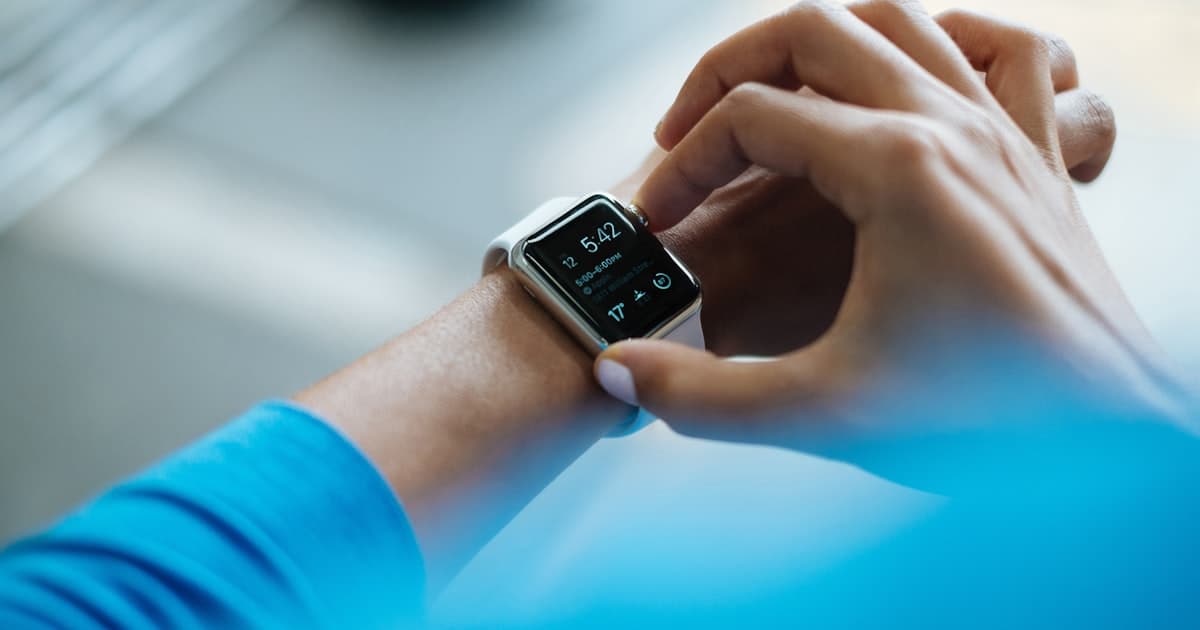
I'm going to be upfront with you: I am not a "watch guy." I know there are communities of people who spend thousands of dollars on mechanical timepieces and talk about "complications" like they're surgeons. More power to them. But for the first thirty years of my life, the only thing on my wrist was the occasional sunburn, and I was perfectly happy about it.
Then, about two years ago, I started paying attention to my health in a way that required actual data. Not the "I feel pretty good today" kind of data. The "my resting heart rate is doing something weird and I'd like to know if I'm dying" kind of data. I'd been working on fixing my sleep and realized that having numbers -- real, tracked-over-time numbers -- made the difference between guessing and knowing what was actually happening to my body at 3am.
Problem was, I needed to wear something to get those numbers. And I hated wearing things.
What followed was an eighteen-month odyssey through smartwatches, fitness bands, a ring that made me feel like I was proposing to myself, and a subscription-based strap that charged me monthly for the privilege of telling me I slept badly. I spent a genuinely irresponsible amount of money. Some of it was worth it. A lot of it wasn't.
Here's everything I learned, organized by the devices I actually lived with, for guys who feel the same irrational resistance to putting technology on their bodies.
The Apple Watch Ultra 2 -- The Kitchen Sink on Your Wrist ($799)
Let's start with the obvious one. The Apple Watch Ultra 2 is what happens when Apple looks at a regular smartwatch and says, "What if we made it bigger, brighter, louder, and priced it like a decent mountain bike?"
I wore the Ultra 2 for about three months. Here's what's genuinely great about it: if you're already neck-deep in the Apple ecosystem -- iPhone, AirPods, MacBook, the whole thing -- the integration is seamless in a way that nothing else touches. Texts on your wrist. Calls on your wrist. Apple Pay on your wrist. Turn-by-turn directions tapping your wrist so you don't have to look at your phone while walking. The health tracking is solid across the board -- heart rate, blood oxygen, ECG, sleep stages, workout detection. It does everything. That's the blessing and the curse.
The curse is that this thing is 49mm of titanium sitting on your wrist (per Apple's official Ultra 2 tech spec page), and it feels like it. I have average-sized wrists, and the Ultra 2 made me look like I was wearing a hockey puck. At night, trying to sleep with it on was an exercise in frustration -- I'm a side sleeper, and every time I bent my wrist under my pillow, the crown dug into the back of my hand. I started taking it off at night, which defeated the entire purpose of buying it for sleep tracking.
Battery life is the one area where the Ultra 2 actually impressed me. Two solid days with regular use, sometimes pushing into a third if I wasn't doing GPS workouts. That's dramatically better than the regular Apple Watch Series 10, which dies by bedtime if you look at it too aggressively.
But here's the honest truth: about 80% of what the Ultra 2 does, I didn't need. I don't scuba dive. I don't navigate backcountry trails with GPS waypoints. I don't need a siren function. I needed heart rate, sleep tracking, and workout data, and I was paying $799 for a device that also wanted to be my phone, my wallet, my compass, and my emergency beacon. The regular Apple Watch Series 10 ($399) does all the health stuff for half the price in a case that doesn't make your wrist look like it's cosplaying as a cliff face.
Who it's actually for: People who want one device that does literally everything, live in the Apple ecosystem, and don't mind charging something every two days. Also people with larger wrists who won't feel like they're wearing a manacle.
The Garmin Forerunner 265 -- The Runner's Best Friend ($450)
After the Apple Watch experience, I went the other direction and picked up a Garmin Forerunner 265. This was around the time I was training for a half marathon, and multiple people told me the Garmin was the move for serious running data.
They were right. The Forerunner 265 is what a fitness tracker looks like when it's designed by people who actually run, not people who want to sell you a tiny iPhone for your wrist. The running metrics are absurd in the best way: cadence, ground contact time, vertical oscillation, training load, VO2 max estimates, recovery time, race predictions. After about three weeks, the watch knew my fitness level well enough to predict my 5K time within about 40 seconds of my actual result. That's borderline unsettling.
Battery life is where Garmin makes Apple look silly. I got thirteen days on a single charge with the AMOLED display in regular smartwatch mode, and about 20 hours of continuous GPS tracking during runs. Thirteen days. I literally forgot it needed charging. I'd see the battery at 30% and think, "Huh, I should probably charge that at some point this week." With the Apple Watch I was plugging in every night like it was a phone from 2008.
The sleep tracking is surprisingly good too, though it presents the data in a way that requires you to actually open the Garmin Connect app and dig through menus. It's all there -- sleep stages, pulse ox, respiration, Body Battery (Garmin's recovery metric) -- but the presentation isn't as polished as Apple or Oura. You have to want the data enough to go find it.
Comfort-wise, the Forerunner 265 is considerably lighter than the Apple Watch Ultra (47g vs 61g) and the silicone band is softer. I slept with it on without major complaints, though I'll admit that any watch on my wrist at night still felt like an intrusion. I adapted after about a week, which is more than I can say for the Ultra 2.
The downside? The Garmin's smart features are bare-bones compared to Apple. You can see notifications, but replying to them is clunky. There's no real app ecosystem. The touchscreen is responsive but the interface feels like it was designed by engineers who think aesthetics are optional. It's a fitness computer that happens to tell time, not a smartwatch that happens to track fitness. If that distinction matters to you -- and for some people it really does -- the Garmin will feel like a downgrade from Apple in daily usability.
Who it's actually for: Runners, cyclists, and people who care more about training data than reading texts on their wrist. Also anyone who finds charging a device every two days personally offensive.
The Samsung Galaxy Watch Ultra ($649)
I'll be brief on this one because I only wore it for about three weeks before returning it. The Samsung Galaxy Watch Ultra is Samsung's answer to the Apple Watch Ultra, and it's a competent smartwatch if you're on Android. The health tracking through Samsung Health is solid -- heart rate, sleep, body composition (via bioelectrical impedance, which is a fancy way of saying "rough estimate"), and workout tracking.
It runs Wear OS, which means you get Google Maps, Google Wallet, and a decent app selection. Battery life was about two and a half days, which splits the difference between Apple and Garmin. The build is titanium and it feels premium.
Why I returned it: I'm an iPhone user, and the Galaxy Watch Ultra doesn't work with iPhone at all. Full stop. If you're on Android, this is probably the best overall smartwatch you can buy -- it does the "everything device" thing as well as Apple does, just in Google's ecosystem instead. But the compatibility wall is real, and Samsung makes zero effort to play nice with iOS.
Who it's actually for: Android users who want the same all-in-one experience Apple Watch owners have. If you carry a Galaxy phone, this is the obvious pick and I'd put it ahead of anything else on this list for you.
The Oura Ring Gen 3 -- For People Who Really Hate Watches ($299 + $6/month)
This is the one that surprised me.
I bought the Oura Ring fully expecting to hate it. A ring? On my finger? That tracks my health? It sounded like something a Silicon Valley executive would wear while explaining his "sleep optimization protocol" over a $19 matcha latte. I am not that person.
That said, the Oura Ring is, without question, the most comfortable wearable I've ever used. After about two days, I forgot it was there. Completely. It weighs 4 to 6 grams depending on your size -- my Apple Watch Ultra weighed ten times that. It's titanium, it looks like a plain wedding band (I got the silver one), and not a single person has ever noticed I was wearing a health tracker unless I told them.
Sleep tracking is where the Oura Ring genuinely excels. It sits directly on your finger, which means it gets a cleaner pulse signal than a wrist-based device. My sleep data from the Oura was consistently more detailed and, based on how I actually felt in the morning, more accurate than either the Apple Watch or the Garmin. It breaks down your sleep into light, deep, and REM stages, gives you a sleep score, tracks your nighttime heart rate and HRV, and delivers a "readiness score" each morning that tells you how recovered you are.
That readiness score became my morning ritual. Wake up, check the ring, and know whether today is a day to push hard or take it easy. It sounds hokey until you start noticing the pattern: every time I ignored a low readiness score and tried to do an intense workout anyway, I felt terrible and performed worse. The ring was right, every time.
The battery lasts about six to seven days. Charging takes roughly an hour on the little dock. I charge it during my morning shower and coffee routine and it's always full.
The downsides. The Oura Ring cannot do real-time heart rate during workouts. It takes your heart rate continuously throughout the day, but it doesn't give you the live, second-by-second feedback you'd want during a run or a HIIT session. For that, you still need a watch or a chest strap. It also doesn't have GPS, so there's no route tracking for runs or rides.
(For a related angle, see The Dumbphone Comeback Isn't What You Think.)
And then there's the subscription. The ring costs $299, which is reasonable. But to actually access your data -- the scores, the trends, the insights, literally the reason you bought it -- you need to pay $6 a month for an Oura membership. Without the subscription, you get... basically nothing useful. Your $299 ring becomes a $299 ring. This is irritating on principle even if $6/month isn't exactly going to break the bank. You already bought the hardware. Making you pay monthly to use it feels like a restaurant charging you for the plate.
Who it's actually for: People who hate watches, value sleep and recovery data above all else, don't need real-time workout tracking, and can stomach a subscription on top of the purchase price. If you told me I could only keep one device from this entire experiment, it would be the Oura Ring, and I'm as surprised about that as anyone.
The Whoop 4.0 -- The Subscription Model Debate ($239/year or $30/month, device included)
Whoop is the one that starts arguments. Not because the product is bad -- it's actually quite good at what it does -- but because the entire business model is a subscription. There is no device to buy. You pay $30 a month (or $239 for a year, or $199 for 18 months), and they send you the Whoop 4.0 strap. Stop paying, the strap becomes a bracelet. An ugly bracelet.
I wore the Whoop for two months. The strap itself is surprisingly small and thin -- it sits on your wrist like one of those fabric festival bracelets. You can also buy body accessories to wear it on your bicep, your boxers (seriously), or a sports bra, which means you can hide it entirely. Comfort-wise, it's the second most forgettable wearable I tried, after the Oura Ring.
What Whoop does well is recovery and strain tracking. It monitors your heart rate variability, resting heart rate, and sleep quality, then gives you a daily recovery score (green, yellow, red) and a strain score that accumulates throughout the day based on your activity. The idea is simple: green means push hard, yellow means moderate, red means rest. Over two months, I found this guidance to be genuinely useful, especially during weeks where I was training hard and needed to know when to back off.
The sleep tracking is comparable to Oura -- detailed, accurate, and it tracks sleep stages well. The sleep coach feature, which tells you when to go to bed based on your desired recovery level, was actually helpful on nights when I was tempted to stay up watching something.
What Whoop doesn't do: tell time. Show notifications. Track GPS. Count steps. Play music. It does one thing -- biometric monitoring -- and it does that one thing very well. But that also means you're paying $30/month for a device that doesn't even have a screen. You check everything on your phone.
The subscription debate is legitimate. Over two years, you'll pay $480 to $720 depending on your plan. For that money, you could buy an Oura Ring and pay its subscription for years, or buy a Garmin and own it outright forever. Whoop's argument is that the subscription includes free hardware upgrades when new models come out, plus all the analytics in the app. It's a fair argument. It's just not one that sat well with me personally. I don't like renting things.
Who it's actually for: Athletes and serious fitness people who want detailed recovery data, don't care about smart features, and are comfortable with a recurring cost. If you're a CrossFit person, a triathlete, or someone who trains hard five-plus days a week, Whoop might be the best option here for pure training optimization. If you're a casual gym-goer who wants to track steps and check texts, you'll feel robbed.
The Budget Corner: Fitbit Charge 6 ($160)
I almost didn't include this because it feels like bringing a Honda Civic to a car show. But honestly? For a lot of guys reading this, the Fitbit Charge 6 might be the right answer, and I'd be doing you a disservice by pretending otherwise.
The Charge 6 is a thin band that does steps, heart rate, sleep tracking, SpO2, GPS (finally -- older Fitbits needed your phone for GPS), and basic workout tracking. It works with both iPhone and Android. Battery lasts about seven days. It has Google Wallet built in for contactless payments. And it costs $160.
The sleep tracking is decent. Not as granular as Oura or Whoop, but it gives you a sleep score and stage breakdown that's accurate enough to be useful. The step counting and daily activity tracking is exactly what you'd expect -- reliable and straightforward. The heart rate sensor is good enough for general fitness tracking, though I wouldn't trust it for precise training zones the way I'd trust a Garmin or a chest strap.
Comfort is excellent. The Charge 6 is narrow and light enough that it genuinely disappears on your wrist. I wore it for about ten days and barely noticed it, which is the highest compliment I can pay a wearable.
The Google integration means you get Google Maps turn-by-turn on the tiny screen and YouTube Music controls, which are nice-to-haves but not essential. The app -- now migrated fully to the Google ecosystem since Google bought Fitbit -- is clean and easy to read, though it's lost some of the charm of the original Fitbit app.
Downsides: it doesn't look like a watch, so if aesthetics matter to you, this screams "fitness tracker" in a way that the Garmin or Apple Watch doesn't. The screen is small and not great in direct sunlight. And the premium features (stress management score, deeper sleep analytics) require Fitbit Premium at $10/month or $80/year, which is the same subscription tax that plagues Oura and Whoop.
Who it's actually for: The "I just want to count my steps, track my sleep, and not think about it" crowd. There's no shame in this. Not everyone needs VO2 max estimates and training load calculations. If you want data without obsession, the Charge 6 delivers at a price that doesn't require a conversation with your spouse.
Is Any of This Data Actually Useful?
Okay, here's the part where I have to be honest with you, because nobody in the wearable space seems willing to say this out loud: most of the data these devices generate, you will not use. You will look at your VO2 max estimate once, think "huh," and never look at it again. You will check your blood oxygen level and have no idea what to do with the number. You will see your heart rate variability trending downward and feel a vague sense of concern that leads to zero behavioral change.
The data that actually mattered to me, across all of these devices, boiled down to three things:
Sleep quality. This was the single most useful metric from any wearable I tried. Being able to see, over weeks and months, how my sleep was trending -- and more importantly, what was affecting it -- gave me the information I needed to actually fix things. Alcohol showing up in my sleep scores like a smoking gun. Late caffeine tanking my deep sleep. Temperature changes making a measurable difference. That data was worth the price of admission alone.
Resting heart rate trends. Not your heart rate right now. The trend over time. When my resting heart rate crept up over a couple weeks, it was an early warning that I was overtraining, getting sick, or not recovering enough. When it trended down, I knew my fitness was improving. Simple, actionable, and hard to get without a wearable.
Recovery readiness. Whether it's Oura's readiness score, Whoop's recovery score, or Garmin's Body Battery, the idea is the same: "Should I push hard today or take it easy?" I was skeptical of this until I started honoring it. On green/high readiness days, my workouts were better. On red/low readiness days, I'd scale back and feel better the next day. It's not magic -- it's just your body telling you what it needs through data you can't feel directly. The underlying signal is heart rate variability, and there's a real evidence base behind using it to gauge readiness — see this Frontiers in Physiology review of HRV-guided training, which finds HRV-guided programs consistently outperform fixed-schedule programs in endurance trials.
Everything else -- step counts, floors climbed, calorie estimates, stress scores, SpO2 readings -- ranges from "mildly interesting" to "completely useless noise." If you're buying a wearable for step counting alone, save your money and use your phone. It's in your pocket all day anyway.
So What Should You Actually Buy?
I'll make this simple.
If you want one device that does everything and you have an iPhone: Apple Watch Series 10 ($399). Not the Ultra unless you have a specific reason. The Series 10 does the same health tracking in a smaller, lighter package. Charge it while you shower in the morning and it'll track your sleep just fine.
If you're a serious runner or cyclist: Garmin Forerunner 265 ($450). Nothing else touches it for training data and battery life. You'll charge it twice a month and the running metrics will make you a better athlete.
If you hate wearing things on your wrist (like me): Oura Ring Gen 3 ($299 + $6/month). Accept the subscription, enjoy the sleep data, and forget you're wearing it. Pair it with a chest strap on workout days if you need real-time heart rate.
If you're on Android: Samsung Galaxy Watch Ultra ($649) for the full package, or Fitbit Charge 6 ($160) if you want to keep it simple and cheap.
If you want pure recovery and training optimization: Whoop 4.0 ($30/month), but only if you're training hard enough to actually use the data and you're at peace with the subscription model.
If you just want step counting and basic sleep data: Fitbit Charge 6 ($160). Done. Stop overthinking it.
As for me, I landed on the Oura Ring for daily wear and the Garmin Forerunner 265 for training days. The ring handles sleep and recovery, the watch handles running data. Total cost of about $750 plus the Oura subscription, and I've got all the data I actually use without any of the data I don't. My wrist is free most days, which makes the anti-watch part of my brain very happy.
The wearable that works is the one you'll actually wear. For a lot of guys, that means the smallest, lightest, most forgettable option -- not the one with the most features. I spent eighteen months and way too much money learning that. Hopefully you can skip the expensive part and just take my word for it.
Sources

About the writer
Marcus Hale
Senior writer — Tech & Money
Read more from Marcus — full archive, full bio, and contact on their writer page.
Share this story
More from Marcus
Spot a problem with this piece? Email info@luba.media.