Best Knives for the Kitchen and the Outdoors
A good knife is the most underrated tool a man can own -- whether you're breaking down a chicken or breaking down firewood. Here's how to pick the right blades without falling into the collector rabbit hole.
· 10 MIN READ
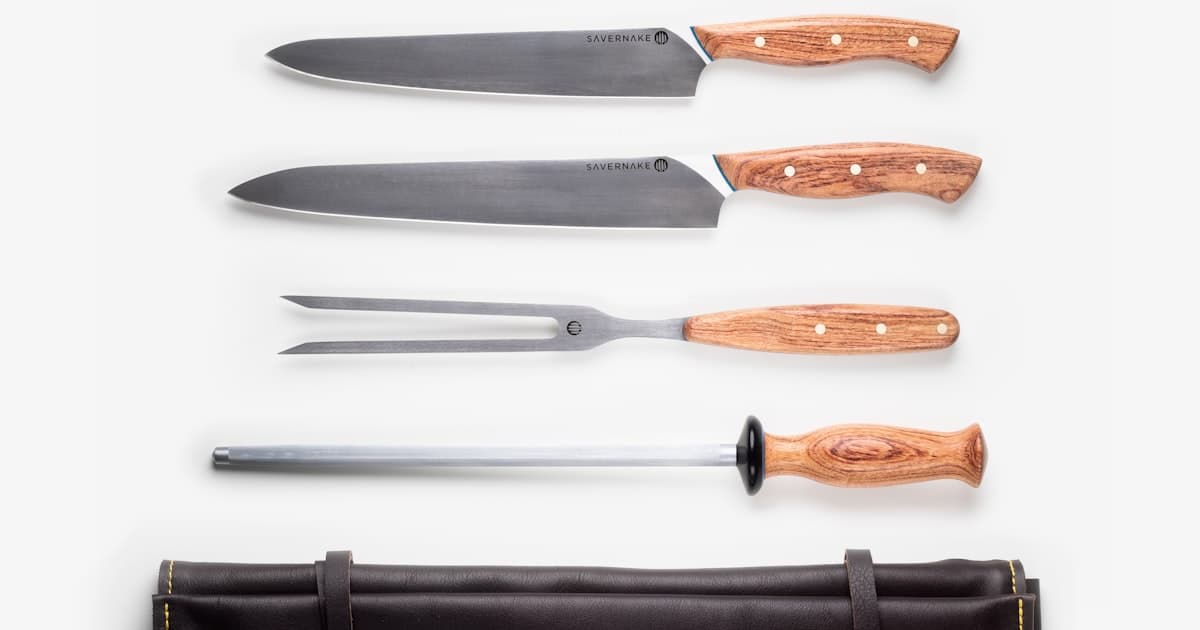
My grandfather had one kitchen knife. One. A carbon steel chef's knife that he'd bought sometime in the Carter administration, and he used it for everything. Dicing onions, breaking down a whole chicken, slicing bread, opening packages, and on at least one occasion that I witnessed, prying open a paint can. That knife was the single most versatile tool in his house. When he died, my dad got the knife. It's still sharp. It's still in use. It's outlasted two marriages, three kitchen renovations, and the entire rise and fall of the food processor.
I'm telling you this because the knife world -- both kitchen and outdoor -- has a tendency to overcomplicate things. Walk into a kitchen store and you'll see knife sets with seventeen pieces, half of which you'll never touch. Browse an outdoor gear shop and you'll find $400 bushcraft knives made from Swedish steel that was supposedly hand-forged by a guy named Lars during a thunderstorm. The marketing is relentless, the options are overwhelming, and it's very easy to either spend way too much money or buy the wrong thing entirely.
Here's what I've learned after years of cooking, camping, and accidentally cutting myself: you need fewer knives than you think, and the ones you need should be better than you'd expect.
Kitchen Knives: The Only Three You Need
I'm going to save you from the 14-piece knife block. You need three kitchen knives. Just three. Every professional chef I've ever talked to agrees on this, and they use these three knives for 95% of everything they do.
The Chef's Knife (The One That Matters Most)
A chef's knife is an 8-inch (sometimes 10-inch) blade that handles 80% of kitchen tasks. Chopping vegetables, mincing garlic, slicing meat, dicing onions, cutting herbs -- all of it. If you could only own one kitchen knife for the rest of your life, this is the one.
The Victorinox Fibrox Pro 8-Inch Chef's Knife ($35) is the budget king and it's the knife I recommend to every person who asks. America's Test Kitchen has rated it the best budget chef's knife for over a decade. It comes sharp, it holds an edge reasonably well, it's comfortable in the hand, and it costs less than a decent steak dinner. This is the knife you buy when you're starting out, and honestly, it's good enough that some people never upgrade.
The Wusthof Pro 8-Inch Chef's Knife ($50-60) is a step up in handle ergonomics and edge retention. German steel, well-balanced, and feels like a real knife in your hand rather than a good-enough knife. If you're going to cook regularly and want something that feels premium without being extravagant, this is the sweet spot.
The Tojiro DP 8.2-Inch Gyutou ($55-65) is where you step into Japanese knife territory, and Japanese knives are a different animal. Thinner blade, harder steel, sharper edge. It glides through vegetables like they've personally offended it. The trade-off is that Japanese knives are more brittle -- you can't use them to hack through bones or frozen food, and they chip more easily if you're careless. But for pure cutting performance per dollar, nothing at this price point touches it.
Underlying figures: APA — relationships topic page.
The Miyabi Koh 8-Inch Chef's Knife ($100-120) is where things get serious. Japanese steel, beautiful Damascus pattern on the blade, razor sharp out of the box, and balanced in a way that makes chopping feel effortless. This is the knife that made me understand why people get obsessed with kitchen knives. It's not necessary. But it is wonderful.
The Paring Knife (The Detail Work)
A paring knife is a small (3-4 inch) knife for tasks that are too delicate or small for a chef's knife. Peeling garlic, deveining shrimp, slicing strawberries, coring tomatoes, trimming fat. It's the precision instrument to your chef's knife's all-purpose tool.
The Victorinox 3.25-Inch Paring Knife ($9) is so cheap and so good that there's almost no reason to look elsewhere. Seriously. Nine dollars. It comes sharper than some knives that cost ten times as much, and when it dulls, you can sharpen it or just buy another one and still be under $20. I've owned the same one for four years and it's still going strong.
The Serrated Bread Knife (The One You Forget You Need)
A bread knife is a long (10-12 inch) serrated blade that handles anything with a crust or a tough exterior -- bread (obviously), tomatoes, cakes, roasted meats. The serration grips the surface instead of crushing it, which is why a sharp chef's knife still squishes a ripe tomato but a bread knife slices it cleanly.
The Mercer Culinary Millennia 10-Inch Bread Knife ($15) is the workhorse pick. Professional kitchen quality, comfortable handle, and at fifteen bucks it's practically disposable -- though you won't need to dispose of it because serrated knives stay sharp for years since the teeth are recessed and don't contact the cutting board.
Taking Care of Your Kitchen Knives
The number one thing that ruins kitchen knives isn't use -- it's storage and washing.
Never put good knives in the dishwasher. The high heat, harsh detergent, and rattling against other utensils dulls the edge and can damage the handle. Hand wash, dry immediately, done.
(See also: Meal Prep for Guys Who Think They Can't Cook.)
Get a magnetic knife strip or a knife guard. Throwing knives loose in a drawer is how you dull them (and cut yourself). A magnetic strip on the wall costs $15 and keeps your knives accessible and protected. A simple blade guard costs $3 and lets you store them in a drawer without damage.
Learn to sharpen -- or pay someone who can. A dull knife is more dangerous than a sharp one because you have to apply more force, which means less control, which means the knife is more likely to slip. A King 1000/6000 grit whetstone ($25) and a YouTube tutorial will teach you to sharpen in an afternoon. If that sounds like too much work, most kitchen stores and farmers' markets have knife sharpening services for $5-10 per knife.
A honing rod is not a sharpener. That steel rod that came with your knife block? It doesn't sharpen. It realigns the microscopic edge of the blade, which helps maintain sharpness between actual sharpenings. Use it every few uses -- a few strokes per side at a 15-20 degree angle. It takes ten seconds and genuinely extends the time between sharpenings.
Outdoor Knives: A Different Set of Rules
Kitchen knives are precision instruments. Outdoor knives are tools. The qualities that make a great kitchen knife -- thin blade, hard steel, razor edge -- would make a terrible outdoor knife because thin hard blades snap when you try to baton wood, and razor edges roll when they hit something harder than a carrot.
Outdoor knives need to be tough, versatile, and able to take abuse without failing. Here's the breakdown by use case.
The Everyday Carry (EDC) Folding Knife
If you carry one knife in your pocket daily -- and if you don't, you should -- a folding knife between 3 and 3.5 inches is the sweet spot. Legal in most places, useful for everything from opening packages to cutting cord to slicing an apple, and small enough to forget it's there until you need it.
The Benchmade Bugout ($140-160) is light (1.85 ounces), thin, and disappears in your pocket. The Axis lock is smooth and satisfying. The S30V steel holds an edge well. It's the EDC knife I carry daily and the one I've recommended to probably twenty people.
For the underlying data, see The Gottman Institute.
The Civivi Elementum ($50-60) is the budget EDC that punches way above its weight. D2 steel, smooth action, multiple handle material options, and a fit and finish that makes people assume it costs twice what it does. If you're not sure you want to spend $150 on a pocket knife, start here.
The Spyderco Delica 4 ($80-90) has been a top EDC recommendation for decades, and for good reason. The VG-10 steel is excellent, the ergonomics are perfect for real use, and the Spyderco thumb hole makes one-handed opening ridiculously easy.
The Fixed Blade Camp Knife
For camping, bushcraft, and general outdoor use, a fixed blade between 4 and 5 inches is the utility player. No moving parts to fail, stronger than a folder, and capable of handling tasks from food prep to fire-starting to shelter building.
The Morakniv Companion ($15) is the most recommended budget outdoor knife on the planet, and the recommendation is earned. Stainless steel blade, comfortable rubber handle, comes shaving-sharp, and costs less than lunch. I've used mine to carve feather sticks, prepare fish, cut rope, and whittle a marshmallow stick that was, I'll be honest, way more elaborate than the marshmallow deserved. For fifteen dollars, it's insane value.
The ESEE 4 ($110-130) is the step up for serious outdoor use. 1095 carbon steel that's tough enough to baton through hardwood, a handle designed for extended use in all conditions, and a warranty that says if you break it doing anything -- literally anything -- they'll replace it. People have sent back ESEEs that they clearly abused, and ESEE replaced them. That's confidence in your product.
The Benchmade Bushcrafter 162 ($180-200) is the premium option that splits the difference between a tool and a showpiece. CPM-S30V steel, a leather sheath that's actually nice, and a 4.43-inch blade that handles everything from fine carving to splitting kindling.
The Knife You Don't Need (But Might Want Anyway)
I own a Japanese nakiri -- a vegetable knife with a flat, rectangular blade that looks like a mini cleaver. I did not need this knife. My chef's knife handles vegetables just fine. But the nakiri makes chopping vegetables so satisfying, so effortlessly precise, that I use it almost daily. The flat blade means the entire edge contacts the cutting board at once, so every chop is clean. Dicing an onion with a nakiri feels like an achievement. It shouldn't. It's just an onion. But here we are.
The point is: once you have the essentials, the rabbit hole is there if you want it. A fillet knife if you fish. A cleaver if you break down whole chickens. A santoku if you like the Japanese style but want something shorter than a gyutou. There's always another knife.
But start with the three kitchen essentials and one good outdoor blade. That covers 99% of what you'll ever need to cut, and it'll cost you less than $100 if you go with the budget picks. Pair your kitchen knives with a solid grilling setup and you've got the tools for a genuinely impressive cooking game. And if knives are your entry point into the gear world, wait until you see what's in my everyday carry kit -- the knife is just the beginning.
Further reading and primary sources
Background and primary-source references for the claims and recommendations above. Linked references are intended for readers who want to verify a claim, dig deeper into a topic, or check the underlying data themselves.
- APA — relationships topic page — American Psychological Association consumer research and clinical guidance.
- The Gottman Institute — longitudinal couples research published by John Gottman's lab.
- Harvard Study of Adult Development — longest-running longitudinal study of adult well-being (80+ years).

About the writer
Jordan Shaw
Senior writer — Culture, Style & Relationships
Read more from Jordan — full archive, full bio, and contact on their writer page.
Share this story
More from Jordan
Spot a problem with this piece? Email info@luba.media.