Apartment Upgrades That Impress Without Trying Too Hard
Your apartment doesn't need to look like a West Elm catalog to stop embarrassing you. Here are the practical, budget-friendly upgrades that make a guy's place look like an actual adult lives there.
· 12 MIN READ
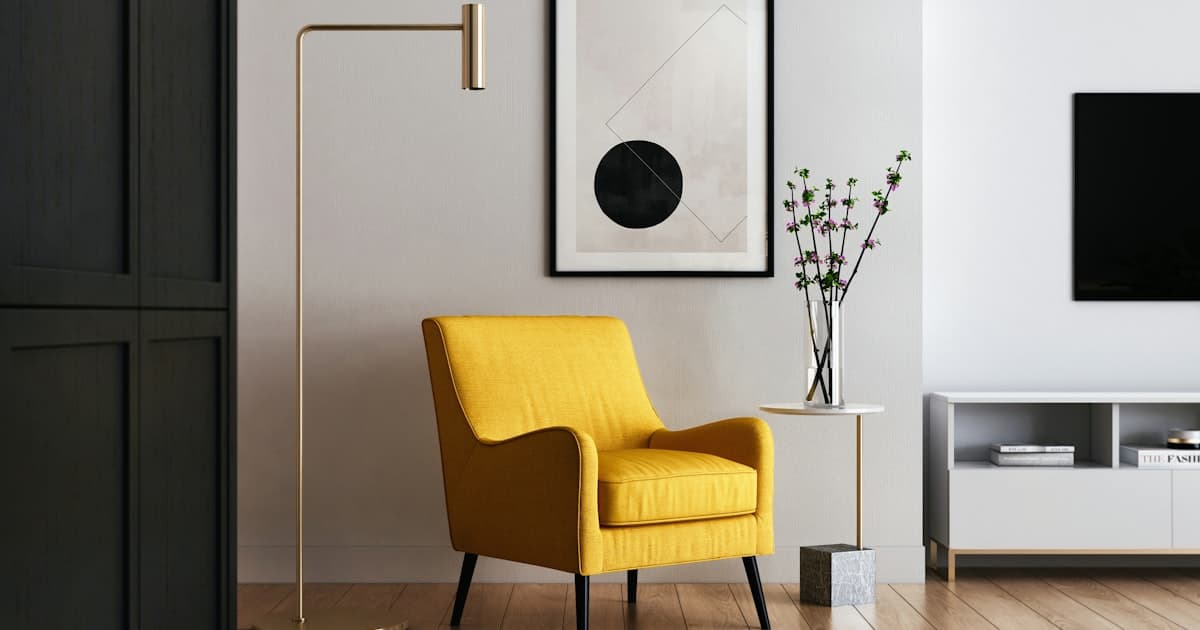
Let me paint you a picture. It's 2022. I'm 27 years old. I make decent money. I drive a reasonable car. I own real shoes. And my apartment looks like a dorm room that got a one-star Yelp review.
My couch was a futon I'd had since junior year of college. My "dining table" was a folding card table I bought for a poker night in 2019 and simply never put away. My bedroom had one lamp — a floor lamp with no shade, just a bare bulb blasting interrogation-room lighting into my face every night. The walls were white. Not "minimalist white." Not "Scandinavian chic." Just white. Default white. "I've never considered the walls as something that could be different" white.
My buddy Marcus came over one night, looked around, and said, "Dude, do you live here or are you between places?" I'd lived there for three years.
That was my wake-up call. Over the next several months, I spent maybe $600 total — less than one month's rent — and turned my place from "crime scene waiting to happen" into "oh, this is actually nice." No interior designer. No Pinterest boards. No trips to Restoration Hardware where everything costs $900 and is named after a French village. Just basic stuff that makes a massive difference.
Here's everything I did, roughly in order of impact.
Lighting Is 90% of the Battle
I cannot overstate this. Lighting is the single biggest difference between "this apartment feels depressing" and "this apartment feels like a place where a functioning human being lives." And it costs almost nothing to fix.
First thing I did: I replaced every overhead bulb in my apartment with warm white LEDs (2700K color temperature — this number matters, write it down). The US Department of Energy's lighting guide explains the temperature scale clearly: 2700K is "warm white" (incandescent feel), 3000K starts feeling neutral, and anything 4000K+ skews into the "bluish-white fluorescent disaster" range that makes your skin look like you haven't been outside in eleven months. Warm white makes everything look better. Your furniture looks better. Your food looks better. You look better. A six-pack of warm white LED bulbs is like $12 at any hardware store, and the DOE notes ENERGY STAR-rated LEDs use about 75% less energy and last 25 times longer than incandescents.
Second thing: I bought two table lamps from Target. Nothing fancy. Ceramic base, white shade, $25 each. Put one on my nightstand, one on a side table in the living room. Then — and this is the key move — I stopped using the overhead lights entirely. Overhead lighting is what hospitals and DMVs use. Lamps are what adults use. The warm glow of two or three lamps scattered around a room makes it feel like an actual home instead of a holding cell.
Total cost for the lighting overhaul: about $70. Impact: enormous. My friend Sarah walked in after the change and said, "Wait, did you paint?" I hadn't touched the walls. It was just the lighting.
If you want to go a step further, a couple of smart bulbs or smart plugs let you control everything from your phone or set them on timers. I have my living room lamps set to turn on automatically at sunset. It's a small thing, but coming home to a lit apartment instead of a dark cave genuinely changes how you feel about the space.
Get a Real Couch (Or at Least Retire the Futon)
I know. A couch is expensive. That said, it doesn't have to be. I got mine from IKEA. The FRIHETEN sleeper sofa. Right around $600 at the time. It's not going to be featured in Architectural Digest. It's also not going to make your date wonder if you're experiencing financial difficulties. It's a normal, decent-looking couch that seats three adults, has a chaise section, and folds out into a bed for when your college buddy "just needs to crash for one night" and stays until Wednesday.
If $600 is still steep, Facebook Marketplace is a goldmine for couches. People who are moving sell legitimately nice furniture for a fraction of what they paid. I've seen Article couches go for $200 because someone needed them gone by Saturday. Just inspect it in person first. Smell it. I'm serious. Smell the couch. Your nose will tell you things a photo never will.
The futon went to the curb. I put it out with a "FREE" sign and it was gone in forty minutes. Somewhere in this city, a college sophomore is sleeping on my old futon right now, and I wish him well.
Throw Pillows Are Not Just for Women
I resisted this one for months. Throw pillows felt like something my mom would buy. Something that signaled I'd surrendered some essential part of my masculinity to HomeGoods.
Then I bought two dark charcoal throw pillows for my couch — $15 each at Target — and the entire living room suddenly looked like I'd spent thousands on it. I don't know how to explain the magic of throw pillows to someone who's never experienced it. They just make a couch look intentional. Like you chose it on purpose. Like the room has been considered by a person who makes decisions about his space instead of just existing in it passively.
Here's the rule: two to four throw pillows max. Pick solid colors or very subtle patterns. Dark gray, navy, olive, rust — anything that looks like a color a mountain would be. Stay away from anything with words on it, anything your aunt would describe as "fun," and absolutely anything with a sequin. You want the pillows to say "I have taste" not "I went to a craft fair."
A Rug Ties the Whole Room Together
Yes, I'm about to quote The Big Lebowski, and no, I won't apologize for it. The Dude was right. A rug really does tie the room together. It's also one of those purchases that feels pointless until you have one, and then you can't believe you ever lived without it.
I got a 5x7 area rug from Rugs USA during one of their perpetual sales. About $80. It's a low-pile, dark geometric pattern — looks expensive, hides stains, doesn't collect dog hair like a lint trap. I put it under my coffee table in the living room and the room went from "vacant apartment being shown to potential tenants" to "somebody lives here and that somebody might even have a subscription to a magazine."
The trick with rugs: go bigger than you think you need. The most common rug mistake guys make is buying one that's too small, so it sits in the middle of the floor like a bath mat for giants. Your rug should be big enough that the front legs of your couch sit on it. If the rug is floating in the middle of the room touching nothing, it's too small or in the wrong spot.
The Kitchen Counter Situation
Your kitchen counter is not a storage unit. It's not a mail sorting facility. It's not a graveyard for empty Amazon boxes you keep meaning to break down. If someone walks into your kitchen and can't see the counter surface, you've got a problem.
(Companion read: How I Went From Couch Potato to Running a Half Marathon in 6 Months.)
Here's what should be on your kitchen counter: a coffee maker, a knife block or magnetic strip, a paper towel holder, and maybe a small plant or a fruit bowl. That's it. Everything else goes in a cabinet, a drawer, or the trash. There's actual research backing the "clear surfaces matter" instinct: a 2009 Personality and Social Psychology Bulletin study by Saxbe and Repetti found people who described their homes as cluttered had elevated cortisol patterns and more depressed mood across the day, while people who described them as restorative did not.
Speaking of the coffee maker — if you're still using a Mr. Coffee drip machine from 2016, I wrote a whole piece about upgrading your coffee setup without spending a fortune. A good coffee setup on the counter actually makes your kitchen look sharper. It's one of the few functional items that doubles as decor.
I also bought a magnetic knife strip from Amazon for $13 and mounted it on the wall next to the stove. Took five minutes to install. Immediately my kitchen went from "fast food staging area" to "this man probably knows what a shallot is." I do not know what a shallot is. But the knife strip suggests otherwise, and that's what matters.
Hang Something on the Walls
Blank walls are the number one giveaway that a guy hasn't thought about his space for even thirty seconds. You don't need original artwork from a gallery. You don't need a gallery wall with seventeen frames arranged in a perfectly imperfect cluster. You need like two or three things on your walls, and they need to not be a Bob Marley poster held up with thumbtacks.
What I did: I went to a local thrift store and bought three framed prints for about $8 each. One was a black and white photograph of a city skyline. One was an abstract thing with blue and gray tones. One was a vintage travel poster. None of them match perfectly, but they all work together because they're in similar frames and similar color families.
If thrift stores aren't your thing, Society6 and Etsy sell affordable prints that don't look mass-produced. Get them in 16x20 or larger — small frames on a big wall look like postage stamps. Buy cheap frames from Target or Michael's (Michael's always has a 50% off frames coupon, always, like it's a constitutional right). Hang them at eye level. Done.
Total wall art cost for me: about $40 including frames. The apartment went from "witness protection safe house" to "a person with interests lives here."
The Bathroom Deserves Five Minutes of Thought
Guys, I'm going to say something and I need you to hear me: if someone comes to your apartment and uses your bathroom, that bathroom is forming an opinion about you. A strong opinion. And if your bathroom contains a crusty bar of Irish Spring on the sink ledge, a single towel that's been "air drying" for three weeks, and a shower curtain that's developing its own ecosystem, that opinion is not favorable.
Here's the bare minimum bathroom upgrade list:
A matching towel set. Two bath towels, two hand towels, two washcloths. All the same color. Navy or charcoal gray. $25-30 for the set at Target. Hang them folded on the towel bar. Replace them every week. This is non-negotiable.
A real shower curtain. Not the plastic liner by itself. A fabric shower curtain that goes over the plastic liner. Waffle weave in white or gray. $15-20. It takes three seconds to install and the difference is absurd.
A soap dispenser. Not a bar of soap. Not the hand soap still in the plastic pump bottle from the grocery store. A ceramic or glass soap dispenser that you refill. $8. This tiny thing makes your bathroom look like it belongs in an apartment where someone pays their taxes on time.
A small trash can with a lid. $10. I shouldn't have to explain this one, but I've been to enough guys' apartments to know that I do.
Total bathroom upgrade: about $60. Time to set up: fifteen minutes. Impression it makes: incalculable.
Plants (Yes, Plants)
I know what you're thinking. "I'll kill it." Maybe. But some plants are so hard to kill that you'd practically have to be trying. A pothos, a snake plant, or a ZZ plant will survive conditions that would make a cactus file a complaint. Low light, irregular watering, complete emotional neglect — they thrive on it. They're the cockroaches of the houseplant world, except they look nice on a shelf.
I bought a pothos from Home Depot for $6 and put it on a floating shelf in my living room. That was eight months ago. I water it whenever I remember, which is roughly every ten days. It's not only alive, it's thriving. It's grown about two feet of trailing vine. It's the healthiest relationship I've ever maintained.
One or two plants in your apartment add a crazy amount of visual warmth. They're alive. They're green. They make a room feel less like a box and more like a space where a living creature has made a deliberate choice to exist. Get one. Just one. Put it somewhere it gets indirect light. Water it on Sundays. You can do this.
The Final Gut Check
Here's my test for whether your apartment is where it needs to be. Imagine someone you're trying to impress — a date, a coworker, your parents, whoever — is coming over in one hour. Is your reaction:
A) Panic. Full panic. You're shoving things in closets, flipping couch cushions, hiding the pile of laundry behind the bedroom door, and considering whether it's weird to light every candle you own at 2 PM.
B) You do a quick tidy, maybe wipe down the kitchen counter, and you're good.
If you answered A, you've got work to do. If you answered B, you're living in a space that works for you. That's the goal here. Not perfection. Not a showroom. Just a place that says, "An adult lives here, and he's got his act reasonably together."
The total damage for everything I've listed here is somewhere between $300 and $600, depending on how much couch shopping you do. That's it. No renovation. No contractor. No six-month project that takes over your weekends. Just a handful of intentional purchases that turn your apartment from "I'm still figuring things out" to "yeah, I live here on purpose."
Start with the lighting. I'm telling you. The lighting changes everything.
Sources

About the writer
Marcus Hale
Senior writer — Tech & Money
Read more from Marcus — full archive, full bio, and contact on their writer page.
Share this story
More from Marcus
Spot a problem with this piece? Email info@luba.media.