DIY Fixes Every Man Should Know Before Calling a Pro
That dripping faucet, running toilet, and squeaky door aren't mysteries -- they're 15-minute fixes you're paying someone $150 an hour to do. Here's how to handle the basics yourself.
· 12 MIN READ
Let me tell you about the time I paid a plumber $180 to replace a toilet flapper.
If you don't know what a toilet flapper is, that's exactly the problem. It's a small rubber piece inside the tank that stops water from constantly running into the bowl. It costs $5 at any hardware store. It takes zero tools to replace. You literally unhook the old one, hook on the new one, and flush. Total time: four minutes if you're slow.
I did not know this. So when my toilet started running non-stop at 2 AM, I panicked, googled "emergency plumber," and paid a man named Daryl to drive to my apartment on a Saturday morning. Daryl walked in, lifted the tank lid, pulled off the old flapper, clipped on a new one, and was done before I'd finished making him the coffee I'd offered. He charged me $180 -- $85 service call fee plus labor -- looked at me with an expression that was either pity or amusement, and left.
I stood in my bathroom holding a receipt for $180 and a deep sense of shame. Daryl had been in my home for less time than a pizza delivery, and he'd fixed a problem that I could have fixed myself with a YouTube video and a trip to Home Depot.
That was the day I decided to learn the basics. Not become a contractor -- just stop being the guy who pays $180 for a four-minute fix.
The Tools You Actually Need
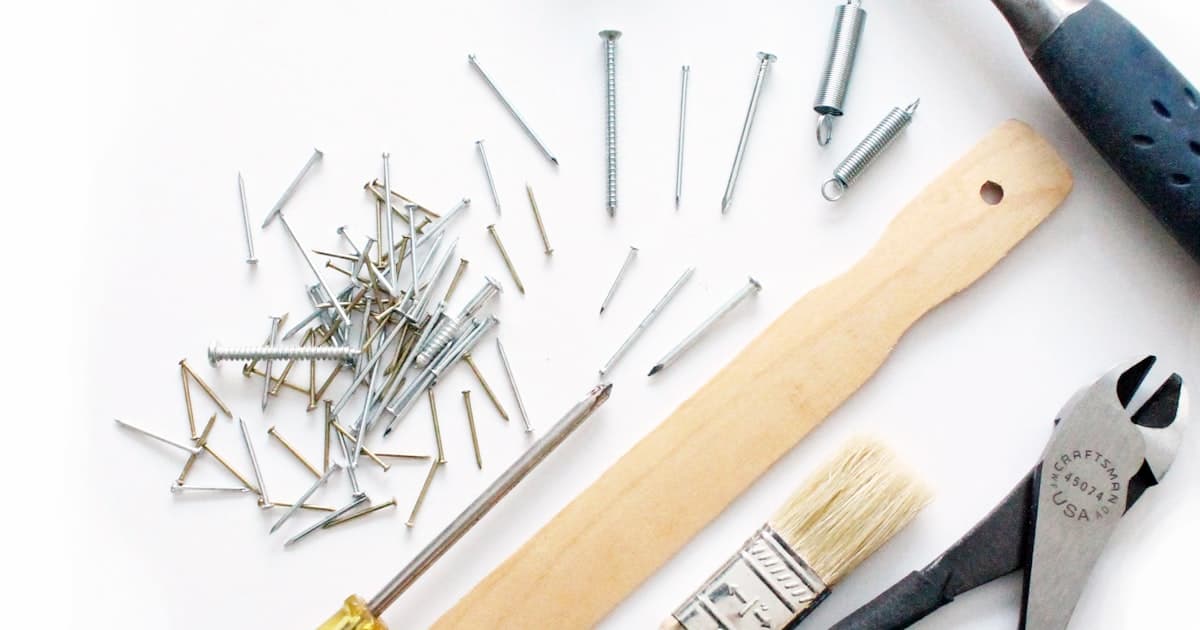
Before we get into specific fixes, let's talk tools. You don't need a full workshop. You need a basic kit that handles 90% of home repairs, and it'll cost you about $75 total.
- A cordless drill/driver. Not optional. This is the single most useful tool you'll ever own. A $50 one from any major brand will handle everything in this article and then some.
- A set of screwdrivers (Phillips and flathead in multiple sizes). Yes, even though you have a drill. Some screws are in places a drill can't reach.
- An adjustable wrench. One. The medium-sized one. It fits most bolts and nuts in a home.
- Pliers. Standard and needle-nose.
- A tape measure.
- A stud finder. Not expensive, not optional. Hanging things on drywall without hitting a stud is how you end up with a shelf on the floor and a hole in the wall.
- A level. Even a small torpedo level. Because "I'll eyeball it" is how you end up with a crooked shelf that haunts you every time you look at it.
- A utility knife.
- Duct tape, electrical tape, and plumber's tape (the thin white stuff, also called Teflon tape). Three tapes, three purposes, all essential.
You can get most of this in a pre-made kit for $60-$80. Keep it in one place. A toolbox, a drawer, a bucket -- I don't care. Just keep it together so you're not searching for a screwdriver while water is spraying out of something.
Fix 1: The Running Toilet
I'm starting here because this was my $180 lesson and I want to spare you the same humiliation.
A toilet that runs constantly or periodically "phantom flushes" almost always has one of two problems: a bad flapper or a float that needs adjusting.
The flapper fix. Turn off the water supply valve (that little knob behind the toilet, near the floor). Flush to empty the tank. Lift the lid and look at the rubber piece at the bottom that covers the hole. That's the flapper. If it's cracked, warped, or has mineral buildup, it's not sealing properly. Unhook it from the overflow tube, take it to the hardware store so you can match the size, buy a new one for $5-$8, and hook it on. Turn the water back on. Done. Worth knowing: the EPA WaterSense fact sheet on toilets calls a constantly-running toilet "the most common source of leaks" in a home and pegs the waste at up to 200 gallons per day for a serious leak. That's a real water bill.
The float adjustment. If the water level in the tank is too high, water runs over the overflow tube and into the bowl nonstop. The float (either a ball on an arm or a cup that slides up and down) controls the water level. Adjust it so the water stops about an inch below the top of the overflow tube. On a ball float, bend the arm slightly downward. On a cup float, pinch the clip and slide it down. Flush and check. If the running stops, you just saved yourself a plumber call.
Fix 2: The Dripping Faucet
A faucet that drips isn't just annoying -- it's wasting water and money. The EPA's WaterSense program estimates household leaks waste nearly 1 trillion gallons of water nationally per year, and a single faucet leaking at one drip per second wastes more than 3,000 gallons annually. It's also almost always a simple fix.
Most modern faucets use a cartridge or ceramic disc mechanism. The drip usually means a worn-out cartridge, a damaged O-ring, or mineral buildup.
Turn off the water supply under the sink. Open the faucet to release any remaining pressure. Then look for a small cap or set screw on the handle -- this is how the handle comes off. Remove it (usually an Allen wrench or small Phillips screwdriver). Under the handle, you'll find the cartridge. Pull it out. Take it to the hardware store. Buy the same one. Put the new one in. Reassemble. Turn on the water.
Total time: 20-30 minutes your first time, 10 minutes once you've done it before. Cost: $8-$20 for a cartridge. Versus the plumber's $150+ to do the same thing.
If your faucet has two handles (hot and cold), the drip is coming from one side. Figure out which one by turning each off individually at the supply valve. Fix that one. Leave the other alone.
Fix 3: The Squeaky Door
This is the easiest fix on the list and somehow people live with squeaky doors for years. Years! Your door isn't haunted. It needs lubrication.
Take the hinge pin out by tapping it upward from underneath with a nail and hammer. Once it's out, coat it with WD-40, white lithium grease, or even petroleum jelly. Put it back in. Squeak gone. Time: two minutes. Cost: whatever WD-40 costs, and you should already own WD-40.
If the squeak is really bad or the pin is corroded, steel wool the pin clean before lubricating. If the hinge itself is loose, tighten the screws. If the screws won't tighten because the holes are stripped (the screw just spins), remove the screw, jam a wooden toothpick or two into the hole with a dab of wood glue, let it dry for an hour, and re-drive the screw. The toothpick gives the screw fresh wood to grip. This is the most satisfying hack in home repair.
Fix 4: Patching Drywall Holes
You moved a picture. There's a hole. You bumped the wall with furniture. There's a dent. Your buddy got too animated during a football game. There's a fist-sized crater. All fixable.
Small holes (nail/screw size). Put a dab of spackle on your finger, press it into the hole, smooth it flat, let it dry, and sand lightly. Paint over it. Done. The spackle costs $5 and one container will fix approximately 200 holes.
(For a related angle, see Best Wearables for Men Who Hate Wearing Things.)
Medium holes (up to about 4 inches). Buy a drywall repair patch kit ($8-$12). It's a self-adhesive mesh patch that goes over the hole. Spread joint compound over it in thin layers, let each layer dry, sand smooth, and paint. Two to three coats, about 30 minutes of actual work spread over a day of drying time.
Large holes (bigger than 4 inches). This requires cutting out the damaged section, putting in a new piece of drywall, taping the seams, mudding, sanding, and painting. It's more involved but still very doable. There are a thousand YouTube tutorials for this. Budget an afternoon and take your time. Your first one will look okay. Your second one will look good. A professional drywall repair for a big hole runs $200-$400. A piece of drywall, some tape, and joint compound costs $20.
If you're in an apartment, patching holes before you move out is how you get your security deposit back. Landlords charge $50-$100 per hole. Spackle and paint cost $15 total. Math.
Fix 5: Unclogging a Drain
Put the chemical drain cleaner back on the shelf. That stuff is brutal on your pipes and the environment, and it often doesn't work on serious clogs anyway.
Bathroom sink or tub drain. The clog is almost always hair. Remove the drain stopper or cover (usually pulls out or unscrews). Use a plastic drain snake -- a thin, barbed strip of plastic that costs $3 -- and push it into the drain. Pull it out slowly. What comes out will be disgusting. It will be a clump of hair and soap scum that resembles a small animal. You will gag. But the drain will work.
Kitchen sink. The clog is usually grease and food buildup. Start with a plunger (a cup plunger, not a flange plunger -- the flat one, not the one with the extra lip). Fill the sink with a few inches of water, plunge vigorously ten to fifteen times. If that doesn't work, the P-trap -- that U-shaped pipe under the sink -- is your next target. Put a bucket under it, unscrew the two slip nuts by hand, pull out the trap, clean it out, reassemble. This sounds intimidating and takes about five minutes.
Fix 6: Resetting a Tripped Breaker
The power goes out in one room and nowhere else. Before you panic, check your electrical panel. One of the breakers has flipped to the middle or "off" position. Flip it fully to "off" first, then back to "on." Power's back.
If it trips again immediately, you have something plugged in that's drawing too much power or there's a short somewhere. Unplug everything on that circuit, reset the breaker, and plug things back in one at a time to find the culprit. If the breaker trips with nothing plugged in, that's an actual electrical issue and you should call an electrician. Not everything is a DIY job, and electrical problems are where you stop messing around.
Fix 7: Caulking (The Unsung Hero of Home Maintenance)
Old, cracked, or missing caulk around your tub, shower, or sink isn't just ugly -- it lets water behind the walls, which leads to mold, which leads to expensive problems.
Remove old caulk with a utility knife or caulk removal tool. Clean the area with rubbing alcohol. Let it dry completely. Apply new silicone caulk (not latex -- silicone for wet areas) in a smooth, continuous bead. Smooth it with a wet finger. Let it cure for 24 hours before getting it wet.
The key is cutting the caulk tube's tip at a 45-degree angle and keeping consistent pressure. Your first attempt will look uneven. Wipe it smooth with your finger before it dries. After two or three feet, you'll get a feel for it.
A tube of caulk: $6. A professional to re-caulk your bathroom: $150-$300. You can literally learn this in an afternoon and keep your car money for important things.
When to Actually Call a Professional
Here's where I earn back my credibility by telling you what NOT to DIY.
Major electrical work. Changing a light fixture or replacing an outlet is fine if you kill the power first. Anything involving your electrical panel, new wiring, or 240-volt circuits is a professional job. Electricity does not care about your confidence level.
Gas anything. If you smell gas or need to work on a gas line, call the gas company. Not a plumber. Not YouTube. The gas company. They'll come for free and they'll fix it with the appropriate level of "not blowing up the building."
Structural work. If a fix involves a load-bearing wall, your foundation, or your roof structure, hire someone. The consequences of getting it wrong are measured in "thousands of dollars" and "your house falling down."
Anything you've attempted twice and failed. This is the rule I live by. If I try a fix twice and can't get it right, I call someone. There's no shame in knowing your limits. The shame is in making a $50 problem into a $500 problem because you got stubborn.
The Real Cost of Not Knowing
Over the past three years, I've tracked every DIY fix I've done and estimated what it would have cost to hire someone. The total is just over $4,200 in saved labor costs. That's not hypothetical -- those are real plumber calls, electrician visits, and handyman appointments I didn't have to make because I spent a few hours learning the basics.
More importantly, there's a confidence that comes from knowing your home isn't a mystery. When something breaks, I don't feel helpless. I feel mildly annoyed and then I fix it. That's a fundamentally different relationship with the place you live, and it's worth way more than the money.
Now if you'll excuse me, I need to go caulk a bathtub. It's less glamorous than it sounds, which is saying something, because it doesn't sound glamorous at all.
Sources

About the writer
Daniel Reyes
Senior writer — Fitness, Cars & Sports
Read more from Daniel — full archive, full bio, and contact on their writer page.
Share this story
More from Daniel
Spot a problem with this piece? Email info@luba.media.