Should You Buy an EV? The Honest Answer for Regular Guys
Electric vehicles are either the future of driving or an overpriced science experiment, depending on who you ask. Here's what it's actually like to own one, what the real costs look like, and whether it makes sense for your life right now.
· 12 MIN READ
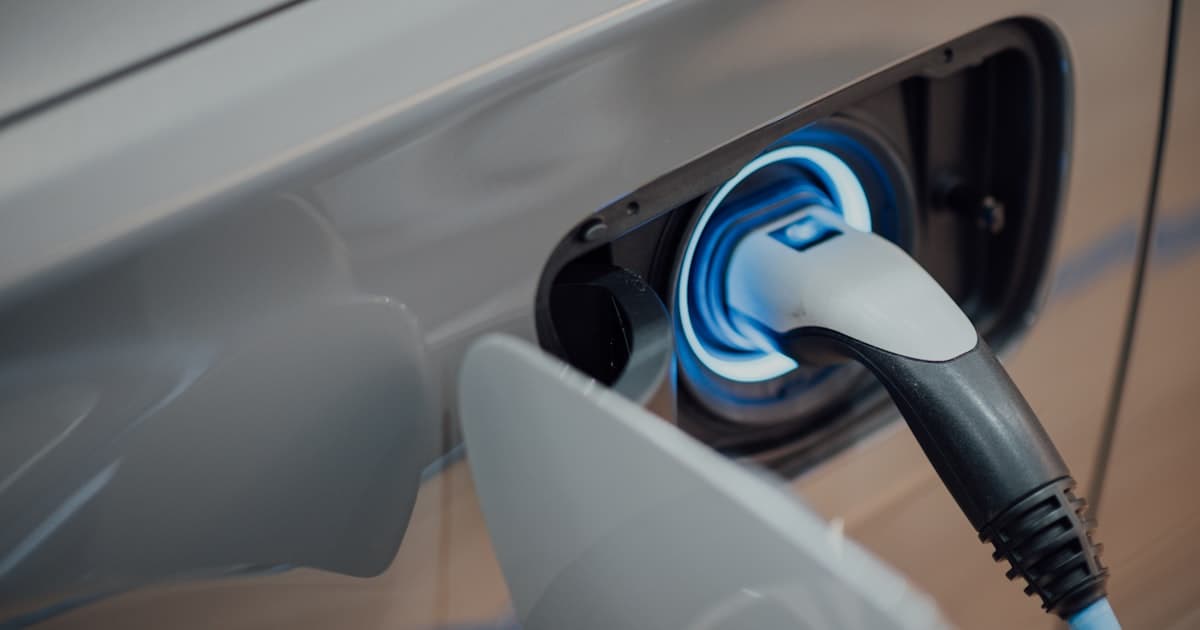
Let me tell you about the exact moment I started taking electric vehicles seriously. I was at a stoplight in my buddy's Tesla Model 3, and a guy in a Dodge Charger R/T revved his engine at us. My buddy looked at me, looked at the Charger guy, and when the light turned green he floored it. We hit 60 mph before the Charger driver had time to process what just happened. No drama, no roaring V8, no tire smoke. Just silent, instantaneous, physics-defying acceleration that rearranged my internal organs and my entire opinion about electric cars in about four seconds.
That was two years ago. Since then I've test driven, borrowed, rented, and obsessively researched practically every EV on the market. I've talked to owners who love theirs, owners who regret theirs, and mechanics who have opinions about both. And I've come to a conclusion that will satisfy absolutely nobody on either side of this debate: electric vehicles are genuinely great — and also genuinely not for everyone. At least not yet.
Here's the honest breakdown.
The Driving Experience Is Absurdly Good
Let's start with the part that every EV owner wants to talk about, because it's the part that's hardest to argue with: electric cars are incredibly fun to drive.
The instant torque thing isn't a marketing gimmick. There's no turbo spool, no downshift delay, no waiting for the engine to climb into its powerband. You push the pedal and the car goes. Immediately. Violently, in some cases. A base Model 3 does 0-60 in about 5.5 seconds, which is faster than most sports cars from ten years ago. The Model 3 Performance does it in 3.1. A Hyundai Ioniq 5 N — a crossover SUV — runs mid-threes. This is insane. We're living in a timeline where a family hauler from Hyundai can gap a Porsche 911 Carrera from the previous generation.
Beyond the straight-line stuff, EVs are just smooth. No gear hunting, no vibrations, no exhaust drone on the highway. The low center of gravity (batteries are heavy and they sit under the floor) makes them feel planted in corners. My buddy's Model 3 handles better than the BMW 3 Series I rented last year, and I say that as someone who grew up worshipping BMWs.
The one-pedal driving thing takes about a day to get used to, and then you'll never want to go back. You lift off the accelerator and the car slows down aggressively, recapturing energy for the battery. In city driving, you barely touch the brake pedal. It sounds weird until you try it, and then it feels like every gas car has a broken connection between your foot and the road.
Range Anxiety: Real, But Probably Not How You Think
This is the big one. The thing your uncle brings up at every family gathering. "But what if you run out of charge in the middle of nowhere?"
The reality: the average American drives about 37 miles per day. The cheapest EV you can buy right now — a base Nissan Leaf — has a range of around 150 miles. A Model 3 gets 270-360 depending on the variant. A Hyundai Ioniq 6 gets over 360. Most EVs on the market right now will cover a full week of average driving on a single charge.
Range anxiety is real, but it's mostly a mental problem, not a practical one. You plug in at home every night (if you have a garage or driveway — more on this in a second) and you wake up to a full "tank" every single morning. You never go to a gas station. You never stand in 15-degree weather squeezing a pump handle while the little TV on the pump plays ads at you. That part is genuinely life-changing, and nobody talks about it enough.
Where range becomes an actual issue is road trips. If you're driving 400 miles to visit your parents for Thanksgiving, you're going to need to stop and charge. DC fast chargers can get most modern EVs to 80% in 20-40 minutes, which isn't terrible — it's roughly a bathroom-break-and-bad-gas-station-coffee stop. But finding a working charger in the right location, that isn't broken or occupied, can turn that stop into an adventure you didn't ask for.
Tesla's Supercharger network is the gold standard. It's fast, reliable, well-placed, and now open to non-Tesla EVs at most locations. The rest of the charging landscape is... improving. Electrify America stations are fine when they work, which is most of the time but not all of the time. I've heard too many stories of people pulling up to a station with four chargers, three of which display error codes and one of which is already taken. It's getting better every quarter. But "getting better" isn't the same as "good."
If you have a garage and you mostly drive around town with the occasional road trip, range is a non-issue. If you live in an apartment, park on the street, and regularly drive 300+ miles in a day, an EV is going to require some lifestyle adjustments that you might not want to make. Be honest with yourself about which camp you're in.
The Money Part: More Complicated Than Anyone Admits
The pitch sounds great on paper: no gas, almost no maintenance, tax credits up to $7,500. EV owners love to tell you they spend $40 a month on electricity instead of $200 on gas. And that's often true.
But let's look at the whole picture.
The upfront cost is still higher. A base Chevrolet Equinox EV starts around $34,000, which is competitive with gas SUVs. A Tesla Model 3 starts around $39,000. A Hyundai Ioniq 5 is about $44,000. These prices have come down significantly — two years ago, everything decent was $50K+ — but you're still generally paying a premium over an equivalent gas car. If you're budget-conscious, the best used cars under $15K are still going to be gas-powered, and that's totally fine.
The federal tax credit helps, but it's gotten complicated. Not every EV qualifies, the rules about battery sourcing and assembly location change more often than my fantasy football lineup, and the credit phases out based on your income. Check the IRS list before you count on that $7,500.
Underlying figures: NHTSA recall database.
Electricity costs vary wildly by location. In Washington state, where electricity is cheap, charging an EV is absurdly affordable. In California or Connecticut, where rates are high, the savings over gas shrink considerably. If your utility offers off-peak rates, charging overnight can cut your costs in half. If they don't, do the math carefully.
(For a related angle, see Best Midsize Trucks for Guys Who Don't Need a Monster.)
Maintenance savings are real, though. An EV has no oil to change, no transmission fluid, no spark plugs, no timing belt, no exhaust system to rust out. Brake pads last two to three times longer because regenerative braking does most of the work. The stuff you'd normally learn from a basic car maintenance guide — checking oil, replacing filters, monitoring fluid levels — most of it just doesn't apply. Your annual maintenance is basically tire rotations, cabin air filters, and windshield washer fluid. That's it.
The wild card is the battery. Most manufacturers warranty the battery for 8 years or 100,000 miles, and degradation data from long-term owners suggests most batteries will still be at 85-90% capacity at that point. But if you do need a battery replacement out of warranty, you're looking at $5,000-$15,000 depending on the car. That's the number that keeps accountants up at night.
Over a typical 5-year ownership period, most analyses show you'll come out slightly ahead with an EV if you're comparing to a similar gas car, and significantly ahead if gas prices spike. But you have to hold the car long enough for the lower operating costs to offset the higher purchase price. If you flip cars every two years, the math doesn't work.
Which EVs Are Actually Worth It Right Now
Not all EVs are created equal, and some are genuinely better buys than others. Here's what I'd actually recommend to a friend in early 2026:
Best overall value: Chevrolet Equinox EV. Starting around $34,000 with 315 miles of range, this is the EV that made me think "okay, this is finally affordable enough for normal people." The interior is surprisingly nice for a Chevy, the range is more than enough, and it qualifies for the full tax credit if you meet the income requirements. After credits, you could be driving a brand new electric SUV for under $27,000. That's wild.
Best if you want the full tech experience: Tesla Model 3. Say what you want about the CEO — the car is good. The Supercharger network alone is worth the price of admission. Over-the-air updates add features after you buy it. The minimalist interior is polarizing but grows on you. And the resale value is still the best of any EV by a significant margin.
Best for enthusiasts: Hyundai Ioniq 5 N. This is the one that made car people realize EVs can have soul. 641 horsepower, simulated gear shifts, artificial engine noise that somehow doesn't feel stupid, and handling that embarrasses cars costing twice as much. It's $67,000, so it's not cheap, but it's the first EV that made me forget it was electric and just enjoy the driving.
For the underlying data, see IIHS vehicle ratings.
Best for not spending a lot: Used Chevrolet Bolt EV. You can find 2022-2023 Bolts for $16,000-$20,000 now. They get about 260 miles of range, they've had the battery recall sorted out (GM replaced every single pack), and they're honestly delightful little cars. Not fast, not luxurious, but cheerful and competent. The best EV value on the market by a mile.
Best for truck guys: Ford F-150 Lightning. The Pro model starts around $52,000, which is a lot for a truck but not insane for an F-150 with 300+ miles of range that can power your entire house during a blackout. The frunk (front trunk, since there's no engine) is enormous. I watched a guy use his as a cooler at a tailgate. Peak engineering.
When an EV Doesn't Make Sense
I promised you an honest answer, and here it is: there are legitimate reasons not to buy an EV right now.
You don't have reliable home charging. If you can't plug in at home — you live in an apartment without charging, you park on the street, your condo board won't install outlets — owning an EV becomes a hassle. Relying on public charging for your daily needs is doable but annoying, like grocery shopping exclusively at gas station convenience stores. It works, technically, but why would you?
You regularly drive very long distances. If your job has you doing 400-mile days regularly, or you tow heavy trailers long distances (towing absolutely murders EV range — cut every number I've mentioned by 40-50%), a gas or hybrid vehicle is still the better tool.
You live somewhere brutally cold. Cold weather reduces EV range by 20-40%, depending on how cold it gets and how much you use the heater. If you're in Minnesota and your commute is already 90% of your car's rated range, winter will leave you sweating. EV range estimates are based on mild conditions, and real-world winter numbers can be genuinely disappointing.
You're on a very tight budget. A $16,000 used Bolt is competitive, but a $10,000 used Civic is still cheaper to buy, requires zero infrastructure changes, and will run for another decade without drama. Sometimes the unsexy answer is the right one.
The Bottom Line
An EV is not a moral imperative or a lifestyle identity. It's a car. A really good car, in most cases. One that's smoother to drive, cheaper to fuel, simpler to maintain, and more technologically impressive than just about anything with a gas engine at the same price point.
But it comes with trade-offs that are real and worth taking seriously: higher upfront cost, charging infrastructure that's still maturing, range limitations in specific use cases, and a battery replacement scenario that could be expensive down the road.
If you have a garage, a daily commute under 100 miles, and a budget of $30,000+, an EV is probably the smartest car purchase you can make in 2026. If those conditions don't describe your life, a good gas car or a hybrid might serve you better, and there's absolutely nothing wrong with that.
The best car is the one that fits your actual life, not the one that wins arguments on the internet. Figure out what you need, test drive a couple of EVs so you know what the fuss is about, and make the call that works for you. Just don't be the guy who dismisses them without ever having driven one. That stoplight moment in my buddy's Model 3 changed my mind. It might change yours too.
Further reading and primary sources
Background and primary-source references for the claims and recommendations above. Linked references are intended for readers who want to verify a claim, dig deeper into a topic, or check the underlying data themselves.
- NHTSA recall database — official U.S. government recall + safety-defect lookup, by VIN or model.
- IIHS vehicle ratings — Insurance Institute for Highway Safety crash-test and safety ratings.
- EPA fuel economy database — official EPA fuel-economy and emissions data for every model year.

About the writer
Daniel Reyes
Senior writer — Fitness, Cars & Sports
Read more from Daniel — full archive, full bio, and contact on their writer page.
Share this story
More from Daniel
Spot a problem with this piece? Email info@luba.media.