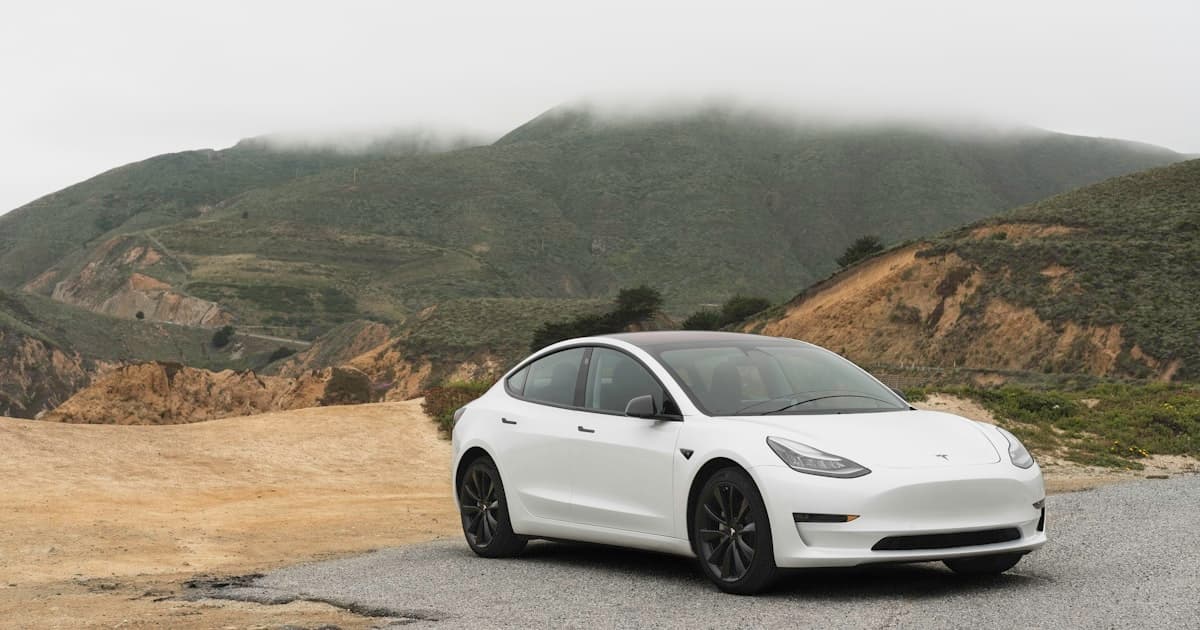
Best Used Cars Under $15K That Won't Leave You Stranded
You don't need $40K and a 72-month loan to get a genuinely good car. Here are 9 used cars under $15,000 that'll start every morning, survive your commute, and maybe even put a smile on your face doing it.
· 14 MIN READ
I'm going to be straight with you: I spent way too many years of my life driving garbage. Not charming garbage, either — not some rusty project car with character. I'm talking a 2004 Chevy Cavalier with a mysterious rattle, a passenger window that only went down (never up), and a check engine light that had been on so long I forgot it was there. I drove that thing for three years because I thought "affordable" and "reliable" were mutually exclusive in the used car market.
They're not. Not even close. You can get a genuinely good car — one that starts every single morning, doesn't hemorrhage oil, handles decently, and won't make your mechanic wince at the sight of it — for under fifteen grand. You just have to know where to look.
This isn't a list of "technically the cheapest running vehicles in America." These are cars I'd actually recommend to a friend. Cars I've driven, ridden in, worked on, or obsessed over enough to know what you're getting into. Some are boring and brilliant. A few are legitimately fun. All of them will get you from A to B without leaving you on the shoulder of I-95 watching your radiator steam while 18-wheelers blow past at 75 mph.
Toyota Camry (2012–2017)
Yeah, I know. The Camry. The beige sedan of beige sedans. The car that screams "I have given up on excitement and embraced practicality." I get it.
The 2012–2017 Camry is, on the data, one of the best cars ever built for a buyer who just needs reliable transportation. The 2.5-liter 2AR-FE four-cylinder is shared across the Toyota lineup — RAV4, Highlander, Scion tC — and is the platform behind the engine's longevity reputation. Consumer Reports and J.D. Power consistently rate this generation among the top five used midsize sedans for reliability; 200,000 miles is routine and 300,000 with basic maintenance is not unusual in fleet and rideshare data.
You'll find clean examples with under 100K miles for $10,000–$14,000 depending on your market. The LE trim is fine; the SE gets you sport-tuned suspension and a slightly more aggressive look if you care about that sort of thing. Watch out for the 2012 model specifically — some had an oil consumption issue with the 2AR-FE engine, though Toyota issued a service bulletin and extended the warranty on affected cars. Before you buy any used car, run the VIN through NHTSA's free recall lookup — it'll surface every open recall on the specific car in front of you, including this one. The 2014+ models are essentially flawless.
Is it exciting? No. Will it make you feel things? Also no. But will it start at 6 AM in a February cold snap while your neighbor's Audi sits there clicking? Every single time.
Honda Civic (2012–2015, 9th Gen)
The Civic is the Camry's slightly cooler cousin who went to art school but still got a real job afterward. The 9th-generation Civic (2012-2015) fixed the problems Honda had with the disastrous 2012 launch model — they actually recalled and redesigned the thing mid-cycle because the reviews were so bad, which is almost unheard of.
The refreshed 2013-2015 Civic is the one to get. The 1.8-liter i-VTEC four-cylinder makes 143 horsepower, which isn't going to pin you to your seat, but it's peppy enough for merging and passing. More importantly, it'll return 30-39 MPG without trying, and Honda's manual transmissions from this era are some of the best-shifting gearboxes ever put in an economy car. If you can find one with a stick, buy it immediately.
Budget $8,000–$13,000 for a clean one. The EX trim gets you a sunroof and Honda's surprisingly good infotainment system. The Si is the hot rod of the lineup — 2.4 liters, 201 horsepower, limited-slip diff, mandatory manual — and they still pop up under $15K if you're patient. Main thing to watch: the 2012 model year has a worse interior and less sound insulation than the 2013+. Skip it.
Mazda3 (2014–2018, 3rd Gen)
If the Camry is the car you buy with your brain and the Civic is the one you buy with your brain and a small slice of your heart, the Mazda3 is the one your heart picked and your brain grudgingly agreed to. The third-generation Mazda3 is one of the best-driving compact cars ever made, full stop. Mazda's engineers were openly trying to make a small, affordable car that felt premium, and they nailed it.
The SKYACTIV-G 2.0-liter engine is willing and efficient (30-40 MPG), and the optional 2.5-liter in the s Touring and s Grand Touring trims gives you 184 horsepower — which in a car this light feels like more. The steering is communicative, the chassis is balanced, and the interior materials are shockingly good for a car in this price range. I've sat in Audis that felt cheaper inside.
Prices run $9,000–$14,000 for the sedan, slightly less for the hatchback (which is the better-looking car, fight me). The main knock: they rust. If you're in the salt belt — anywhere from Maine down through the Midwest — check the rocker panels, wheel arches, and subframe carefully. Mazda had some issues with paint and corrosion protection on these, and a car that looks perfect on top can be dissolving underneath. In dry climates, though? Chef's kiss.
Toyota Corolla (2014–2019, 11th Gen)
The Corolla is the Camry's younger sibling who somehow has even less personality but the same indestructible DNA. The 11th-generation Corolla, especially the 2014-2019 models, is about as close to an appliance as a car can get. You push the button, it goes. You turn the wheel, it turns. You change the oil every 5,000 miles and it rewards you by never, ever breaking.
The 1.8-liter engine makes 132 horsepower, which is honestly plenty for a car that weighs 2,800 pounds. It's not fast. It has no interest in being fast. What it is, is competent, fuel-efficient (28-36 MPG), and so affordable to maintain that it borders on suspicious. Brake pads, oil changes, tires — that's basically the entire maintenance schedule for the first 150,000 miles unless you really abuse it.
You can find these for $8,000–$13,000, and the sweet spot is a 2016-2017 LE or S with under 80K miles. The S trim adds a sport-tuned suspension and slightly thicker steering that makes it feel marginally less like driving a dishwasher. There's basically nothing to watch out for. It's a Corolla. It just works.
Mazda MX-5 Miata (NC, 2006–2015)
Alright, we're done being responsible. Let's talk about the most fun you can have for under $15K with four wheels and a license.
The NC Miata — the third generation — is the one everyone overlooks because it's not the cute original NA or the sharper ND that's on dealer lots right now. But the NC is the sweet spot of the lineup for someone who actually wants to drive their Miata regularly: it's the most refined, the most comfortable, and arguably the best-balanced of the bunch. The 2.0-liter MZR engine makes 167 horsepower (170 in the 2009+ Power Retractable Hard Top models), the six-speed manual is gorgeous, and the chassis does exactly what you tell it to with zero drama.
Is 167 horsepower enough? On paper, barely. On a twisty road — the kind of road you'd find on a list of America's best driving roads — it's more than enough. The Miata isn't about speed. It's about connection. You feel everything through the steering wheel, the pedals, the seat. Every corner is a conversation between you and the road, and the NC speaks fluent back-road.
Budget $8,000–$14,000. The PRHT (Power Retractable Hard Top) models command a premium but are worth it if you live somewhere with weather. Check for rust on the subframe and rocker panels, especially on earlier NCs. The 2009+ facelift cars (sometimes called the NC2) are the best of the bunch: slightly more power, refreshed styling, and improved suspension. If you can find a Club or Sport trim with low miles, you've got a car that'll put a grin on your face every single morning.
Honda Accord (2013–2017, 9th Gen)
The Accord is what happens when Honda's engineers look at the Camry and say, "Okay, but what if it was actually fun to drive?" The 9th-generation Accord (2013-2017) is a mid-size sedan that handles like it's two sizes smaller. The steering is direct, the chassis is composed, and the available V6 — a 3.5-liter making 278 horsepower — turns it into a genuine sleeper. A V6 Accord with the six-speed manual is one of the greatest sedan bargains in history, and I will not be taking questions on this.
(Companion read: Best Midsize Trucks for Guys Who Don't Need a Monster.)
The four-cylinder models are the bread and butter, though: a 2.4-liter making 185 horsepower, paired with either a CVT or a six-speed manual. Even the CVT is tolerable in the Accord, which is saying something because I generally hate CVTs with the fire of a thousand suns. Fuel economy is excellent (26-34 MPG for the four-cylinder, 21-34 for the V6), and the interior is roomy enough that your friends won't hate you for driving them to dinner.
Clean ones run $10,000–$15,000. The sweet spot is an EX-L with the four-cylinder — leather seats, heated seats, sunroof, Honda's LaneWatch camera system, and basically everything you need. The Sport trim is also great: paddle shifters, bigger wheels, a slightly rowdier exhaust note. Watch for: the V6 models with the automatic can develop torque converter shudder at high mileage. Not a dealbreaker but budget $500-800 for a fluid flush or replacement if you feel vibrations at low speed.
Volkswagen GTI (Mk6, 2010–2014)
Here's where the list gets dangerous. The Mk6 GTI is the car that turned a generation of Civic owners into VW enthusiasts. It's a hot hatchback with a 2.0-liter turbocharged four-cylinder making 200 horsepower (210 in the Autobahn trim), a six-speed manual or DSG dual-clutch automatic, plaid seats (yes, tartan plaid, and they're iconic), and a chassis that was tuned on the Nurburgring. It weighs about 3,000 pounds and it drives like a go-kart with a leather interior.
I'm going to be honest: the GTI is not as reliable as the Japanese cars on this list. It's a German car, and German cars have German car problems. The 2.0 TSI engine has a known issue with the timing chain tensioner on early Mk6 models (2010-2012), which can fail and cause catastrophic engine damage. The fix is about $1,500 if you catch it early, and the revised tensioner in 2013+ models eliminated the issue. The DSG needs a fluid change every 40K miles, which costs about $400 at a dealer. Water pumps, thermostats, and ignition coils are common maintenance items.
But — and this is a big but — if you go in knowing what you're getting, the GTI is a spectacularly rewarding car. It's fast enough to be fun, practical enough to be your only car, refined enough to take on a road trip, and cheap enough to insure that your wallet won't cry. You'll find them for $8,000–$14,000 depending on miles and trim. The two-door is cooler; the four-door is smarter. Get the manual if you can. And for the love of God, get a pre-purchase inspection.
Subaru Impreza/Crosstrek (2012–2017)
I almost didn't include a Subaru because every outdoor-adjacent person on Earth already knows about them, but it'd be irresponsible not to. If you live somewhere with real winters — snow, ice, the kind of weather that makes you question your life choices — the Impreza or Crosstrek is the car to buy.
Standard all-wheel-drive across the entire lineup. Every single one. No upgrade packages, no extra charge, no ticking a box. The symmetrical AWD system is legitimately good, too — it's a real full-time system, not the reactive front-wheel-drive-until-the-wheels-slip nonsense that some manufacturers call AWD. In snow, the difference is dramatic. I've driven an Impreza through conditions that had trucks in ditches and felt completely planted the entire time.
The 2.0-liter Boxer engine makes 148 horsepower, which is adequate and nothing more. The CVT is... fine. Not great. But it gets the job done and returns 28-33 MPG. The Crosstrek adds about 4 inches of ground clearance over the Impreza, which makes it surprisingly capable on dirt roads and mild trails.
Budget $9,000–$14,000. The thing to watch for — and I cannot stress this enough — is head gasket issues on older Subarus. The 2012+ models with the FB20 engine mostly solved this, but it's still worth checking the cooling system carefully during a pre-purchase inspection. Also check for oil consumption; some FB20 engines burn about a quart every 3,000 miles, which is annoying but manageable if you know about it.
Hyundai Elantra (2017–2020, 6th Gen)
Five years ago, putting a Hyundai on a "best cars" list would've gotten me laughed out of the room. Not anymore. The 6th-generation Elantra is a legitimately good car that happens to depreciate like a stone, which is great news for used buyers.
The 2.0-liter four-cylinder makes 147 horsepower, the six-speed automatic is smooth and predictable, and Hyundai's infotainment system in these is genuinely one of the best in the class — responsive, intuitive, with Android Auto and Apple CarPlay standard on most trims. The interior is nice. Not "nice for the price" — actually nice. Soft-touch materials on the dashboard, decent seats, good sound insulation.
The real selling point is the value. Clean 2017-2018 Elantras with under 70K miles are going for $8,000–$12,000, which puts them well under most of the Japanese competition with similar mileage. Hyundai's 10-year/100,000-mile powertrain warranty is transferable to second owners (verify this with the dealer — some conditions apply), which is a massive perk in the used market.
Watch for: the 1.4-liter turbo in the Eco trim has had some long-term reliability question marks. Stick with the naturally aspirated 2.0. Also, the 2019+ models got a facelift with a slightly different front end and improved safety features — if you can stretch to a 2019 SE, do it.
So You've Picked Your Car. Now What?
Finding the right car is half the battle. Not getting scammed is the other half. A few things I've learned the hard way:
Get a pre-purchase inspection. Every time. No exceptions. Not from your buddy who "knows cars." From a real mechanic, ideally one who specializes in the brand you're buying. This costs $100-$200 and will save you thousands. If the seller won't let you take the car to a mechanic, walk away. Something is wrong.
Pull the vehicle history report. Carfax or AutoCheck, doesn't matter. You're looking for accidents, flood damage, odometer rollbacks, and salvage titles. The federal National Motor Vehicle Title Information System (NMVTIS) is the underlying database both services pull from, and you can query it directly through approved providers — useful when a dealer hands you a "clean" Carfax that's missing things. A one-owner car with full service records is worth a premium over a five-owner mystery machine with 40,000-mile gaps in the report.
Check the maintenance records. Timing belt/chain service, transmission fluid changes, brake work — the boring stuff that tells you whether the previous owner actually cared about the car or just drove it until things broke.
Buy from private sellers when possible. Dealerships add a $1,500–$3,000 markup for reconditioning and profit. Private sellers are usually more negotiable and more transparent about the car's history. The trade-off is less legal protection, so know your state's lemon laws and as-is sale rules.
Don't buy the first one you see. I know it's tempting. I know the Marketplace listing looks perfect and the price seems too good to scroll past. Be patient. Set alerts on Autotrader, Cars.com, and Facebook Marketplace. The right car at the right price will show up — it always does.
There is room in any car enthusiast's mind for both the dream cars and the practical ones. The practical category is its own quiet pleasure: a used vehicle that starts every morning, handles a road trip, and does not trigger dread at every "we found something" call from the mechanic. The nine cars above do exactly that, and the reliability data backs the recommendation.
Save the poster car fund for later. For now, buy something that starts every morning and smile about how much you didn't spend.
Sources

About the writer
Daniel Reyes
Senior writer — Fitness, Cars & Sports
Read more from Daniel — full archive, full bio, and contact on their writer page.
Share this story
More from Daniel
Spot a problem with this piece? Email info@luba.media.