The Simplest Cocktails Every Man Should Know
You don't need a home bar that looks like a speakeasy or a muddler that costs more than your shoes. Here are the cocktails that take five minutes, need minimal gear, and make you look like you have your life together.
· 12 MIN READ
Last New Year's Eve, my friend Connor volunteered to make cocktails at a house party. Connor's qualifications for this role were: (1) he owned a cocktail shaker he'd received as a groomsman gift three years earlier and never used, and (2) he once watched a YouTube video about mojitos. That was the full extent of his mixology background.
What followed was, by any reasonable measure, a disaster. He muddled mint so aggressively that it looked like a lawn mowing incident in a glass. He free-poured rum with the confidence of a man who had never measured anything. He forgot the simple syrup entirely in the first batch, then overcompensated by adding about half a cup to the second batch, creating what one guest diplomatically described as "mojito-flavored corn syrup." By 10 PM, the kitchen looked like a crime scene, Connor was sweating, and everyone had quietly switched to drinking beer from cans.
I tell this story not to roast Connor (okay, partly to roast Connor) but to illustrate a point: cocktails don't have to be complicated. The best cocktails in the world -- the ones that bartenders have been making for a hundred years, the ones that survive because they're genuinely great -- are almost all simple. Three to five ingredients. Minimal technique. No muddling catastrophes required.
Here are the ones every guy should know how to make. All of them are easy. All of them are impressive. None of them will turn your kitchen into a splash zone.
What You Need (And It's Less Than You Think)
Before we get to the drinks, let's talk equipment. You don't need much.
A shaker. A Boston shaker (two tin cups) or a cobbler shaker (the three-piece one with the built-in strainer) both work. $10-20 on Amazon. If you don't have a shaker, a large jar with a lid works in a pinch. I've made excellent cocktails in a Mason jar. It's not pretty, but it's functional.
A jigger. This is the little double-sided measuring cup that measures 1 oz on one side and 2 oz (or 1.5 oz) on the other. Essential. Free-pouring is how Connor happened. A jigger costs $5 and it's the difference between a balanced cocktail and a regrettable one.
A strainer. If you're using a Boston shaker, you need a Hawthorne strainer. If you're using a cobbler shaker, the strainer is built in. Either way, you need a way to keep ice out of the glass.
Ice. Regular ice works fine. Large cubes are better for drinks served on the rocks because they melt slower and dilute less. Silicone molds that make big cubes cost $8 and they're one of the best small upgrades you can make.
Glasses. A rocks glass (short and wide) for stirred drinks. A coupe glass (the shallow champagne-style glass) for shaken drinks served "up." If you don't have coupes, a wine glass works. If you don't have rocks glasses, a regular glass works. The drink doesn't know what it's in.
That's it. That's the whole setup. Under $40 and it fits in a drawer.
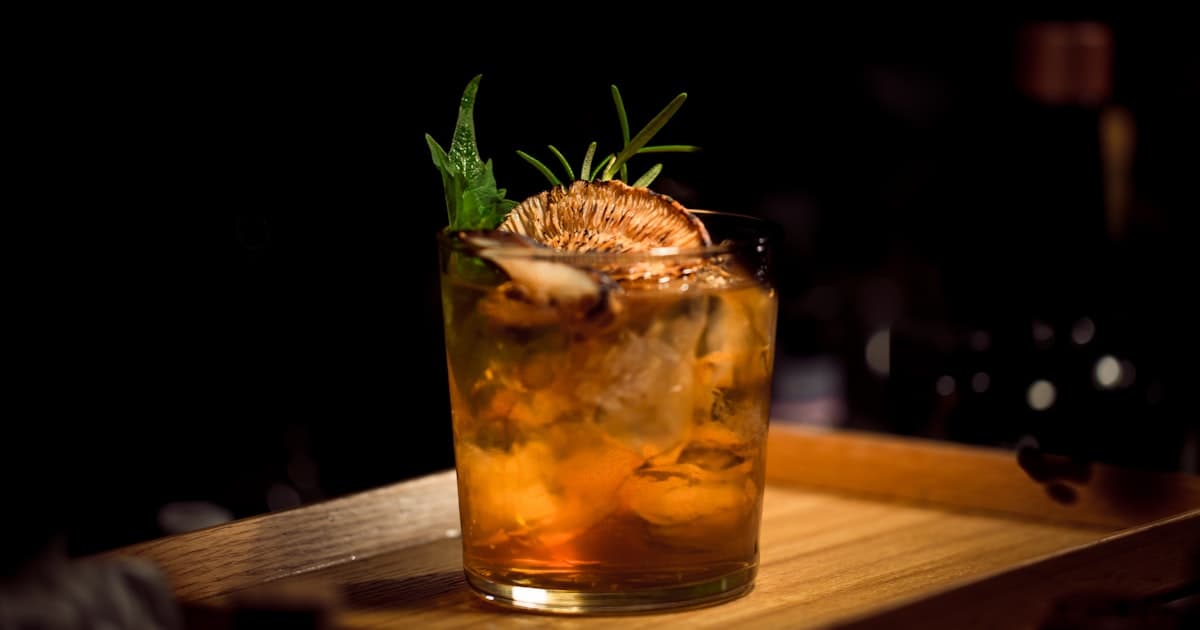
The Old Fashioned: The Foundation
If you learn one cocktail from this entire article, make it this one. The Old Fashioned is one of the oldest cocktails in America — the Library of Congress's "American Cocktail" research guide traces the term "cock-tail" to an 1806 Balance and Columbian Repository definition that describes essentially the Old Fashioned formula (spirits, sugar, water, bitters). It's also routinely the most-ordered classic cocktail in the world per Drinks International's annual brand report. And it requires exactly four ingredients.
What you need:
- 2 oz bourbon or rye whiskey
- 1 sugar cube (or 1/4 oz simple syrup)
- 2-3 dashes Angostura bitters
- Orange peel
How to make it:
- Put the sugar cube in a rocks glass. Add the bitters on top.
- Add a splash of water and muddle (press and twist) until the sugar is dissolved. If using simple syrup, skip this step and just add the syrup and bitters.
- Add the whiskey. Stir.
- Add one large ice cube.
- Express the orange peel over the drink (hold it over the glass, squeeze it so the oils spray onto the surface) and drop it in.
Time: 90 seconds. Difficulty: Almost none.
The Old Fashioned is the cocktail that taught me that great drinks are about balance, not complexity. The sweetness of the sugar, the depth of the bitters, the warmth of the whiskey, and the bright citrus oil from the peel -- four elements, perfectly balanced, creating something greater than the sum of its parts.
If you want to go deeper on the whiskey side, I wrote a whole guide on bourbon for beginners that covers what to buy at every price point. A good Old Fashioned starts with a good bourbon.
The Whiskey Sour: The Crowd-Pleaser
This is the cocktail I make when someone says "I don't really like whiskey" and I want to prove them wrong. The Whiskey Sour is sweet, tart, smooth, and barely tastes like a strong drink even though it absolutely is one.
What you need:
- 2 oz bourbon
- 3/4 oz fresh lemon juice (please use real lemons, not that plastic bottle)
- 3/4 oz simple syrup
- Optional: 1 egg white (trust me on this)
How to make it:
- Add all ingredients to a shaker.
- If using egg white: shake without ice first for about 15 seconds (this is called a "dry shake" and it emulsifies the egg white into a foam). Then add ice and shake again for another 15 seconds.
- If not using egg white: just add ice and shake for 15 seconds.
- Strain into a rocks glass with ice or a coupe glass without ice.
The egg white thing freaks people out. I get it. "Raw egg in a cocktail" sounds like a dare. But the egg white doesn't add any flavor -- it adds texture. It creates a silky, foamy layer on top that transforms the drink from good to "wait, you made this?" good. The acid in the lemon juice and the alcohol in the whiskey effectively neutralize any food safety concerns. Bartenders have been doing this for over a century.
If you absolutely won't do the egg white, the drink is still excellent without it. Just less photogenic.
The Margarita: Done Right, Not Done Fast
The margarita is the most abused cocktail in America. What most people think of as a margarita -- neon green, frozen, served in a fishbowl at a chain restaurant -- bears approximately zero resemblance to an actual margarita, which is a clean, balanced, devastatingly drinkable tequila cocktail.
(Companion read: Meal Prep for Guys Who Think They Can't Cook.)
What you need:
- 2 oz blanco tequila (100% agave -- check the label)
- 1 oz fresh lime juice
- 3/4 oz Cointreau (or any triple sec, but Cointreau is best)
- Salt for the rim (optional)
How to make it:
- If salting the rim: run a lime wedge around the edge of a rocks glass, then dip the rim in salt.
- Add tequila, lime juice, and Cointreau to a shaker with ice.
- Shake for 10-15 seconds.
- Strain into the salt-rimmed glass over fresh ice.
That's a real margarita. Three ingredients (plus salt). No sour mix. No blender. No green dye. It tastes like tequila and lime and sunshine, and it takes sixty seconds to make.
The tequila matters here. "100% agave" on the label means it's made entirely from agave. If it just says "tequila" without that designation, it's a mixto -- partly agave, partly other sugars -- and it'll give you both a worse drink and a worse hangover. Espolon, Olmeca Altos, and Cimarron are all solid blanco tequilas in the $20-25 range.
The Gin & Tonic: The Effortless One
I almost didn't include this because it feels too simple. But that's exactly the point. A well-made G&T is one of the most refreshing drinks on the planet, and "well-made" just means using good ingredients in the right ratio. It takes thirty seconds.
What you need:
- 2 oz gin
- 4-5 oz tonic water
- Lime wedge
How to make it:
- Fill a tall glass with ice. Like, a lot of ice. The more ice, the slower it melts, the less diluted your drink gets.
- Add the gin.
- Add the tonic.
- Squeeze the lime over the top and drop it in.
- Give it one gentle stir. One. Don't over-stir or you'll kill the carbonation.
The upgrade here is the tonic. Standard Schweppes tonic is fine but forgettable. Fever-Tree or Q Tonic have better flavor and less artificial sweetness. The difference is about $2 per bottle and it's immediately noticeable. Tonic is literally half the drink, so it's worth spending an extra two bucks on.
The Moscow Mule: The Vodka Play
If vodka is your thing (no judgment), the Moscow Mule is the move. It's refreshing, slightly spicy from the ginger, and looks fantastic if you serve it in a copper mug (you don't have to, but they're $15 on Amazon and they keep the drink cold).
What you need:
- 2 oz vodka
- 1/2 oz fresh lime juice
- 4-5 oz ginger beer (not ginger ale -- ginger beer has actual ginger kick)
How to make it:
- Fill a mug or glass with ice.
- Add vodka and lime juice.
- Top with ginger beer.
- Stir gently.
- Garnish with a lime wheel if you're feeling fancy.
Total time: twenty seconds. Difficulty: can you pour things into a cup? Then you can make this.
The Negroni: The Sophisticated One
The Negroni is the cocktail you make when you want to signal that you have taste without being annoying about it. It's an Italian classic, it's stirred (not shaken), and it has a bittersweet complexity that grows on you the more you drink them.
What you need:
- 1 oz gin
- 1 oz Campari
- 1 oz sweet vermouth
How to make it:
- Add all three ingredients to a mixing glass (or just a regular glass) with ice.
- Stir for about 30 seconds. (Stirring, not shaking, is the move for spirit-forward cocktails because it chills without adding air bubbles or too much dilution.)
- Strain into a rocks glass over a large ice cube.
- Garnish with an orange peel.
Equal parts everything. That's the entire recipe. It's the simplest ratio to remember and one of the most balanced cocktails ever invented.
Fair warning: Campari is bitter. Like, genuinely bitter. If your first sip of a Negroni makes you make a face, that's normal. Give it three tries. By the third one, you'll either love it or you won't, and either answer is fine. But the people who love Negronis REALLY love Negronis.
The Daiquiri: Not What You Think It Is
When I say "daiquiri," you're picturing a frozen pink slushie from a spring break bar. I need you to delete that image. A real daiquiri is a shaken rum cocktail that's closer to a whiskey sour than a Slurpee, and it's one of the most elegant simple drinks in existence.
What you need:
- 2 oz white rum
- 1 oz fresh lime juice
- 3/4 oz simple syrup
How to make it:
- Add everything to a shaker with ice.
- Shake hard for 10-15 seconds.
- Strain into a coupe glass.
Three ingredients. That's a real daiquiri. It's tart, slightly sweet, and goes down dangerously easy. It's Hemingway's drink. It's a bartender's litmus test -- the drink they order to see if an unfamiliar bar knows what it's doing. And it takes you forty-five seconds to make at home.
Simple Syrup: Make It Once, Use It Forever
Several of these recipes call for simple syrup, and I want to address this because some guys hear "simple syrup" and think it's some fancy ingredient they need to buy. It's not. It's sugar water. Literally.
How to make it: Equal parts sugar and water. Heat until sugar dissolves. Done. A cup of sugar and a cup of water makes enough simple syrup to last you a month of cocktail-making. Store it in a jar in the fridge. It keeps for weeks.
That's it. That's the recipe. If you can boil water, you can make simple syrup. And having a bottle in your fridge unlocks half the cocktail menu.
The Actual Point
That said, about knowing how to make cocktails: it's one of those skills that has a wildly disproportionate payoff for the effort invested. Learning seven drinks -- which took me maybe three evenings of practice -- transformed me from "a guy who opens beers" to "a guy who makes cocktails" at every gathering I host. And those gatherings got better because of it.
Making someone a drink is an act of hospitality. It says "I thought about this, I prepared for this, I wanted you to have something good." It's the same energy as hosting a dinner party that doesn't suck -- the effort is small, but the impression is lasting.
So pick two from this list. Buy the ingredients. Make them this weekend. You'll spend less than $50 on supplies and gain a skill that'll serve you for the rest of your life.
And if Connor's reading this: buddy, the mojitos were fine. They were fine. (They were not fine.)
Sources

About the writer
Jordan Shaw
Senior writer — Culture, Style & Relationships
Read more from Jordan — full archive, full bio, and contact on their writer page.
Share this story
More from Jordan
Spot a problem with this piece? Email info@luba.media.