How to Actually Stick to a Budget Without Hating Your Life
Budgeting doesn't have to feel like financial prison. Here's how I went from bleeding money every month to actually saving -- without giving up everything that makes life worth living.
· 11 MIN READ
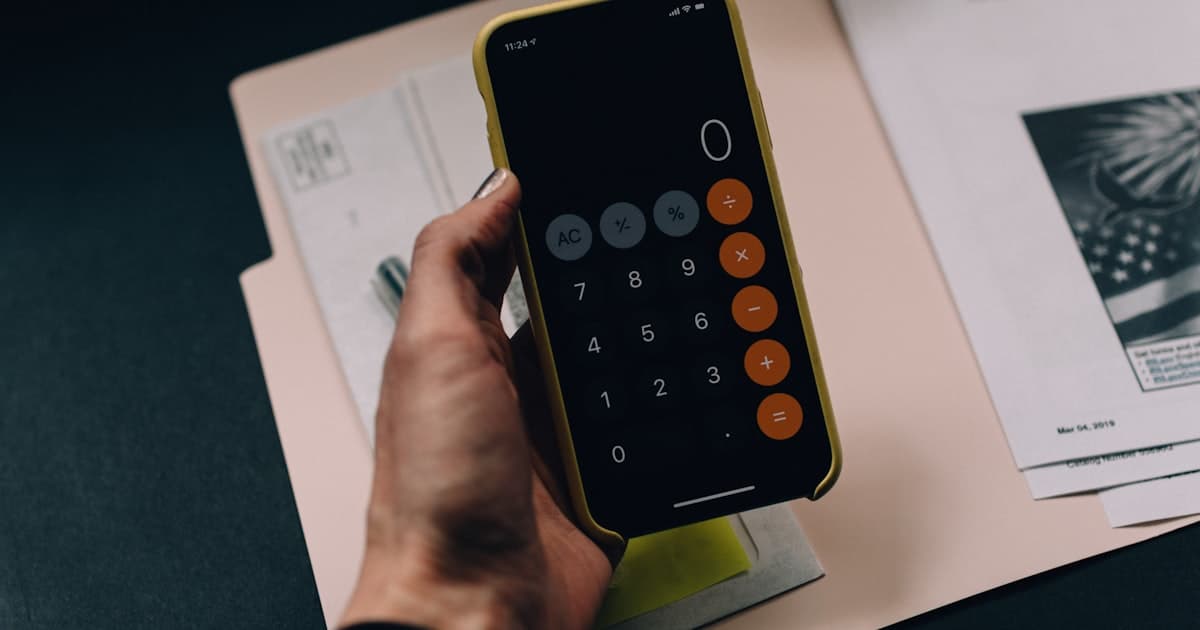
I want to tell you about the moment I realized I was terrible with money. It wasn't some dramatic wake-up call -- no repo truck in the driveway, no intervention from concerned friends. It was a Tuesday night, standing in the checkout line at Target with a cart full of things I definitely did not come to Target for, watching the total climb past $200, thinking "huh, I should probably figure out where my money goes."
I was 28. I made decent money. And somehow, by the 22nd of every month, I was staring at my checking account like it had personally betrayed me.
Sound familiar? Good. Because that means this article is for you, and also because misery loves company.
Why Most Budgets Fail (Spoiler: It's Not Because You're Weak)
Here's the dirty secret the personal finance world doesn't want you to know: most budgets fail because they're built by people who apparently hate fun. They look at your spending and go "well, just stop buying coffee and cancel your subscriptions and eat rice and beans for every meal and never leave your apartment."
Cool. Super sustainable. I'll just become a monk.
The problem isn't willpower. The problem is that most budgeting advice asks you to go from spending freely to spending nothing, which is the financial equivalent of going from the couch to running a marathon. You're going to pull something, and that something is your sanity.
My buddy Marcus tried the zero-based budget method where you assign every single dollar a job before the month starts. He lasted eleven days before he blew $300 at a bar because, and I quote, "the spreadsheet was making me feel like I was in prison." He's not wrong. When your budget makes you feel restricted, your brain starts looking for the exit, and the exit is usually a spontaneous purchase that undoes three weeks of discipline.
The first budget I ever tried was one of those apps that categorize your spending and then shame you about it. "You spent $347 on restaurants this month!" Yeah, I know. I was there. For all of them. It wasn't new information, and the judgment wasn't motivating -- it was just annoying. I deleted the app after two weeks and went right back to financial chaos.
The Budget That Actually Worked (Because It Didn't Feel Like a Budget)
After failing at approximately four different budgeting systems, I stumbled onto something that actually stuck. I call it the Three Bucket Method, though I'm sure some financial advisor somewhere already named it something catchier and charges $200 to teach it.
Here's how it works. You take your monthly take-home pay and split it into three buckets:
Bucket 1: Bills and non-negotiables (50%). Rent, utilities, car payment, insurance, groceries, minimum debt payments. The boring stuff. The stuff where if you don't pay it, bad things happen. This bucket isn't sexy, but it keeps the lights on and your credit score intact. If your non-negotiables exceed 50% of your income, that's a signal that something structural needs to change -- but that's a different conversation. For most people, 50% covers it.
Bucket 2: Fun money (30%). This is the revolutionary part, and I'm not being sarcastic. You take 30% of your income and designate it specifically for things that make life enjoyable. Restaurants. Drinks with friends. That video game you've been eyeing. Concert tickets. The impulse buy at Target that you definitely don't need but absolutely want. This is not a suggestion. This is mandatory fun spending. Because if your budget doesn't include things you enjoy, you won't follow it. Period.
For the underlying data, see S&P SPIVA scorecards.
Bucket 3: Future you (20%). Savings, extra debt payments, investing. This is the bucket that fixes your credit score and builds the life you want in five years. The key is that this bucket gets filled automatically -- set up an auto-transfer to a savings account the day after your paycheck hits, before you can spend it. Money you never see is money you never miss.
That's it. Three buckets. No spreadsheet with 47 categories. No tracking every latte. No guilt.
The Tricks That Made It Stick
The system is simple. Sticking to it required some mental gymnastics. Here's what actually helped.
The 48-hour rule. Before any purchase over $50 that isn't a necessity, I wait 48 hours. Not because I'm being disciplined -- because I'm being lazy. Turns out, if you wait two days, you forget about like 60% of the things you wanted to buy. That $80 kitchen gadget that seemed life-changing at 11 PM? By Thursday, I can't even remember what it was. This single habit has saved me probably $3,000 a year.
Cash for categories that kill me. I'm bad at tracking food spending because I eat roughly every three hours like a large infant. So I started pulling out actual physical cash for my restaurant and takeout budget each month. When the cash is gone, it's gone. There's something about handing over bills that makes you feel the money leaving in a way that tapping a card doesn't. It's annoying, and it works.
The "fun fund" automation. I opened a separate checking account with a debit card just for my Bucket 2 money. On payday, 30% auto-transfers into that account. When I'm out with friends, I use that card. I never have to wonder "can I afford this?" because if the card works, I can afford it. If it declines, I've hit my limit and I switch to water. Simple. No math. No guilt.
Unsubscribe from temptation. I didn't realize how much of my spending was driven by marketing until I unsubscribed from every retail email list I was on. Nike, Amazon deals, Best Buy, all of them. You can't impulse-buy something you don't know exists. My inbox got quieter and my wallet got thicker. Related: delete the shopping apps off your phone. If buying something requires you to open a browser and type in the URL, you'll do it 70% less often.
The First Three Months Are the Worst
I won't sugarcoat it. The first month of actually sticking to a budget felt wrong. Not hard, exactly, but wrong. Like wearing a new pair of shoes that technically fit but haven't broken in yet. There were moments where I'd be out with friends and think "I should probably say no to this round" and feel a weird mix of responsibility and resentment.
(For related context, see The Beginner's Complete Guide to Building a Stock Portfolio That Actually Makes Money.)
Month two was when I almost quit. I had an unexpected car repair ($640, because of course), and it wiped out my savings progress for the month. The old me would have said "well, the budget's blown anyway, might as well spend freely for the rest of the month." The new me -- barely, reluctantly -- adjusted the buckets for that month, pulled a little from Bucket 2 to cover the gap, and kept going. It felt terrible. It was also the moment the budget started becoming real.
By month three, something shifted. I checked my savings account and there was actually money in it. Not a lot. Like $1,200. But it was $1,200 more than I'd had three months ago, and it was growing. There's a psychological tipping point where saving stops feeling like deprivation and starts feeling like power. Having money in the bank didn't make me feel restricted -- it made me feel like I had options. That's a fundamentally different experience than budgeting had ever given me before.
(Reference: IRS publications.)
What I Stopped Spending Money On (And Don't Miss At All)
Here's the part that surprised me. Once I started paying attention, I found spending I could cut that didn't reduce my happiness even slightly.
I was paying for three streaming services but only actively watching one. Cancelled two. Saved $28 a month. I never once thought "man, I wish I still had Peacock."
I was buying lunch at work three to four times a week at $12-$15 a pop. Started prepping simple meals on Sunday instead. Not because I'm some meal prep guru -- because I figured out that making a big batch of pasta with chicken and vegetables takes 30 minutes and covers four lunches. Saved roughly $150 a month. The food is honestly better than what I was buying.
I had a gym membership I used maybe twice a month. $50 a month for the privilege of feeling guilty. Cancelled it, bought a pull-up bar and a set of resistance bands for $60 total, and I actually work out more now because there's no commute to the gym.
Premium gas in a car that doesn't require it. My car's manual says 87 octane. I was putting 93 in it because I thought it was "better." It's not. It's just more expensive. That's $15-20 extra a month I was literally burning.
Add it all up and I found about $260 a month in spending that contributed zero to my quality of life. That's $3,120 a year. For nothing.
The Stuff I Refused to Cut
Here's the flip side, and this is just as important. There are things I spend money on that personal finance Twitter would crucify me for, and I don't care, because they make my life measurably better.
I still go out to eat with friends. Not as often, and I'm more intentional about it, but social meals are one of the best parts of being alive and I refuse to sit in my apartment eating rice while my friends are at the new taco place.
I kept my good coffee subscription. $18 a month for beans from a local roaster. Yes, I could buy Folgers for $6. No, I will not. The twenty minutes I spend every morning drinking genuinely good coffee while the apartment is quiet is the most peaceful part of my day. You can have my coffee subscription when you pry it from my cold, under-caffeinated hands.
I budget for experiences -- concerts, weekend trips, sporting events. These are the things I'll actually remember in ten years. Nobody's deathbed regret is "I wish I'd saved $75 instead of going to that incredible concert with my best friend."
Where I Am Now
I've been running this system for about fourteen months. I have an emergency fund that would cover three months of expenses if everything went sideways. I'm putting money into a Roth IRA for the first time in my life. I paid off a credit card that had been haunting me for two years. And here's the part that's hard to quantify but matters most -- I don't feel stressed about money anymore. Not because I have a lot of it, but because I know where it's going.
The budget isn't perfect. Some months I go over in Bucket 2 because life happens and life is expensive. Some months I put less into Bucket 3 because my car decided to develop a new personality disorder. But the trend line is right. More is coming in than going out, the gap is growing, and I'm not miserable about it.
That's the whole trick, really. A budget that works is one you'll actually follow. And you'll only follow one that lets you be a human being. The internet is full of people who'll tell you to eliminate every luxury and live like a spartan warrior until you're 65 and can finally enjoy your money. That's insane advice. You're alive right now. Spend some of it. Just maybe not $200 at Target on a Tuesday because you went in for toothpaste and came out with a decorative throw pillow and a waffle maker.
You know what, the waffle maker was actually worth it. Some purchases justify themselves.
Further reading and primary sources
Background and primary-source references for the claims and recommendations above. Linked references are intended for readers who want to verify a claim, dig deeper into a topic, or check the underlying data themselves.
- S&P SPIVA scorecards — S&P Dow Jones Indices' semi-annual scorecard comparing active funds against benchmarks.
- IRS publications — official U.S. Internal Revenue Service publications on tax treatment of every account type.
- Bureau of Labor Statistics — official U.S. labor, wage, and inflation data.

About the writer
Marcus Hale
Senior writer — Tech & Money
Read more from Marcus — full archive, full bio, and contact on their writer page.
Share this story
More from Marcus
Spot a problem with this piece? Email info@luba.media.