The Best Video Games to Play When You Need to Decompress
When the world is too much and you need to mentally check out for a while, not every game is the right call. Here are the ones that actually lower your blood pressure instead of spiking it.
· 11 MIN READ
There are times in life when you come home, drop your bag, stare at the wall for a second, and think "I need to not think for a while." Maybe work was a nightmare. Maybe traffic was an hour of honking and existential dread. Maybe you just had one of those days where every single thing was slightly wrong -- not catastrophically wrong, just persistently, annoyingly wrong -- and your brain is vibrating at a frequency that only dogs can hear.
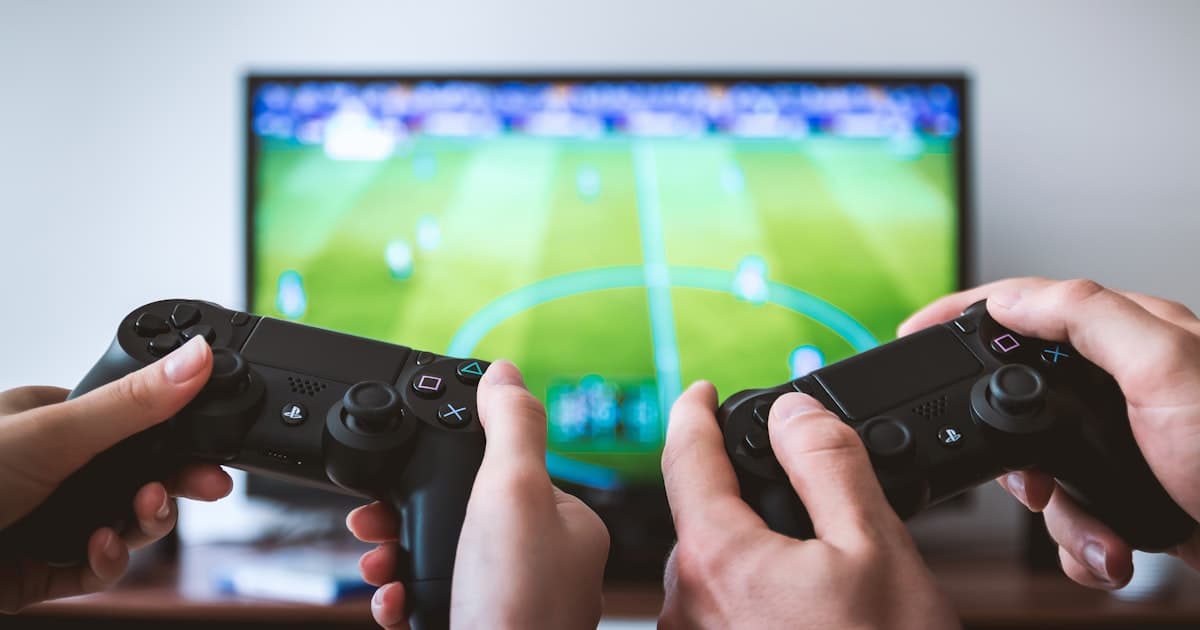
You sit down. You pick up the controller. And then you make the worst possible decision: you boot up a competitive online shooter.
Twenty minutes later you've been called a name that shouldn't be physically possible, you've rage-quit twice, and your blood pressure has gone from "mildly elevated" to "pre-stroke." Great decompression session, champ.
I've made this mistake enough times to have learned my lesson. Not every game is a stress reliever. Some games are stress in a different costume. The games on this list are genuine mental reset buttons -- the ones I reach for when I need my brain to stop clenching like a fist.
The "Turn Your Brain Off and Just Vibe" Tier
Stardew Valley. I'll be honest, I thought this game was going to be boring. You're a farmer. You plant crops. You water them. You wait. This sounded like work, and I already had a job I was trying to forget about.
Then I played it at 10 PM after a particularly brutal Wednesday, and four hours later I was deeply invested in whether my virtual blueberry crop would survive the winter and whether I should marry the goth girl who hangs out by the lake. This game has no urgency, no time pressure that matters, and no way to fail. You just exist in a gentle little pixel world where the biggest crisis is whether to buy a chicken or a duck. It's digital Xanax, and I mean that as the highest compliment.
No Man's Sky. Yeah, I know. The launch was a disaster. We all remember. But the game now, after years of updates, is a genuinely stunning exploration experience. You land on a planet, scan some alien plants, look at a sunset that has two suns, mine some resources, and move on. There's no one shooting at you (in creative mode), no scoreboard, no pressure. Just you and an infinite universe that doesn't care about your quarterly review.
I spent an entire Saturday afternoon flying between planets, naming them stupid things, and not thinking about a single real-world problem. When I finally looked up, it was dark outside. That's the sign of a good decompression game -- you lose time in the best possible way.
Minecraft (Peaceful Mode). Remove the monsters and what's left is the purest building sandbox ever made. I have a Minecraft world that I've been adding to for three years. There's a house on a cliff, a bridge to nowhere that I keep extending because I like the way it looks, and an unnecessarily complex farm that produces more wheat than any reasonable person would need. None of it serves a purpose. All of it is satisfying.
There's something specifically calming about placing blocks. It's the adult version of Legos, except you can't step on them in the dark and wish for death. The repetitive, creative nature of building in Minecraft puts your brain into a flow state that's genuinely meditative. I'm not being woo-woo about this -- actual psychologists have studied how building games reduce anxiety. Science says it works. My brain agrees.
The "I Want to Think, But Gently" Tier
Sometimes you don't want to turn your brain completely off -- you want to redirect it. Give it a puzzle that isn't related to your actual life, so it stops running disaster simulations about that email you sent.
Source for the claims above: CDC physical activity guidelines.
The Witness. This game is just puzzles on a beautiful island. That's it. Line puzzles, specifically. You walk around, find a puzzle panel, solve it, and a new area opens up. No enemies, no timer, no dialogue (basically). It's just you and your brain, working through increasingly complex puzzles at your own pace in one of the most visually stunning game environments ever created.
I played this for three weeks after a particularly stressful period at work, and it genuinely rewired my brain to focus on the problem in front of me instead of spiraling about things I couldn't control. When you're tracing a line through a maze that involves learning how shadows work, there's no room in your head for anxiety. It's occupying the exact right amount of mental bandwidth.
Tetris Effect. You know Tetris. Everyone knows Tetris. But Tetris Effect takes the formula and wraps it in synesthesia -- the blocks pulse with light and music, the backgrounds shift from underwater scenes to desert landscapes, and the music responds to your actions. It sounds pretentious on paper and in practice it's transcendent.
There's actual research showing that playing Tetris after stressful events reduces intrusive thoughts. Something about the spatial reasoning task interrupts your brain's tendency to replay bad memories on loop. I don't fully understand the neuroscience, but I can tell you from experience that 30 minutes of Tetris Effect makes me feel like I've had a nap and a massage simultaneously.
Firewatch. You play as a man who took a job as a fire lookout in Wyoming to escape his problems. That premise alone should tell you this is a decompression game. You walk through beautiful forests, talk to your supervisor on a handheld radio, and slowly unravel a mystery that's more melancholy than scary.
It's about three hours long, which is perfect for a single evening when you need to escape into someone else's story. I played it on a night when I couldn't sleep, and by the end I was both emotionally moved and relaxed enough to pass out immediately. A game that gives you feelings AND cures insomnia is doing double duty.
(For a related angle, see Productivity Systems That Actually Work for Normal People.)
The "I Want Something Satisfying Without Competition" Tier
PowerWash Simulator. I know how this sounds. A game where you pressure wash dirty things. That's the whole game. You point a hose at a dirty van and make it clean. Then you point it at a dirty playground and make that clean. Then a house, a helicopter, a gnome.
It is, without exaggeration, one of the most satisfying gaming experiences I've ever had. Watching grime dissolve under the water pressure triggers something primal in the brain -- the same part that likes peeling the plastic off new electronics or watching those carpet cleaning videos on Instagram. My buddy Dave, who plays exclusively first-person shooters and describes himself as "not a casual gamer," played PowerWash Simulator for six hours straight and then texted me "I think this game fixed my anxiety." I believe him.
Euro Truck Simulator 2. You drive a truck across Europe. You deliver cargo. You obey traffic laws. If this sounds mind-numbingly boring, you are correct, and that's the entire point.
There is something deeply peaceful about driving a virtual truck from Hamburg to Prague at a reasonable speed, with the radio playing, rain on the windshield, watching the scenery change. You're not saving the world. You're not solving puzzles. You're just driving. And somehow, that simplicity is exactly what your brain needs after a day of processing 400 decisions and 87 emails.
I once drove a virtual load of timber from Sweden to Italy. It took about two real-time hours. When I was done, I felt like I'd just gotten back from vacation. This game shouldn't work as well as it does, and yet here we are.
Underlying figures: PubMed.
Cities: Skylines. Building a city from scratch is the ultimate "productive procrastination" feeling. You're not doing anything real, but your brain thinks it's accomplishing something because you're making decisions and seeing results. Zoning residential areas, laying out roads, managing traffic flow -- it's complex enough to hold your attention and calm enough to not spike your cortisol.
My city has 120,000 virtual residents who are mostly happy, and I care about their commute times more than I care about my own. That's probably something I should discuss with a therapist, but for now it's excellent stress relief.
The "I Need to Punch Something But, Like, Calmly" Tier
Hades. Okay, this one is technically stressful -- you're fighting through the Greek underworld, dying repeatedly, and fighting your way back up. The reason: it's on this list: death in Hades isn't failure. It's progress. Every time you die, you go back to the House of Hades, chat with characters, unlock new abilities, learn something, and try again.
The combat is fast and fluid, which gives your brain the action it sometimes craves, but the death mechanic removes all frustration. You literally cannot lose. You can only progress. For someone coming off a bad day where they felt like they kept failing, a game that reframes failure as forward momentum is exactly the right energy.
Elden Ring (hear me out). Yes, it's hard. Famously hard. But the open world is so vast and so beautiful that you can spend hours just riding around on your horse, exploring ruins, watching the landscape change, and avoiding fights you're not ready for. The exploration itself is the decompression. The combat is optional dessert. I've had sessions where I didn't fight a single boss and just explored a new area, found a cool cave, got a weird item I didn't understand, and logged off feeling like I'd had an adventure. Screen time tracked correctly is time spent intentionally, and intentional gaming is a completely legitimate way to recharge.
What to Avoid When You're Stressed
A few categories of games that seem like they'd be relaxing but are secretly stress multipliers.
Online competitive anything. League of Legends, Call of Duty lobbies, Rocket League ranked -- these games are engineered to create tension. The community is often toxic. The matchmaking puts you against people who've dedicated their lives to being better than you. If you're already stressed, adding competitive pressure and strangers calling you trash is like treating a headache by headbutting a wall.
Games with real consequences for failure. Survival games where you lose everything when you die, roguelikes without persistent upgrades, anything where hours of progress can evaporate in a second. When you're stressed, you need a safety net, not a tightrope.
Anything with a ticking clock. Horror games with time-based mechanics, strategy games with real-time deadlines, anything that makes you feel rushed. Your real life already has deadlines. Your decompression time should not.
The Secret Nobody Talks About
That said, about using games to decompress: there's a version of this that's healthy and a version that's avoidance. The healthy version is "I'm going to spend an hour doing something enjoyable to reset my brain, then I'm going to deal with my life." The avoidance version is "I'm going to play for seven hours every night because thinking about my problems is too hard."
I've been on both sides. During a particularly rough stretch, I was playing four to five hours every weeknight, not because I was enjoying it but because stopping meant being alone with my thoughts. That's not decompression. That's hiding.
The sleep improvements I made later forced me to set a hard stop on gaming at 10 PM, and honestly, it made the gaming I did do more enjoyable. A focused hour of Stardew Valley is more restorative than four unfocused hours of clicking between games.
Use these games like a warm shower after a long day -- something that makes the transition from stress to calm a little smoother. Then turn them off, go to bed, and tackle tomorrow with a brain that actually got a chance to breathe.
Your high score can wait. Your mental health can't.
Further reading and primary sources
Background and primary-source references for the claims and recommendations above. Linked references are intended for readers who want to verify a claim, dig deeper into a topic, or check the underlying data themselves.
- CDC physical activity guidelines — official U.S. Department of Health and Human Services activity guidelines for adults.
- PubMed — National Library of Medicine bibliographic database of peer-reviewed biomedical literature.
- American College of Sports Medicine position stands — ACSM official position stands on exercise prescription and physiology.

About the writer
Daniel Reyes
Senior writer — Fitness, Cars & Sports
Read more from Daniel — full archive, full bio, and contact on their writer page.
Share this story
More from Daniel
Spot a problem with this piece? Email info@luba.media.