The Art of Doing Nothing (And Why It's Not Lazy)
We've been brainwashed into thinking every minute needs to be productive. Here's a case for doing absolutely nothing sometimes -- and why it might be the most productive thing you do all week.
· 10 MIN READ
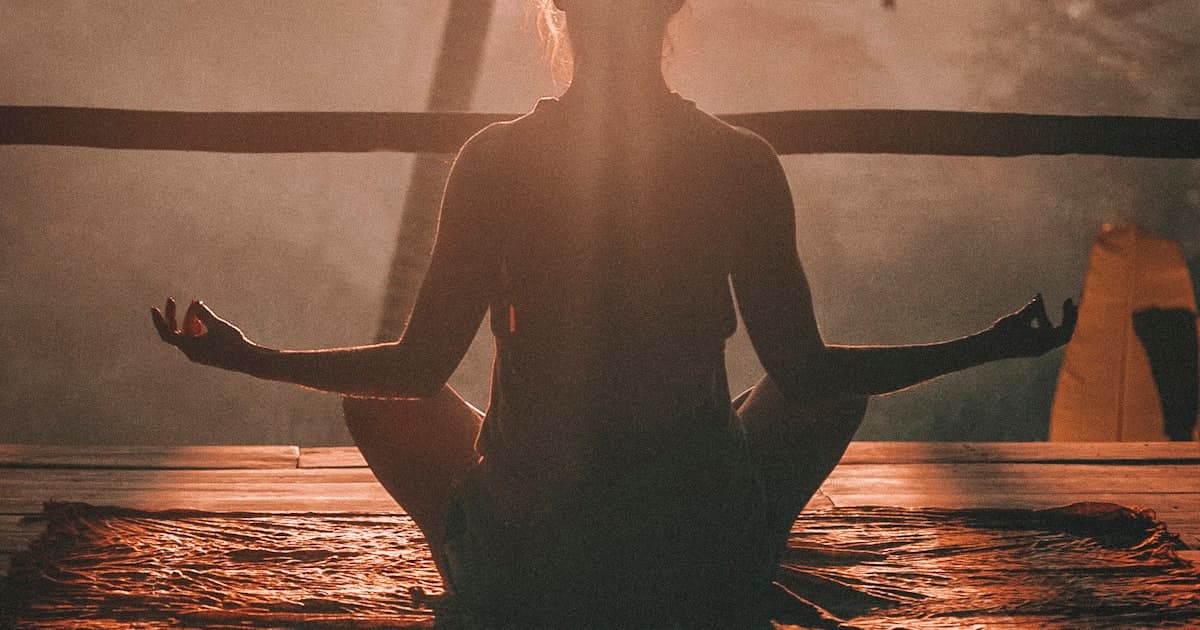
Last Saturday I did nothing. And I don't mean "nothing" the way people usually mean it, where they watched four hours of Netflix and then felt guilty about it. I mean I sat on my back porch with a cup of coffee and stared at the trees for forty-five minutes. No phone. No podcast. No book. No plan to do anything after. Just me, a mug, and some trees that were doing their tree thing.
My buddy Kyle texted me around noon asking what I was up to. I said "nothing." He said "nice, same" and then listed seven things he'd done that morning including a workout, a grocery run, and reorganizing his garage. Kyle doesn't know what nothing means. Most of us don't.
We live in a culture that has confused "busy" with "good" to such a degree that doing genuinely nothing -- not productive nothing, not "recovery" nothing, just actual nothing -- feels transgressive. Like you're getting away with something. Like at any moment, a productivity influencer is going to burst through your door and demand to know why you haven't optimized your morning yet.
I'm here to tell you that doing nothing is not only fine, it might be one of the best things you can do for your brain, your creativity, and your general sense of not wanting to scream into a pillow every evening.
The Problem with Constant Productivity
I fell hard into the productivity trap in my mid-twenties. I read all the books. Atomic Habits. Deep Work. Getting Things Done. The 4-Hour Work Week. I had systems. I had routines. I had a morning routine that I swore changed my life, and honestly, it kind of did for a while.
But here's what none of those books tell you: optimizing everything is exhausting. When every minute of your day is accounted for, when every idle moment is an opportunity for a podcast or an audiobook or a "productive hobby," you never actually rest. Your brain never gets to just... be. It's always processing, always consuming, always on.
I hit a wall around age 29. I was doing everything "right" -- gym in the morning, productive work hours, side hustle in the evenings, educational content during commutes, meal prep on Sundays. I was a machine. I was also miserable, creatively bankrupt, and couldn't remember the last time I'd had an interesting thought that wasn't related to a task.
That's when I started doing nothing on purpose.
What "Nothing" Actually Means
Let me be specific, because this gets misunderstood.
Doing nothing does not mean watching TV. That's entertainment. Your brain is being fed stimulation.
It does not mean scrolling your phone. That's micro-dosing dopamine from a glass rectangle.
It does not mean sleeping. That's sleeping.
It does not mean meditation, though meditation is close. Meditation has a structure, a technique, an intention. Doing nothing has no intention. That's the whole point.
Doing nothing means existing in a space without an input or an output. Sitting on a bench. Lying on your bed staring at the ceiling. Standing on your balcony watching traffic. Walking without a destination and without headphones. Being in a state where your brain is not receiving structured information and is not trying to produce anything.
It feels weird at first. Uncomfortable, even. The first time I tried to sit on my porch without my phone, I lasted about six minutes before my hand reflexively reached for my pocket. My brain was screaming for input like a toddler who wants the iPad. "Give me something! Anything! A podcast! A text thread! The Wikipedia page for otters! SOMETHING!"
That discomfort is telling. If you can't sit quietly with yourself for fifteen minutes without reaching for stimulation, that's not because you're busy. That's because you've trained your brain to be addicted to input, and the withdrawal is real.
The Science (Because I Know You're Skeptical)
There's actual research behind this, and it's not woo-woo stuff.
When you're doing nothing -- when your brain isn't focused on a specific task -- it shifts into what neuroscientists call the "default mode network." This is the brain state associated with daydreaming, self-reflection, and creative thinking. It's where your brain makes connections between seemingly unrelated ideas, processes emotions, and does maintenance work that it can't do when you're focused on tasks.
Some of the most creative insights in history have come from people doing absolutely nothing. Newton and the apple tree. Archimedes in the bath. Your own experience of having a brilliant idea in the shower -- the shower isn't special, it's just one of the few places where you're not looking at a screen.
There's also research showing that constant cognitive engagement without breaks leads to decision fatigue, reduced creativity, and burnout. Your brain is not a machine that runs indefinitely on willpower. It's more like a muscle that needs recovery. And just like you wouldn't work out seven days a week without rest days -- well, actually, some of you would, and that's why you keep getting injured -- your brain needs days where the load is genuinely light.
The Italian Approach
The Italians have a concept called "dolce far niente" -- the sweetness of doing nothing. It's not laziness. It's a cultural value. The idea that sitting at a cafe with an espresso and watching the world go by is a legitimate and valuable use of your time. Not productive time. Not "recharging so you can be more productive later" time. Just... pleasant time. Time that exists for its own sake.
We don't have this in American culture. We have "self-care," which has been co-opted by the wellness industry into another thing you need to buy products for and schedule into your planner. Self-care in America means a $40 face mask and a guided meditation app that costs $14.99/month. Dolce far niente means sitting on a bench and watching pigeons.
(For related context, see How I Started Reading Again After Years of Doom-Scrolling.)
(Primary source: Britannica.)
I'm not saying we all need to move to Italy. I'm saying there's wisdom in a culture that doesn't feel guilty about pleasure that doesn't produce anything.
How to Actually Do Nothing
This requires more explanation than it should, which says something about where we are as a society.
Start small. Five minutes. Sit somewhere comfortable without your phone. Just sit there. If your brain starts planning your day or reviewing your to-do list, that's fine -- notice it and let it go. You're not meditating. You don't have to clear your mind. You just have to not give it structured input.
Remove the phone. This is non-negotiable. You cannot do nothing with a phone in your hand or pocket. You will look at it. I don't care how much willpower you think you have. Put it in another room. The phone is the enemy of nothing.
Don't time it. Setting a timer defeats the purpose. "I'm going to do nothing for exactly twenty minutes" is a task. It has a beginning and an end and a metric. Just sit until you don't want to sit anymore. That might be ten minutes or it might be an hour.
Do it outside if you can. There's something about being outdoors that makes doing nothing feel natural instead of weird. Inside your apartment, doing nothing feels like depression. On a park bench, doing nothing feels like philosophy. The venue matters.
Expect discomfort. The first few times, you'll feel restless, guilty, or bored. That's normal. Boredom is not a problem to be solved. Boredom is a state your brain needs to pass through to get to the good stuff -- the creative thinking, the genuine relaxation, the random memory of something funny that happened in 2019 that makes you laugh out loud for no reason.
What Happens When You Get Good at It
After about a month of regular nothing -- I aim for twenty to thirty minutes a few times a week, though I don't track it because tracking it would be very un-nothing -- I noticed some changes.
I started having ideas again. Not the forced, brainstorming-session kind of ideas. The kind that just appear, fully formed, because my brain finally had space to connect dots without being told what to connect. A solution to a work problem I'd been grinding on for weeks showed up during a porch sit. An idea for a gift for my girlfriend's birthday appeared while I was staring at a wall. My brain was doing work I hadn't assigned it, and the work was good.
I slept better. This one surprised me. I think my brain was so accustomed to processing information right up until the moment I closed my eyes that it couldn't wind down. Giving it regular periods of low stimulation during the day seemed to teach it how to downshift, and that translated to easier sleep.
I was less reactive. When you spend time with your own thoughts regularly, you get more comfortable with them. You get better at noticing emotions without immediately acting on them. Someone cuts you off in traffic and instead of honking and yelling, you just... notice that you're annoyed. And then you're not annoyed anymore. It's not that you've become zen. It's that your tolerance for internal discomfort has increased because you've been practicing it.
I was more present during actual activities. This is the paradox that productivity culture misses entirely: doing nothing makes the doing-something parts of your life better. A conversation with a friend is richer when your brain isn't simultaneously processing a podcast from earlier. A meal tastes better when you're not eating it while scrolling. Nothing gives your brain the capacity to be fully somewhere when you're somewhere.
The Pushback
I know what some of you are thinking. "This is privilege talking. I can't afford to do nothing. I have responsibilities."
Fair point. And I'm not suggesting you abandon your obligations to stare at clouds full-time. I'm suggesting that the fifteen minutes you currently spend scrolling Twitter before bed could be spent sitting quietly instead. That the lunch break you spend watching YouTube could occasionally be spent just eating and looking around. That the commute where you always listen to a podcast could sometimes be a commute where you just... drive.
Nothing doesn't require free time. It requires repurposing time you're already spending on low-value stimulation. You're not adding nothing to your schedule. You're replacing noise with silence.
The Permission Slip
Consider this article your official permission to do nothing. Not as a productivity hack. Not as a strategy for being more creative or more rested or more effective at work, even though it is all of those things. Do nothing because the experience of simply existing -- of sitting in a chair and being alive and not having to do anything about it -- is genuinely pleasant once you get past the discomfort.
You are not a machine. You are not an optimization problem. You are a person, and people need time to just be people. Not productive people. Not efficient people. Just people.
Now if you'll excuse me, I have absolutely nothing to do this afternoon, and I'm very much looking forward to it.
Further reading and primary sources
Background and primary-source references for the claims and recommendations above. Linked references are intended for readers who want to verify a claim, dig deeper into a topic, or check the underlying data themselves.
- Britannica — encyclopedic reference for historical and cultural background.
- Library of Congress — U.S. Library of Congress historical archives and primary sources.
- National Archives — U.S. National Archives primary historical documents.

About the writer
Jordan Shaw
Senior writer — Culture, Style & Relationships
Read more from Jordan — full archive, full bio, and contact on their writer page.
Share this story
More from Jordan
Spot a problem with this piece? Email info@luba.media.