The Beginner's Complete Guide to Building a Stock Portfolio That Actually Makes Money
I lost $3,000 on my first stock pick. Then I learned how investing actually works. Here's everything I wish someone had told me before I started throwing money at random tickers.
· 19 MIN READ
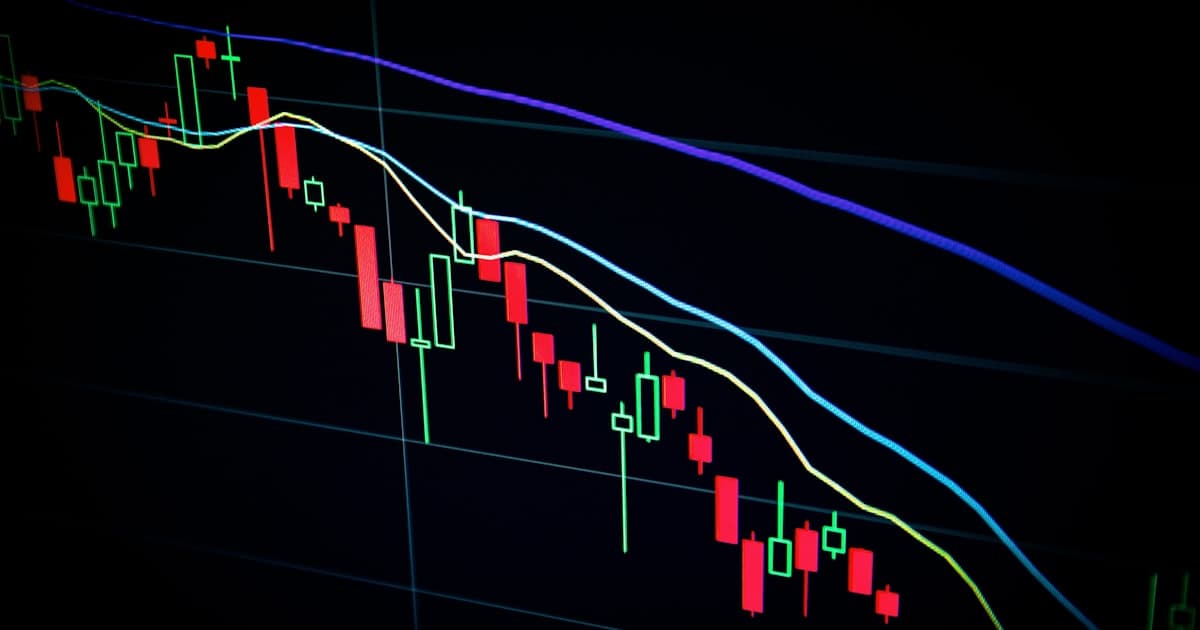
Let me tell you about the dumbest financial decision I ever made.
It was 2017. I was 24, had just gotten my first "real" paycheck from a job that didn't involve a name tag, and I thought I was Warren Buffett because I'd read half of The Intelligent Investor on a flight to Denver. Half. I didn't even finish it. I skimmed the back cover, nodded like I understood what "margin of safety" meant, and opened a Robinhood account at the airport gate.
My first stock pick? A biotech company some guy on Reddit swore was about to get FDA approval for a miracle drug. I threw $3,000 at it. Three thousand dollars. That was basically my entire savings at the time. I could've bought a used motorcycle. I could've taken a trip to Japan. Instead, I bought shares in a company whose name I couldn't even pronounce correctly.
Two weeks later, the FDA did not approve the miracle drug. Turns out the "DD" (due diligence) on Reddit was written by a college sophomore who owned 12 shares and had a Scarface poster on his wall. My $3,000 became $740. I stared at my phone in the Chipotle parking lot for twenty minutes.
That was my introduction to investing.
That said, I didn't quit. I was angry, sure. Mostly at myself. But I also realized something important: I hadn't been investing. I'd been gambling. There's a massive difference, and nobody had ever explained it to me. Not my parents (who kept their money in a savings account earning 0.03%), not my school (which taught me the Pythagorean theorem but not how a 401k works), and definitely not Reddit.
So I spent the next few years actually learning this stuff. Reading books. Listening to podcasts. Making smaller, less catastrophic mistakes. And slowly, painfully, building a portfolio that actually makes money.
This is everything I wish someone had told me before I lost three grand in a Chipotle parking lot.
If Your Financial Plan Involves Winning the Lottery, We Need to Talk
Before we get into the nuts and bolts, let's have an honest conversation about why most people — smart, capable, perfectly functional adults — get investing completely wrong.
Mistake number one: chasing hot tips. Your coworker Dave tells you about this amazing AI stock. Your barber mentions crypto. Your uncle won't shut up about gold. Everyone has a "sure thing." The reality: if everyone already knows about it, the opportunity is probably already priced in. The stock market is not a secret club where your buddy's inside information gives you an edge. It's millions of professionals with supercomputers analyzing every piece of public data 24/7. You, me, and Dave are not outsmarting them.
Mistake number two: trying to time the market. "I'll wait until it dips." "I'll sell at the peak." "I can feel it in my bones that the market's about to crash." No, you can't. Nobody can. Studies have shown — repeatedly, boringly, conclusively — that even professional fund managers can't consistently time the market. Over a 20-year period, something like 90% of actively managed funds underperform a basic S&P 500 index fund. Ninety percent. These are people whose literal job it is, and they can't beat the average.
Mistake number three: doing nothing. This one's the sneaky killer. A lot of guys I know understand that investing is important, nod along when people talk about it, and then... just don't do it. They leave their money in a checking account for years because the whole thing feels overwhelming. I get it. But every year you wait costs you real money — we'll get to the compound interest math later, and honestly, it might make you a little nauseous.
Index Funds: The Boring Superpower Nobody Talks About
Okay, let's address the elephant in the room. You probably opened this article hoping I'd tell you which five stocks to buy that'll make you rich. I'm not going to do that. Not because I'm gatekeeping some secret formula, but because stock picking is, for the vast majority of people (including me), a losing strategy long-term.
Instead, let me introduce you to the most boring, unsexy, incredibly effective investment vehicle ever created: the index fund.
An index fund is basically a basket that holds a little piece of every company in a particular index. The S&P 500 index fund, for example, holds shares in the 500 largest publicly traded companies in America. Apple, Microsoft, Amazon, Johnson & Johnson, Costco — all of them. When you buy one share of an S&P 500 index fund, you're buying a tiny slice of all 500 companies at once.
Why is this powerful? Diversification. If Apple has a bad quarter, maybe Microsoft has a great one. If tech tanks, maybe healthcare rallies. You're not betting on one horse; you're betting on the entire race. And historically, the entire race (meaning the overall stock market) goes up over time. Not every year. Not in a straight line. But over 10, 20, 30 years? It trends up. Always has.
The S&P 500 has returned an average of roughly 10% per year over the last century. That includes the Great Depression, the dot-com bust, 2008, COVID — all of it. If you'd just left your money in an S&P 500 index fund through every single one of those disasters, you'd have come out ahead. Significantly ahead.
Now, the honest case for individual stocks: I'm not going to pretend I don't own any. I do. There's something genuinely exciting about researching a company you believe in and watching your thesis play out. If you want to allocate, say, 10-15% of your portfolio to individual stocks you've actually researched? Go for it. Just know that the other 85-90% should be in boring, reliable, diversified funds. Think of it like your diet — mostly vegetables and protein, with the occasional burger. The burger's not going to kill you, but you shouldn't eat only burgers.
How to Actually Open a Brokerage Account (It Takes Like 15 Minutes)
This is the part where a lot of people get stuck, and I think it's because they imagine some intimidating process involving paperwork and a guy in a suit. It's not. Opening a brokerage account in 2026 is easier than signing up for a streaming service.
(Reference: S&P SPIVA scorecards.)
Here are the three brokerages I'd actually recommend, and I don't get paid by any of them:
Fidelity — My personal pick. Zero-fee index funds (literally 0% expense ratio on some of their funds), excellent customer service, and a clean app that doesn't feel like it was designed in 2004. Their ZERO funds — like FZROX (total market) and FZILX (international) — are genuinely hard to beat.
Charles Schwab — Merged with TD Ameritrade, so they've got a huge platform now. Great research tools, no minimums to open an account, and solid index fund options through their own Schwab funds or through Vanguard ETFs.
Vanguard — The OG. Jack Bogle, the founder of Vanguard, basically invented the index fund for regular people. Their funds are legendary (VTI, VXUS, BND). The app used to be terrible, but they've improved it. The expense ratios are rock-bottom.
Any of these three will serve you well. Please, for the love of all that is holy, do not use some random app you saw advertised on TikTok with a spaceship logo and a referral bonus. Use a real brokerage.
To open an account, you'll need:
- Your Social Security number
- A bank account to link for transfers
- About 15 minutes of your time
- The willingness to answer some basic questions about your income and investment goals
That's it. You'll probably be ready to invest the same day.
Dollar Cost Averaging: The Only Strategy You Actually Need
Alright, imagine we're at a bar. You've got a beer, I've got a bourbon, and you ask me, "Okay, but when do I actually buy? What if the market's at an all-time high?"
Here's what I'd tell you: it doesn't matter.
Dollar cost averaging (DCA) means you invest the same amount of money at regular intervals regardless of what the market is doing. Every month, $500 goes into your index funds. Market's up? You buy. Market's down? You buy. Market's sideways and boring? You buy.
Why does this work? Because when prices are high, your $500 buys fewer shares. When prices are low, your $500 buys more shares. Over time, your average cost per share smooths out, and you avoid the impossible task of trying to guess the "right" time to buy.
The real magic of DCA isn't mathematical. It's psychological. It removes emotion from the equation. You don't have to agonize over whether today is a good day to invest. You set up an automatic transfer, and you let it run. My Fidelity account pulls $600 from my checking account on the 1st of every month like clockwork. I don't think about it. I don't check the market first. The money moves, shares are purchased, and I go about my day.
Is DCA theoretically optimal? No. Mathematically, lump-sum investing (putting all your money in at once) beats DCA about two-thirds of the time, because the market goes up more often than it goes down. But lump-sum investing requires nerves of steel. Imagine dumping $20,000 into the market on a Monday and watching it drop 5% by Friday. Most people can't handle that. DCA lets you sleep at night. And the best investment strategy is the one you'll actually stick with.
Asset Allocation: Don't Put All Your Money in One Bucket
Here's where things get a little more nuanced, but I promise to keep it simple.
Asset allocation is just a fancy way of saying "don't put all your money in one thing." Your portfolio should have a mix of different asset types, because different assets behave differently in different market conditions. Here are the big three:
Stocks (Equities) — The growth engine. Historically the highest returns, but also the most volatile. When people talk about "the market," they usually mean stocks. This is where most of your money should be if you're young and have decades before you need it.
Bonds (Fixed Income) — The boring stabilizer. Bonds are basically loans you make to governments or corporations, and they pay you interest. Returns are lower than stocks, but they're much less volatile. When stocks crash, bonds usually hold steady or go up. They're the seatbelt in your portfolio's car.
REITs (Real Estate Investment Trusts) — A way to invest in real estate without actually buying property. REITs own apartment buildings, office towers, shopping centers, warehouses — all kinds of real estate. They're required by law to pay out 90% of their income as dividends, so they're great for income. They also tend to move somewhat independently from stocks, which adds diversification.
(See also: Investing for Beginners Without the Wall Street Jargon.)
A simple starting allocation if you're in your 20s or 30s:
- 70-80% stocks (split between U.S. and international)
- 10-15% bonds
- 5-10% REITs
As you get older and closer to needing the money, you gradually shift more toward bonds. The classic rule of thumb is "your age in bonds" — so if you're 30, 30% bonds. I think that's too conservative for most young people, but the principle is sound: reduce risk as you get closer to retirement.
A dead-simple, three-fund portfolio that'll outperform most hedge funds over 30 years:
- VTI (Vanguard Total Stock Market) — covers the entire U.S. market
- VXUS (Vanguard Total International) — covers every market outside the U.S.
- BND (Vanguard Total Bond Market) — covers the U.S. bond market
That's it. Three funds. Total cost: roughly 0.05% per year in fees. You could set this up today and not change a thing for the next decade.
For verification, see IRS publications.
The Compound Interest Math That'll Make You Angry You Didn't Start Sooner
I'm about to show you numbers that are going to hurt a little, especially if you've been procrastinating. Sorry in advance.
Let's say you start investing $500 per month at age 25, and you get an average return of 8% per year (which is conservative — the historical S&P 500 average is closer to 10%, but let's be cautious). Here's what happens:
- By 35 (10 years): You've invested $60,000. Your portfolio is worth about $91,000. That extra $31K? That's compound interest doing its thing.
- By 45 (20 years): You've invested $120,000. Your portfolio is worth about $275,000. More than double what you put in.
- By 55 (30 years): You've invested $180,000. Your portfolio is worth about $680,000. Almost four times your contributions.
- By 60 (35 years): You've invested $210,000. Your portfolio is worth over $1,050,000. You're a millionaire. From $500 a month.
Now here's the part that stings. If you wait until 35 to start — just ten years later — and invest the same $500/month until 60, you end up with about $475,000. Still great, but that's a difference of over half a million dollars. Not because you invested less money, but because you gave compound interest less time to work.
Albert Einstein (allegedly) called compound interest the eighth wonder of the world. I don't know if he actually said that, but whoever did was right. Time is the single most powerful variable in investing. Not intelligence, not stock-picking ability, not having wealthy parents. Time.
If you're 22 and reading this, you have the biggest advantage of anyone. Please, for the love of God, open a brokerage account this week.
The Mistakes I've Made (And the Ones You Should Avoid)
I've made most of the classic mistakes, so let me save you the trouble.
Panic selling. Yes, I panic-sold during COVID. We've all done something embarrassing. When the market dropped 30% in March 2020, I sold a bunch of my positions "to protect myself." Then the market recovered faster than any crash in history, and I missed the rebound. I literally paid money to lose money. The lesson: don't sell during a crash. Historically, every single market crash has been followed by a recovery. Every one. If you sell during the dip, you lock in your losses and miss the recovery. Just... don't.
Checking your portfolio daily. I used to check my Fidelity app fifteen times a day. Before coffee. During meetings. On the toilet. This is psychologically destructive. Seeing your portfolio down $300 on a random Tuesday makes you anxious, even though it means nothing long-term. I eventually deleted the app from my home screen and switched to checking once a week, then once a month. My returns didn't change. My stress levels dropped dramatically.
Crypto FOMO. Look, I own a small amount of Bitcoin. I think there's a reasonable case for having 1-5% of your portfolio in crypto as a speculative asset. What I don't think is reasonable is putting your rent money into a dog-themed coin because a tweet went viral. I've watched friends put tens of thousands into meme tokens and lose most of it. If you want to gamble with a small amount, fine. But please don't confuse crypto speculation with investing. They are not the same thing.
Listening to financial influencers. That 23-year-old on YouTube standing in front of a rented Lamborghini telling you about his "passive income secrets"? He makes his money from YouTube ads and course sales, not from investing. Most financial content online is entertainment, not education. Take everything with a dump truck of salt.
Over-diversification. This sounds weird, but yes, you can over-diversify. If you own 47 different ETFs, you probably have massive overlap and you're just creating confusion. The three-fund portfolio I mentioned earlier? That gives you exposure to literally thousands of companies across the globe. You don't need 47 funds.
Not investing in tax-advantaged accounts first. Before you put money in a regular brokerage account, max out your tax-advantaged options. A 401k (especially if your employer matches — that's free money, people, FREE MONEY), a Roth IRA ($7,000/year limit in 2026), an HSA if you have a high-deductible health plan. These accounts let your money grow tax-free or tax-deferred, which makes a massive difference over decades.
When to Actually Sell a Stock
This is a topic that doesn't get enough attention. Everyone talks about when to buy, but knowing when to sell is just as important.
Sell when your original thesis changes. If you bought a company because you believed in their product pipeline, and they pivot to something completely different — that's a reason to reconsider. You're not married to a stock. If the reason you bought it no longer exists, it's okay to move on.
Sell when you need to rebalance. If your target allocation is 80% stocks and 20% bonds, and a huge rally pushes you to 90/10, selling some stocks to buy bonds brings you back in line. This is disciplined, strategic selling — not emotional.
Sell when you actually need the money. You know, for things like buying a house, funding a wedding, or retirement. That's literally what the money is for.
Do NOT sell because: The market dropped 3% today. Some talking head on CNBC said something scary. Your coworker told you the economy is "about to collapse." Your portfolio went down two months in a row. None of these are reasons to sell. They're reasons to take a breath and remember that you're investing for decades, not days.
My personal rule: if I wouldn't write a check to buy the stock today at its current price, I consider selling. If I would still buy it? I hold. Simple, but effective.
The Stuff They Don't Tell You
A few things I've picked up over the years that don't fit neatly into any category:
Dividends are underrated. Companies that pay dividends are essentially mailing you a check every quarter just for owning their stock. Reinvesting those dividends (most brokerages can do this automatically) supercharges compound growth. It's not glamorous, but dividend reinvestment has accounted for roughly 40% of the S&P 500's total return over the past several decades.
Fees will eat you alive if you're not careful. A 1% expense ratio might not sound like much, but over 30 years, it can cost you hundreds of thousands of dollars. Always check the expense ratio of any fund you buy. Anything over 0.2% should make you ask "why am I paying this?"
You don't need to be smart. You need to be consistent. The most successful investors I know aren't the smartest people in the room. They're the most disciplined. They invest the same amount every month, they don't panic, they don't chase trends, and they let time do the heavy lifting. That's the whole secret. I know it's anticlimactic, but it's the truth.
Your emergency fund comes first. Before you invest a single dollar, have 3-6 months of expenses in a high-yield savings account. Not in stocks. Not in crypto. In cash, sitting there, being boring. Because when your car breaks down or you lose your job, you don't want to have to sell investments at a loss to cover the bill.
Resources That Actually Helped Me
I'm not going to give you a list of 50 books. Here are the ones that genuinely changed how I think about money:
Books:
- The Simple Path to Wealth by JL Collins — hands down the best beginner investing book. It's clear, opinionated, and funny. Read this first.
- A Random Walk Down Wall Street by Burton Malkiel — more academic, but it'll convince you that index funds are the way to go.
- The Psychology of Money by Morgan Housel — less about mechanics, more about how our brains mess up our financial decisions. Genuinely enjoyable to read.
Podcasts:
- The Rational Reminder — evidence-based investing without the hype.
- Planet Money (NPR) — not strictly about investing, but it'll help you understand how the economy works, which makes you a better investor.
Websites/Forums:
- Bogleheads.org — a community of investors who follow Jack Bogle's simple investing philosophy. The wiki alone is worth hours of reading.
- Investopedia — basically Wikipedia for finance terms. Whenever you encounter a concept you don't understand, look it up here.
What to avoid: anyone selling a course that promises to teach you "the secret" to beating the market. Anyone with a Discord server full of stock alerts. Anyone who uses the phrase "financial freedom" more than twice in a single paragraph. You'll know it when you see it.
The Bottom Line
Investing is not complicated. The finance industry wants you to think it is, because complicated means you need to pay someone to help you. In practice, it is painfully simple:
- Open a brokerage account at Fidelity, Schwab, or Vanguard.
- Set up automatic monthly contributions.
- Buy a few low-cost index funds.
- Don't touch it for 30 years.
- Retire with more money than you ever thought possible.
That's it. That's the whole article condensed into five steps. Everything else is just details and guardrails to keep you from doing something dumb when the market gets scary.
I still think about that $3,000 I lost on that biotech stock. Not because I'm sad about it — I've made it back many times over. But because it reminds me how easy it is to convince yourself you're investing when you're actually just gambling. The difference between the two is research, diversification, patience, and a healthy respect for how much you don't know.
You don't have to be perfect. You just have to start.
If you want to accelerate things, a well-chosen side hustle can supercharge how much you have to invest each month. And if you want to go deeper on the mindset side, here are 10 books that completely rewired how I think about money.
And please, for the love of everything, don't take stock tips from a guy in a Chipotle parking lot. Even if that guy is me.
Further reading and primary sources
Background and primary-source references for the claims and recommendations above. Linked references are intended for readers who want to verify a claim, dig deeper into a topic, or check the underlying data themselves.
- S&P SPIVA scorecards — S&P Dow Jones Indices' semi-annual scorecard comparing active funds against benchmarks.
- IRS publications — official U.S. Internal Revenue Service publications on tax treatment of every account type.
- Bureau of Labor Statistics — official U.S. labor, wage, and inflation data.

About the writer
Marcus Hale
Senior writer — Tech & Money
Read more from Marcus — full archive, full bio, and contact on their writer page.
Share this story
More from Marcus
Spot a problem with this piece? Email info@luba.media.