10 Books That Will Rewire How You Think About Money
I used to think budgeting was something only boring people did. Then I read these 10 books and now I'm the boring person who won't shut up about index funds. You're welcome.
· 9 MIN READ
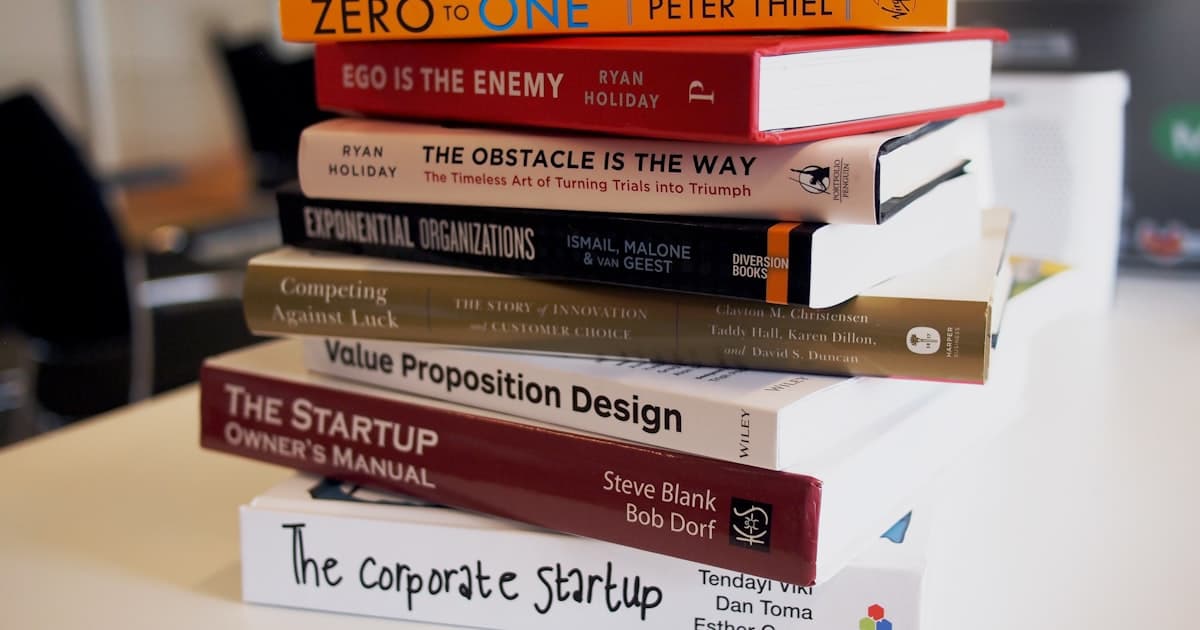
I'm not going to pretend I had some dramatic rock-bottom moment with money. I wasn't drowning in credit card debt or living in my car. I was just... dumb about it. The kind of dumb where you make decent money but somehow never have any. The kind where you vaguely know you should be "investing" but the whole thing feels like it was designed by people who wear vests with no shirt underneath on Wall Street.
Then I started reading. And somewhere between book three and book seven, something clicked. I became the insufferable guy at dinner who says things like "well actually, time in the market beats timing the market."
Here are the 10 books that did it, ranked roughly by how hard they hit me.
1. The Psychology of Money — Morgan Housel
This is the one I recommend to everyone. Your girlfriend, your dad, your buddy who just got his first real job. Housel's thesis is deceptively simple: doing well with money has almost nothing to do with how smart you are and almost everything to do with how you behave.
The insight that stuck: Wealth is what you don't see. The guy driving the Lambo might be broke. The woman in the Honda might be worth $4 million. Comparing yourself to other people's spending is the dumbest game you can play.
Who should read it: Everyone. If you only read one book on this list, make it this one. It changed the way I think about "enough" — I stopped chasing a number and started asking what kind of life I actually want to fund.
2. I Will Teach You to Be Rich — Ramit Sethi
Yes, the title sounds like a late-night infomercial. Yes, I judged it for two years before reading it. Yes, I was wrong. Sethi's whole approach is anti-deprivation. He wants you to automate your finances so aggressively that you can spend guilt-free on stuff you love while your savings and investments grow on autopilot.
The insight that stuck: The "Conscious Spending Plan" instead of a budget. Budgets feel like diets. Conscious spending feels like you're the CEO of your own money.
Who should read it: Anyone in their 20s or 30s who earns decent money but has no system. After reading this, I spent one Saturday setting up automatic transfers and haven't manually moved money since. That single afternoon was worth more than any raise I've gotten.
3. Die With Zero — Bill Perkins
The contrarian pick. Perkins argues that dying with a huge pile of money means you traded irreplaceable life experiences for digits on a screen. He's not saying blow it all — he's saying optimize for fulfillment across your whole life, not just your retirement account balance.
The insight that stuck: "Memory dividends." A trip you take at 30 pays dividends in memories for 50+ years. The same trip at 70 pays for maybe 10. This made me book a trip I'd been putting off for three years.
Who should read it: Compulsive savers and anyone who keeps saying "someday." Fair warning: if you're still in debt, this is not your book yet. Get your foundation right first.
4. The Simple Path to Wealth — JL Collins
Started as letters Collins wrote to his daughter. His argument: buy VTSAX (Vanguard Total Stock Market Index Fund), keep buying it, never sell it, retire wealthy. That's basically the whole book. And he's right.
The insight that stuck: The stock market always recovers. Always. Every crash in history has been followed by a recovery. If you can really internalize that, you'll never panic-sell again. If you're just starting your investing journey, this is the book that makes it feel doable.
Who should read it: Anyone intimidated by investing. I moved my entire portfolio to index funds after reading this and my returns have been better with zero effort.
5. A Random Walk Down Wall Street — Burton Malkiel
The academic backbone behind index fund investing. Malkiel methodically destroys the idea that stock-picking, chart-reading, or listening to CNBC pundits can consistently beat the market. It's denser than others on this list, but the core message is liberating: you don't need to be smart about investing, you just need to not be stupid.
The insight that stuck: Even professional fund managers fail to beat index funds over long periods. The vast majority of them. If the pros can't do it, why would you or I think we can?
Who should read it: Anyone paying a financial advisor 1% to underperform an index fund. It's the book that made me cancel my Motley Fool subscription.
(Reference: S&P SPIVA scorecards.)
6. Rich Dad Poor Dad — Robert Kiyosaki
Controversial take time. This book has real problems — some advice is questionable, and Kiyosaki's "Rich Dad" might not have existed. But the mindset shift is genuinely valuable. The idea that assets put money in your pocket and liabilities take it out, and that most people spend their lives buying liabilities they think are assets, is a perspective changer.
The insight that stuck: Your house is not an asset. It costs you money every month. Technically oversimplified, but the underlying point — acquire things that generate income — rewired how I evaluate every major purchase.
Who should read it: People who grew up with zero financial education. Read it for the mindset, not the specific advice. And for the love of everything, don't get sucked into any of his seminars.
7. Your Money or Your Life — Vicki Robin & Joe Dominguez
The OG financial independence book, written decades before FIRE was a subreddit. The central exercise: calculate your "real hourly wage" after commuting, work clothes, and decompression time. Then measure every purchase in hours of your life. That $200 dinner? If your real hourly wage is $25, that's eight hours of your life.
The insight that stuck: The "fulfillment curve" — spending more makes you happier up to a point, then actively makes you less happy. Finding that inflection point is basically the cheat code for contentment.
Who should read it: Anyone feeling trapped on the work-spend treadmill.
8. The Millionaire Next Door — Thomas J. Stanley & William D. Danko
Stanley and Danko studied actual millionaires and found most of them drive used cars, live in modest homes, and buy suits off the rack. The flashy spenders? Most are actually broke. This book is a statistical takedown of the "fake rich" lifestyle.
The insight that stuck: "Big Hat, No Cattle." It's a Texas expression for people who look wealthy but aren't. Once you see it, you can't unsee it. Every leased BMW in the parking lot starts looking like a cry for help.
Who should read it: Anyone who feels "behind" because coworkers have nicer stuff. This book killed my desire to upgrade my car, which might be the most financially productive thing a book has ever done for me.
9. The Richest Man in Babylon — George S. Clason
Written in 1926 as parables set in ancient Babylon, and somehow every lesson still applies. "Pay yourself first" — that's from this book. It's about 150 pages and you can finish it in an afternoon.
The insight that stuck: "A part of all I earn is mine to keep." Before you pay anyone else — landlord, credit card company, bar tab — set aside a portion for yourself. I started at 10% and I'm now at 25%.
Who should read it: Absolute beginners or anyone who needs a reset. No jargon, no spreadsheets, just timeless principles wrapped in surprisingly engaging stories.
10. Atomic Habits — James Clear
"Wait, this isn't a money book." You're right — it's a behavior book. And every money problem is actually a behavior problem. Clear's framework — make good habits obvious, attractive, easy, and satisfying — applies to saving and investing just as well as going to the gym.
The insight that stuck: You don't rise to the level of your goals, you fall to the level of your systems. I had "save more money" as a goal for years. Nothing happened. When I built automatic systems (thanks, Ramit), everything changed.
Who should read it: Anyone who knows what they should be doing with money but can't seem to do it. This book is the bridge between financial knowledge and financial action.
The Order I'd Read Them In
If you're starting from zero: The Richest Man in Babylon first (afternoon read, sets the foundation), then I Will Teach You to Be Rich (build the system), then The Psychology of Money (lock in the mindset).
If you're already saving but want to level up: The Simple Path to Wealth, then A Random Walk Down Wall Street, then Die With Zero to make sure you're not hoarding for no reason.
If you just need a kick in the ass: Atomic Habits and Your Money or Your Life back to back. You'll be a different person in a month.
The best financial education doesn't come from a single book — it comes from reading enough of them that the principles start overlapping and reinforcing each other. Somewhere around book five or six, you stop seeing money as this stressful, confusing thing and start seeing it as a tool. A boring, reliable, incredibly powerful tool.
And once the mindset clicks, the next moves become obvious: start investing even small amounts, or negotiate the raise you've been avoiding. The books give you the framework. The action is on you.
Now stop reading about reading and go pick one up.
Further reading and primary sources
Background and primary-source references for the claims and recommendations above. Linked references are intended for readers who want to verify a claim, dig deeper into a topic, or check the underlying data themselves.
- S&P SPIVA scorecards — S&P Dow Jones Indices' semi-annual scorecard comparing active funds against benchmarks.
- IRS publications — official U.S. Internal Revenue Service publications on tax treatment of every account type.
- Bureau of Labor Statistics — official U.S. labor, wage, and inflation data.

About the writer
Marcus Hale
Senior writer — Tech & Money
Read more from Marcus — full archive, full bio, and contact on their writer page.
Share this story
More from Marcus
Spot a problem with this piece? Email info@luba.media.