How to Stop Being Broke in Your Twenties
Being broke in your twenties feels inevitable, like a rite of passage you're supposed to just endure. It's not. Here's the unvarnished, zero-judgment guide to getting your financial life together before thirty.
· 11 MIN READ
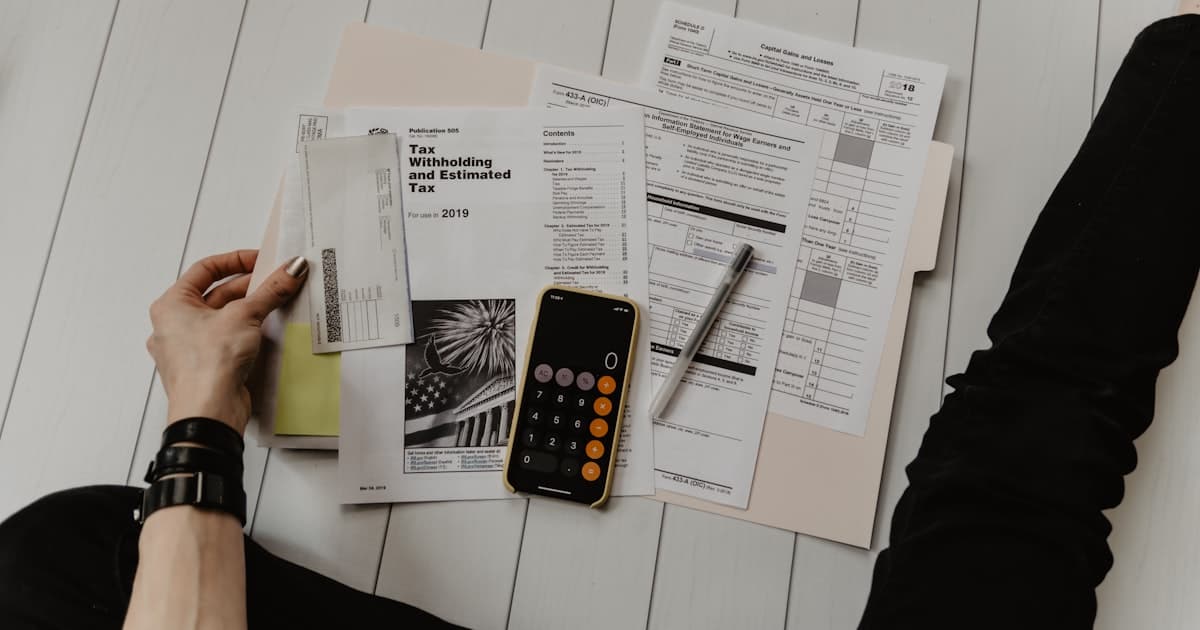
At twenty-four, I was making what I thought was a reasonable salary and somehow still had $11 in my checking account on the 28th of every month. Not as an occasional occurrence. As a pattern. As a lifestyle. Every month, without fail, I'd look at my bank balance in the last week and think, "How? Where did it go? I don't even do anything."
That last part wasn't true, of course. I did plenty. I just didn't track any of it. A $14 lunch here. A $6 coffee there. A $45 Uber at 2 AM because I forgot to check the surge pricing. A $120 bar tab that I split with "the group" even though I had two beers and someone else ordered three rounds of top-shelf tequila shots. Death by a thousand charges, and I couldn't name a single one that felt worth it in retrospect.
I wasn't poor. I was financially illiterate. There's a massive difference. Being poor means you don't have enough money. Being financially illiterate means you have money but it evaporates because nobody taught you how money actually works, and you're too embarrassed to ask because you feel like every other adult already knows.
What matters: most other adults don't know either. They're just faking it more convincingly than you are. So let's fix this together, starting from the absolute bottom.
Step One: Find Out Where Your Money Actually Goes
This is the step everyone skips because it's uncomfortable, like stepping on a scale after the holidays. But you can't fix a leak you can't see.
Go through your last three months of bank and credit card statements. Every single charge. Don't categorize them into neat buckets yet -- just look at them. The point is to create a moment of reckoning. You need to feel the full weight of your spending before you'll be motivated to change it.
When I did this for the first time, I discovered that I was spending $340 a month on food delivery. Three hundred and forty dollars. On food that arrived lukewarm, in bags that leaked, from restaurants I wouldn't have gone to in person. I also found subscriptions I'd forgotten about ($9.99/month for a meditation app I used once), recurring charges from a gym I hadn't visited since February, and approximately $180/month in "miscellaneous" spending that I genuinely could not identify. Money just... leaving.
This audit isn't about guilt. It's about awareness. You can't stick to a budget if you don't know what you're budgeting against.
Step Two: Pay Yourself First (No, Seriously, This Works)
I used to save whatever was left over at the end of the month. That said, about "whatever's left over" -- it's always zero. If the money is sitting in your checking account, you will spend it. Not because you're weak-willed, but because that's what checking accounts are for. It's like putting a plate of cookies on the counter and trying to not eat them. The cookies are going to lose.
The fix is stupid simple: set up an automatic transfer from your checking account to a savings account on the day you get paid. Before you see the money. Before you have a chance to mentally allocate it to "going out this weekend" or "that jacket I saw online." If the money leaves before you notice it, you adjust to living on less without it feeling like a sacrifice.
I started with $50 per paycheck. That's it. Fifty bucks. It was small enough that I barely noticed it missing, but after a year, I had $1,300 in savings that I would have otherwise spent on DoorDash and impulse buys from Amazon at midnight. The next year I bumped it to $100 per paycheck. Then $150. Now it's $200, and my checking account balance at the end of the month is basically the same as it was when I was saving $50, because lifestyle adjusts to the available cash like water filling a container.
Source for the claims above: S&P SPIVA scorecards.
Step Three: Build a Baby Emergency Fund
One of the main reasons guys stay broke is that every unexpected expense becomes a crisis. Your car needs new brakes: crisis. Your phone screen cracks: crisis. You get a parking ticket: crisis. Each one wipes out whatever little buffer you had, and you're back to zero. Or worse, you put it on a credit card, and now you're paying interest on a parking ticket, which is spiritually devastating.
The goal: get $1,000 saved as fast as reasonably possible. That's your emergency cushion. It's not a vacation fund. It's not a "this jacket is technically an emergency because it's on sale" fund. It's for genuine unexpected expenses that would otherwise force you into debt.
A thousand dollars solves most small emergencies. It covers a car repair, a medical copay, a broken appliance, or a last-minute flight home for a family emergency. Having it sitting there, untouched, does something psychological -- it reduces the ambient financial anxiety that you've probably been carrying for so long you don't even notice it anymore. The first time I handled an unexpected $400 expense by just... paying it, without panic or credit card debt, I felt like a different person.
Step Four: Stop Bleeding Money on Food
Food is where most broke twentysomethings hemorrhage cash without realizing it. Between takeout, delivery apps, coffees, lunches out, snacks, and the groceries you buy with good intentions that slowly rot in the fridge because you ordered Chipotle instead, food can easily eat (pun intended) 40% of your take-home pay.
I'm not going to tell you to never eat out. That's unrealistic and joyless. I'm going to tell you to eat out intentionally. Choose when you go out, make it count, and cook the rest.
(Adjacent reading: The Best Apps for Managing Your Money Like a Grown-Up.)
Cooking doesn't have to be complicated. Five meals you can rotate through the week is plenty. Something with chicken. Something with rice and beans. Something with pasta. Eggs for literally any meal. And whatever the simplest thing you actually enjoy making is. That's your lineup.
I spend about $70-80 a week on groceries now, which covers breakfast and dinner most nights. That's roughly $300/month on food I cook, compared to the $600+ I was spending when delivery apps had me in a chokehold. The math is not subtle.
Underlying figures: IRS publications.
Step Five: The Debt Question
If you have debt -- credit cards, car loan, student loans -- you're in the majority. Most twenty-somethings carry some form of debt, and the interest on that debt is actively working against every dollar you earn.
Priority one: stop adding to credit card debt. Credit cards at 25% APR are financial quicksand. Every dollar you put on a credit card and don't pay off in full costs you a quarter more over time. If you're carrying a balance, stop using the card for discretionary spending immediately. Use cash or a debit card until the balance is gone. The psychological friction of handing over physical cash or watching your checking account drop in real time is a powerful spending deterrent.
Priority two: pay minimums on everything except your smallest debt. Throw every extra dollar at the smallest balance until it's gone. Then take the money you were putting toward that debt and add it to the next smallest. This is the "debt snowball" method, and while it's not technically the most mathematically optimal approach (you'd save slightly more in interest by attacking the highest-rate debt first), it works better psychologically because the quick wins keep you motivated.
I had $4,200 in credit card debt at 25. It took me fourteen months to pay it off, during which time I ate a lot of rice and beans and said no to a lot of bar invitations. But the month I made the final payment and saw a zero balance was one of the best feelings of my entire adult life. Better than any night out. Better than anything I'd put on that card in the first place.
Step Six: Make More Money
Cutting expenses has a floor -- you can only reduce spending so much before you're living on rice and sadness. But income has no ceiling. If your budget is tight even after cutting waste, the bottleneck isn't your spending -- it's your earning.
Options, roughly in order of effort:
Ask for a raise. Seriously. If you've been at your job for a year or more, are performing well, and haven't had a meaningful compensation conversation, you're probably underpaid. Most people are.
Start a side hustle. Not a "hustle culture, grind 24/7, sleep when you're dead" side hustle. A practical one. Freelancing your existing skills. Tutoring. Selling stuff you don't need. Dog walking. Driving for a rideshare on weekends. Even an extra $300-500/month changes the math significantly.
Invest in skills that increase your earning power. A certification, an online course, a new tool you can learn. The best investment you can make in your twenties isn't stocks -- it's yourself, because you are your primary income-generating asset and upgrades to that asset compound for decades.
Step Seven: Start Investing (Even $25/Month)
I know. You barely have money to live on, and I'm telling you to invest. But hear me out, because compound interest is the closest thing to magic that exists in finance, and starting early is the single most important variable.
If you invest $100/month starting at 25, at a 7% average annual return, you'll have roughly $264,000 by age 65. Wait until 35 to start the same $100/month, and you'll have about $122,000. Ten years of waiting cost you $142,000. Time is the most valuable ingredient, and you have more of it right now than you ever will again.
You don't need to pick individual stocks. You don't need to understand options or futures or whatever your coworker won't stop talking about. Open a Roth IRA with Fidelity, Schwab, or Vanguard. Buy a target-date fund or a total stock market index fund. Set up automatic contributions. Forget about it. Check it once a year. That's it. That's the whole strategy.
The Emotional Part Nobody Talks About
Being broke is stressful in a way that affects everything. Your relationships, your sleep, your self-esteem, your willingness to make plans. The constant low-grade anxiety of knowing that one unexpected expense could wreck your month is exhausting, even when you don't consciously think about it.
Getting your financial life together doesn't happen overnight. It's not a dramatic transformation -- it's a slow, boring process of making slightly better choices consistently over months and years. But at some point, and I can't tell you exactly when because it's different for everyone, you'll check your bank account and feel something you haven't felt before: calm. Not rich. Not even comfortable, necessarily. Just calm. The knowledge that you have a buffer, a plan, and a direction. That's worth more than anything you could buy with the money you're currently wasting on surge-priced Ubers at 2 AM.
Start today. Not tomorrow. Not Monday. Not "after this paycheck." Right now. Open your bank statement. Set up that $50 automatic transfer. Cancel one subscription you don't use. Cook dinner tonight instead of ordering in. Small moves. Boring moves. The kind of moves that build a life where you stop being broke and start being somebody who used to be broke, which is a significantly better story to tell.
Further reading and primary sources
Background and primary-source references for the claims and recommendations above. Linked references are intended for readers who want to verify a claim, dig deeper into a topic, or check the underlying data themselves.
- S&P SPIVA scorecards — S&P Dow Jones Indices' semi-annual scorecard comparing active funds against benchmarks.
- IRS publications — official U.S. Internal Revenue Service publications on tax treatment of every account type.
- Bureau of Labor Statistics — official U.S. labor, wage, and inflation data.

About the writer
Marcus Hale
Senior writer — Tech & Money
Read more from Marcus — full archive, full bio, and contact on their writer page.
Share this story
More from Marcus
Spot a problem with this piece? Email info@luba.media.