Surviving Your First Music Festival Without Losing Everything
Music festivals are incredible. They're also three days of sensory overload where your phone dies, your feet hurt, and you forget how deodorant works. Here's the survival guide nobody gave me before my first one.
· 11 MIN READ
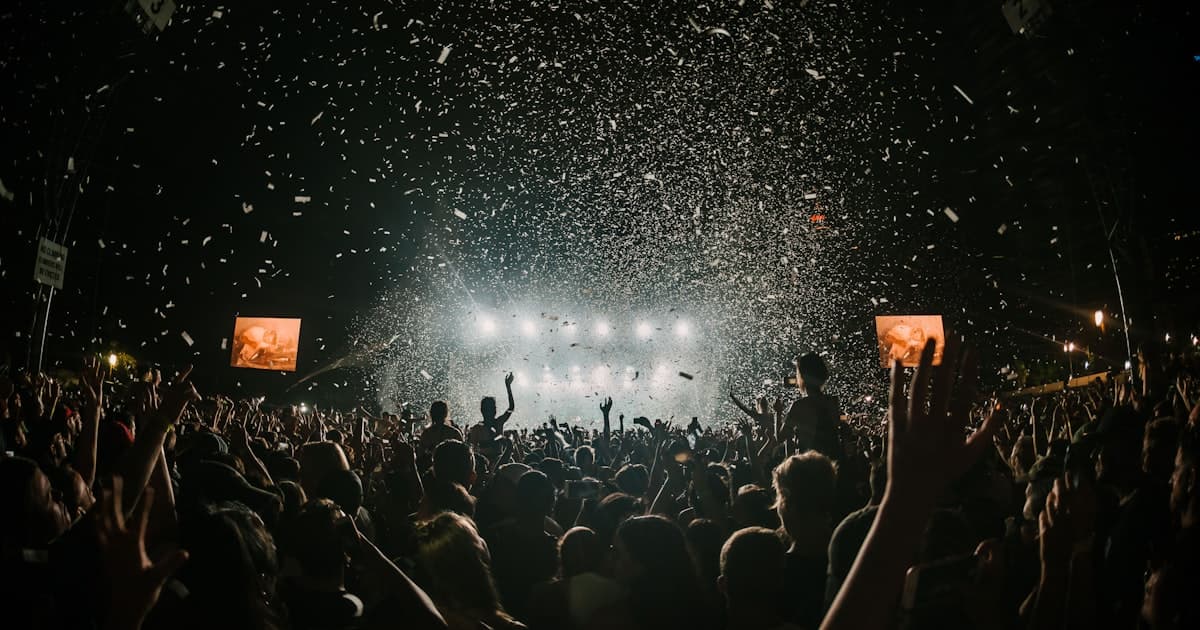
My first music festival was a masterclass in everything not to do. I showed up with a backpack containing one change of clothes, a phone charger with no portable battery, brand new boots I'd never broken in, zero sunscreen, and the unearned confidence of a man who thought "how hard can a weekend in a field be?"
Extremely hard, as it turns out. By hour six, my feet were hamburger. By hour twelve, my phone was dead and I couldn't find my friends in a crowd of 40,000 people. By day two, I'd gotten the worst sunburn of my life, lost my sunglasses, and eaten four $15 slices of mediocre pizza because I hadn't planned any alternative food situation. By day three, I was standing in a porta-potty that had clearly been through things no porta-potty should survive, questioning every decision that led me to this moment.
The music was incredible, though. Like, genuinely life-changing. And that's the paradox of music festivals -- the experience is unforgettable, but whether it's unforgettable in a good way or a traumatic way depends almost entirely on preparation.
I've since been to seven festivals, and I've gotten progressively better at it. Here's everything I wish someone had told me before that first one.
Packing: The Difference Between Survival and Suffering
The instinct for a first festival is to underpack because you don't want to carry stuff. This is wrong. Underpack for a weekend trip. Overpack for a festival. You're about to spend three days in conditions that are essentially glamorous homelessness, and what you bring determines your quality of life.
Shoes: the most important decision you'll make. Wear broken-in shoes. Not new shoes. Not shoes you bought for the festival. Shoes you've already walked miles in and know won't blister. I go with lightweight hiking shoes or trail runners -- they have support for standing all day, grip for mud (and there will be mud, even if the forecast says zero rain, because 40,000 people standing on grass creates its own weather), and they can get trashed without you caring.
Bring a second pair. This sounds like overkill until your main pair is soaked through at 2 PM on day one and you have to stand in wet shoes for eight more hours. A dry backup pair is the luxury that separates festival veterans from festival victims.
Clothing. Layers. Always layers. Festival weather is unpredictable, and even if it's 90 degrees during the day, nighttime at an outdoor venue can drop 20+ degrees. My formula: shorts and a t-shirt for daytime, a light long-sleeve for evening, a packable rain jacket regardless of forecast, and one warm layer (hoodie or flannel) for late night. Pack like you're going on a trip -- except anticipate everything getting dirty.
Bring more socks than you think you need. Dry socks are currency at a festival. They're the thing that can turn your entire day around at 4 PM when everything else is going sideways.
The non-negotiable supply list. Sunscreen (SPF 50, reapply every two hours, I don't care if you think you don't burn). A hat with a brim. A portable phone charger -- not the one that gives you one charge, the big one that gives you four to five charges. A reusable water bottle that holds at least 32 ounces. Earplugs (yes, at a music festival -- we'll get to this). A fanny pack or crossbody bag that sits against your body and zips closed.
First aid that matters. Blister bandages (Compeed or similar -- these are genuinely magical and worth every penny). Ibuprofen. Electrolyte packets. Pepto-Bismol tablets. Wet wipes. Hand sanitizer. This isn't being paranoid. This is being a person who's going to be walking 15,000+ steps a day in the sun while eating questionable food and using questionable bathrooms.
Protecting Your Stuff (Because Theft Is Real)
Nobody wants to talk about this, but festival theft is extremely common. Dense crowds, distracted people, loud music covering any sounds -- it's an environment optimized for pickpockets.
Your phone goes in a zipper pocket or a bag that sits against your body at all times. Not your back pocket. Not a tote bag hanging open. Against your body, zipped. I use a small crossbody bag that rides on my front. It's not the coolest look, but I've never lost anything.
Leave anything you can't afford to lose at the campsite or hotel. That expensive watch, that wallet full of cards you don't need, your actual keys (bring just your car key, not the whole ring). Festival philosophy is: if losing it would ruin your weekend, don't bring it into the crowd.
Take a photo of your ID and store it on your phone and email it to yourself. If you lose your physical ID, having a photo won't get you into a bar, but it might help you deal with security or get back into the festival if your wristband malfunctions.
The Earplug Thing (Seriously)
I know. You're going to a music festival to hear music, and I'm telling you to put plugs in your ears. This sounds like telling someone to wear a blindfold to an art museum.
The reality: festival sound systems are mixed to be heard across massive fields. When you're close to the stage, you're absorbing sound levels that can genuinely damage your hearing. Not "might damage in theory." Will damage. Prolonged exposure above 85 decibels causes hearing loss. A festival main stage regularly hits 100-110 decibels. That's not a maybe. That's an audiologist's nightmare.
High-fidelity earplugs -- not the foam ones, the ones designed for concerts -- reduce volume by 15-20 decibels while preserving sound quality. The music actually sounds better because you can hear the detail without the painful parts. A pair of Earasers or Loop earplugs costs $20-$40 and will protect the hearing you need for the rest of your life. It is the most important $20 you'll spend on festival gear.
(Companion read: Hiking for Guys Who Aren't Outdoorsy (Yet).)
Underlying figures: Britannica.
I didn't wear earplugs at my first three festivals. I now have mild tinnitus in my left ear. A permanent ringing that never goes away. It's not debilitating, but it's there, all the time, a constant reminder that 22-year-old me thought earplugs were "lame." They're not lame. Hearing loss is lame.
Food and Water: The Survival Fundamentals
Festival food is expensive and often terrible. The $15 pizza slice I mentioned earlier was cold in the middle, and I bought four of them over the weekend because I had no other plan. That's $60 on bad pizza. I've made worse financial decisions, but not many.
Hydration is not optional. You're in the sun, you're walking constantly, you're probably drinking alcohol, and your body is burning through water faster than you realize. The number one reason people end up in the medical tent at festivals isn't drugs or alcohol -- it's dehydration. Carry a water bottle, fill it at every water station you pass, and drink before you're thirsty. By the time you feel thirsty, you're already behind.
My rule: one bottle of water for every alcoholic drink, and a full bottle before bed. This is not fun. It means more bathroom trips, which at a festival means more porta-potty visits, which is its own special kind of suffering. But it also means you wake up on day two feeling human instead of feeling like a forgotten house plant.
The food strategy. If camping, bring your own breakfast supplies -- granola bars, peanut butter, bread, bananas, things that don't need refrigeration. This saves you $15-$20 per morning on festival breakfast, which ranges from mediocre to offensive. For lunch and dinner, budget for festival food but scope out the options first. Walk the entire food vendor area before buying anything. The best food is often in the corner booth nobody's found yet, not the one with the longest line.
Electrolytes. Bring powder packets -- Liquid IV, LMNT, or even Pedialyte packets. Drop one in your water bottle each morning. After a day of sweating, walking, and partaking in whatever your vices are, your body is depleted. Electrolytes are the difference between waking up ready for day two and waking up feeling like you were hit by a truck that then backed over you.
Navigating the Actual Festival
Study the map and schedule ahead of time. Festival grounds are confusing, stages have names you won't remember, and set times overlap. Before you arrive, download the festival app (they all have one), star the acts you want to see, and note which stages they're on. Build in walking time between stages -- at a big festival, going from one end to the other can take 20-30 minutes through crowds.
Accept that you'll miss things. The schedule is designed so that you can't see everything. Conflicts are inevitable. Make peace with this now. Pick your priorities and let the rest go. The worst festival experience is trying to see everything and enjoying nothing because you're always rushing to the next thing.
Have a meeting point. Cell service at festivals ranges from "spotty" to "nonexistent" because 40,000 phones are all trying to use the same few towers. Establish a physical meeting point with your group -- "the tree near the water station by the second stage, at the top of every hour." When your phone dies or texts won't send, this is how you find each other.
Front is not always best. Being in the front row means getting crushed against a barrier for hours, having zero mobility, and enduring the most intense volume. Seriously. The sweet spot for sound and experience is typically 20-50 rows back from the stage, slightly off-center. Better sound mix, more space, easier exit if you need to leave for water or bathrooms.
The Social Dimension
One of the best things about festivals is the people. Everyone is in a good mood. Everyone is there because they love music. Conversations happen easily. Making friends at a festival is the polar opposite of making friends in regular adult life -- nobody's guarded, nobody's on their phone, and sharing a blanket space during a sunset set creates bonds that feel instantly deep.
Talk to the people next to you. Share your snacks. Offer someone sunscreen. Compliment the person with the ridiculous outfit (there's always someone with a ridiculous outfit, and they love being noticed). Festival culture is one of the few remaining social spaces where strangers are genuinely friendly by default.
But also: trust your instincts. If someone feels off, move away. Not every encounter needs to be extended. Your safety is more important than being polite.
The Aftermath
Nobody talks about the post-festival crash. You've been running on adrenaline, stimulation, and probably not enough sleep for three days. When you get home, your body is going to demand payment.
Take the day after the festival off work if you can. Not to do anything productive -- to recover. Shower. Eat real food. Drink a gallon of water. Sleep for twelve hours. Let your feet heal. Process the experience without immediately jumping back into real life.
The first real shower after three days at a festival is one of life's purest pleasures. I'm not being dramatic. You will stand under that water and feel genuine gratitude for indoor plumbing in a way you never have before.
Was It Worth It?
Every time. Despite the sunburns, the lost sunglasses, the porta-potties, the $60 in bad pizza, and the blisters that made me walk like a penguin -- every single festival has been worth it.
There's something about live music in an outdoor setting, surrounded by thousands of people who are all feeling the same thing at the same time, that you simply cannot replicate anywhere else. A song you've heard a hundred times on headphones becomes a completely different experience when you hear it live, under the stars, with bass you can feel in your chest and 30,000 people singing along.
Your first festival will be chaotic. You'll make mistakes. You'll forget something important. You'll spend too much on something dumb. And somewhere in the middle of it all, you'll be standing in a field watching an artist you love play as the sun goes down, and you'll think "oh. This is what everyone was talking about."
Bring earplugs. You'll want to hear that memory for the rest of your life.
Further reading and primary sources
Background and primary-source references for the claims and recommendations above. Linked references are intended for readers who want to verify a claim, dig deeper into a topic, or check the underlying data themselves.
- Britannica — encyclopedic reference for historical and cultural background.
- Library of Congress — U.S. Library of Congress historical archives and primary sources.
- National Archives — U.S. National Archives primary historical documents.

About the writer
Jordan Shaw
Senior writer — Culture, Style & Relationships
Read more from Jordan — full archive, full bio, and contact on their writer page.
Share this story
More from Jordan
Spot a problem with this piece? Email info@luba.media.