Hiking for Guys Who Aren't Outdoorsy (Yet)
You've spent most of your adult life within Wi-Fi range and your most strenuous physical activity is carrying groceries in one trip. Here's how to start hiking without embarrassing yourself, hurting yourself, or getting lost in the woods like a cautionary tale.
· 12 MIN READ
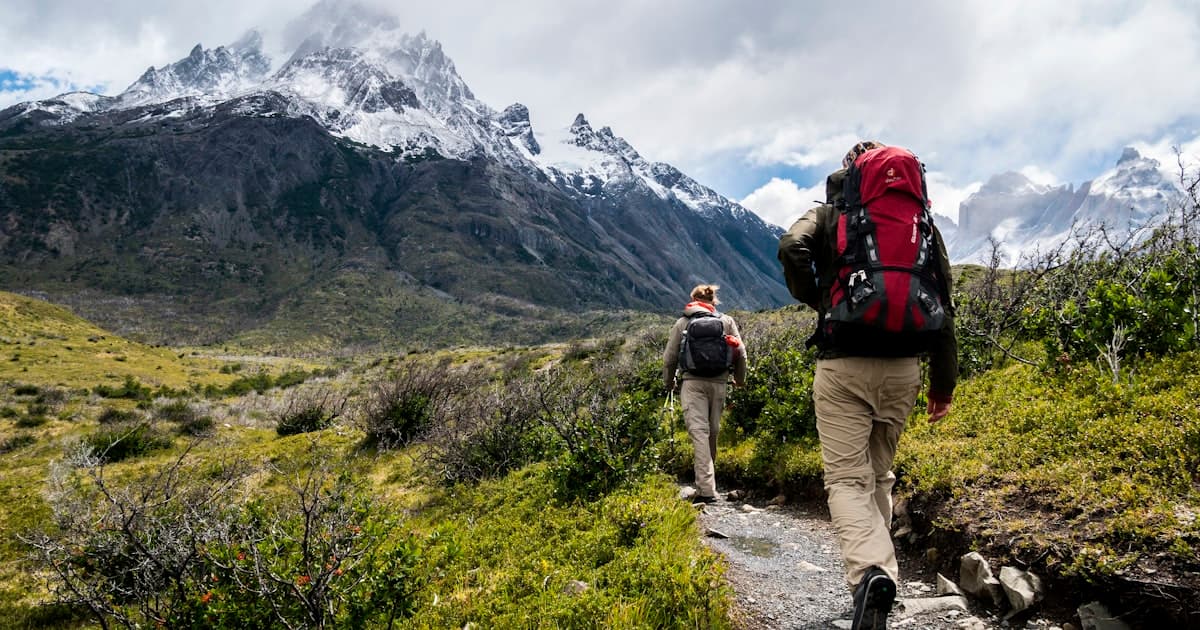
I'm going to be honest with you. Until about a year ago, my idea of "the great outdoors" was eating lunch on a patio instead of inside. I had never voluntarily walked uphill. The closest I'd come to nature was a screensaver of a mountain. I once described a five-minute walk to a restaurant as "a bit of a hike." I was, by every measurable standard, an indoor person.
Then a buddy dragged me on a hike in Shenandoah and something broke in my brain -- in a good way. Three hours of walking through trees, breathing air that didn't taste like a building, and standing at an overlook where I could see three states at once. I felt something I hadn't felt since I was a kid playing outside until dark: genuinely, stupidly alive.
I've been hiking most weekends since. And I've learned a lot -- some of it from reading, some from experience, and some from making mistakes that ranged from "mildly inconvenient" to "I genuinely thought I might have to call someone for help." If you're a guy who's spent most of his time indoors and is even slightly curious about hiking, this is the guide I wish I'd had before I showed up to a trailhead wearing jeans and carrying a single Dasani water bottle like some kind of wilderness amateur.
Picking a Trail (Without Accidentally Signing Up For a Death March)
The single most important thing you can do as a new hiker is pick the right trail. This sounds obvious. It is not. Because every trail website describes difficulty differently, "moderate" means wildly different things in different parts of the country, and there's always some guy in the reviews writing "Easy trail, great for families!" who turns out to be a former Marine with calves the size of bowling balls and a casual definition of "easy" that would hospitalize most accountants.
Here's what to look for. You want a trail that's between two and five miles round trip. Not one-way -- round trip. I made that mistake once. Drove to a trailhead, started a "three-mile" trail, felt great for an hour, then realized I was three miles away from my car and had to walk three miles back. That's a six-mile hike, which for a guy whose longest recent walk was through a Costco, is a fundamentally different experience.
Elevation gain matters more than distance. A flat three-mile walk through the woods is easy. A three-mile trail with 1,500 feet of elevation gain will have you seriously questioning your cardiovascular health and your life decisions. For your first few hikes, look for trails with under 500 feet of elevation gain. You want "rolling hills," not "scrambling up rocks while wheezing."
AllTrails is your best friend. Download the app. It has reviews, difficulty ratings, photos from other hikers, and -- this is the key feature -- a map that shows the trail route so you don't get lost. I'd also recommend downloading the map for offline use before you head out, because cell service in the mountains has the reliability of a friend who says they'll help you move.
Gear: What You Actually Need (And What's Just Marketing)
The outdoor gear industry has a financial incentive to make you believe you need $2,000 worth of equipment to walk in the woods for three hours. You do not. Here's what you actually need for a day hike:
Shoes. This is the one thing worth spending money on. You can get away with running shoes or sturdy sneakers on flat, well-maintained trails. But the moment there's any rock, root, mud, or incline involved, you want hiking shoes or trail runners with actual tread. I started with a pair of Merrell Moab 3s that cost about $110, and they've been tanks. Salomon, Keen, and Columbia all make solid options in that range too. You don't need full-on leather hiking boots unless you're doing multi-day backcountry trips, and if you're reading this article, you are not doing that yet.
If you've been shopping for running shoes and have a pair of trail runners already, those work perfectly fine for most beginner hikes. Same principles apply -- go to a store, try them on, make sure your toes have room.
A backpack. Not a Jansport from college. Not a leather messenger bag. A basic daypack with a hip belt and a water bottle pocket. Doesn't need to be fancy. Osprey, Deuter, and REI's house brand all make daypacks in the $50-$80 range that are perfectly good. You want something in the 20-30 liter range -- big enough for water, snacks, and a jacket, small enough that you're not lugging a wardrobe up a mountain.
Water. More than you think you need. The general rule is about a half liter per hour of hiking, more if it's hot or you're going uphill. Bring at least two liters for a three-to-four-hour hike. I carry a 3-liter CamelBak bladder because drinking from a tube while walking makes me feel like a cool astronaut, but regular water bottles work fine.
Snacks. Trail mix, granola bars, jerky, an apple, whatever. You will get hungrier than you expect. Your body burns through calories fast when you're walking uphill with a pack on, and bonking (running out of energy mid-hike) is a real thing that turns a pleasant walk into a miserable slog. Pack more food than you think you'll eat.
Layers. Weather in the mountains changes fast. Even if it's warm at the trailhead, it can be fifteen degrees cooler and windy at the top. A lightweight rain jacket that packs down small is worth its weight in gold. I got caught in a surprise rainstorm on a ridge once wearing just a t-shirt, and the forty-minute walk back to the car in cold rain was one of the more educational experiences of my life.
Things you do not need: trekking poles (yet), a GPS device (your phone is fine), bear spray (unless you're hiking in grizzly country, which you shouldn't be as a beginner), or any clothing item described as "technical." That word is how outdoor brands justify charging $90 for a shirt.
Trail Etiquette: Don't Be That Guy
Hiking culture is pretty chill, but there are some unwritten rules that separate the people who belong on the trail from the people everyone else is silently judging.
Yield to uphill hikers. If someone is coming up and you're going down, step aside and let them pass. Going uphill is harder, they've got momentum, and stopping on a steep incline sucks. This is the single most universally agreed-upon rule of hiking.
(For related context, see Best Wearables for Men Who Hate Wearing Things.)
Don't play music out loud. I cannot stress this enough. Nobody went to the woods to listen to your Bluetooth speaker playing Joe Rogan or EDM. Wear earbuds if you need audio. Personally, I hike without anything in my ears now because the silence is kind of the point, but I understand the appeal of a podcast on a long flat stretch. Just keep it in your ears.
Pack out everything you bring in. Every wrapper, every tissue, every orange peel. Yes, orange peels — the Leave No Trace Center for Outdoor Ethics lists them as exactly the kind of "natural" trash people wrongly assume vanishes; they can take 2+ years to decompose and they attract wildlife to trails in ways that mess with animal behavior. Leave the trail cleaner than you found it. If you see trash on the trail, pick it up. This is the bare minimum for being a person who deserves access to nice things.
Stay on the trail. Don't cut switchbacks, don't bushwhack through the woods to save thirty seconds, and don't trample through meadows for a photo. Trails exist to concentrate foot traffic and protect the landscape. Going off-trail causes erosion and damages vegetation that took decades to grow.
Say hi to other hikers. A simple "hey" or a nod as you pass someone. This isn't mandatory, but it's the culture, and it's weirdly nice. There's something about greeting strangers in the woods that feels genuinely human in a way that never happens in a grocery store.
Fitness Prep: You Don't Need to Be in Shape (But It Helps to Not Be in Terrible Shape)
Here's the good news: hiking is one of the most forgiving physical activities you can start. It's just walking. You already know how to walk. The bad news is that walking uphill with a pack on for three hours is a completely different experience than walking to your car, and if you're completely sedentary, your first hike is going to hurt in unexpected places.
The muscles that hiking hits hardest are your calves, your quads, and your glutes. If you want to prep, here's the simplest possible routine: walk more. That's it. Walk to places you normally drive. Take stairs instead of elevators. If you want to get fancy, do some bodyweight squats, lunges, and calf raises a few times a week for two or three weeks before your first real hike.
Cardio helps too. If you've been running or cycling or doing literally anything that gets your heart rate up, you're in better shape for hiking than you think. If the most cardiovascular work you've done recently is running to catch a closing elevator, consider taking a few brisk 30-to-45-minute walks in the two weeks before your first hike. Walk hills if you can find them.
Don't let fitness anxiety stop you from going. I was in mediocre shape when I started, and I survived. I was slow, I was sweaty, and I took breaks that a serious hiker would find embarrassing. But I made it. The trail doesn't care how fast you go. That's the beauty of it -- there's no scoreboard, no timer, no guy on a megaphone telling you to pick it up. You walk at your pace. You stop when you want. There's also a real health case here: a 2019 JAMA Internal Medicine study of older women found mortality risk dropped sharply with daily step counts up to about 7,500 steps a day — the kind of volume a single weekend hike easily knocks out. It's the most low-pressure workout that exists.
Beginner-Friendly Trails That Are Actually Worth the Drive
I'm not going to give you a list of thirty trails because you're going to hike one or two before you decide if you like this. Here are five that are genuinely great starter hikes, spread across the country, that deliver a real payoff without destroying you.
Angel's Rest, Columbia River Gorge, Oregon. About 4.8 miles round trip with some solid elevation gain -- roughly 1,500 feet, so this one's on the harder end of beginner. But the view from the top, overlooking the gorge with the river cutting through below, is one of those "oh, this is why people do this" moments. Go on a weekday if you can; weekends get crowded.
Breakneck Ridge, Hudson Valley, New York. A 3.7-mile loop with some rock scrambling that makes you feel like you're doing something adventurous. The views of the Hudson River are spectacular, and it's accessible by Metro-North from the city, which means you don't even need a car. Fair warning: the first section is steep. Take your time.
Koko Head Crater Trail, Oahu, Hawaii. Technically a giant outdoor staircase -- 1,048 steps straight up an old railroad track on the side of a volcanic crater. It's brutal and short (about 1.8 miles round trip) and the view from the top is the kind of thing that makes you understand why people post sunset photos. If you happen to be in Hawaii, this is a must.
Emerald Lake Trail, Rocky Mountain National Park, Colorado. 3.6 miles round trip, relatively gentle grade, and you end up at a turquoise alpine lake surrounded by mountains. It's one of those trails where every person you pass is smiling because the scenery is doing all the work. Gets crowded in summer, so start early.
Laurel Falls, Great Smoky Mountains, Tennessee. 2.6 miles round trip on a paved trail to a waterfall. This is the "I'm not sure I even like hiking yet" option, and there's no shame in it. The Smokies are gorgeous, the trail is easy, and ending at a waterfall feels like a reward you actually earned. If you're anywhere near the Southeast, this pairs perfectly with a weekend trip that won't break the bank.
The Part Where I Tell You to Just Go
I know how this works. You're going to read this, think "yeah, I should try hiking," and then not do it for three months because something always comes up. There's always a reason not to go. The weather's not perfect. You don't have the right shoes yet. You're tired. Your buddy bailed. You don't know which trail to pick.
Go anyway. Go alone if you have to. Pick a trail, any trail -- the closest one rated "easy" on AllTrails -- and just drive there on a Saturday morning. You don't need to prepare for two weeks. You don't need a complete gear setup. You need shoes that aren't sandals, water, and a willingness to walk in a direction that's slightly uphill.
The thing about hiking that nobody tells you is that the bar for having a good time is incredibly low. You don't have to summit anything. You don't have to go far. You just have to get outside, walk for a while, and pay attention. That's it. And I promise you -- from one formerly indoor guy to another -- the first time you're standing somewhere beautiful that you walked to under your own power, breathing hard, legs a little tired, looking at something your phone screen could never do justice to, you're going to get it.
You're going to get why people do this. And you're going to want to do it again.
Sources

About the writer
Jordan Shaw
Senior writer — Culture, Style & Relationships
Read more from Jordan — full archive, full bio, and contact on their writer page.
Share this story
More from Jordan
Spot a problem with this piece? Email info@luba.media.