The Gym Bro Glossary, Decoded
If you've ever stood in a gym feeling like everyone's speaking a different language, you're not wrong. Here's your field guide to the vocabulary of gym culture -- from 'progressive overload' to 'ego lifting' -- translated for normal humans.
· 12 MIN READ
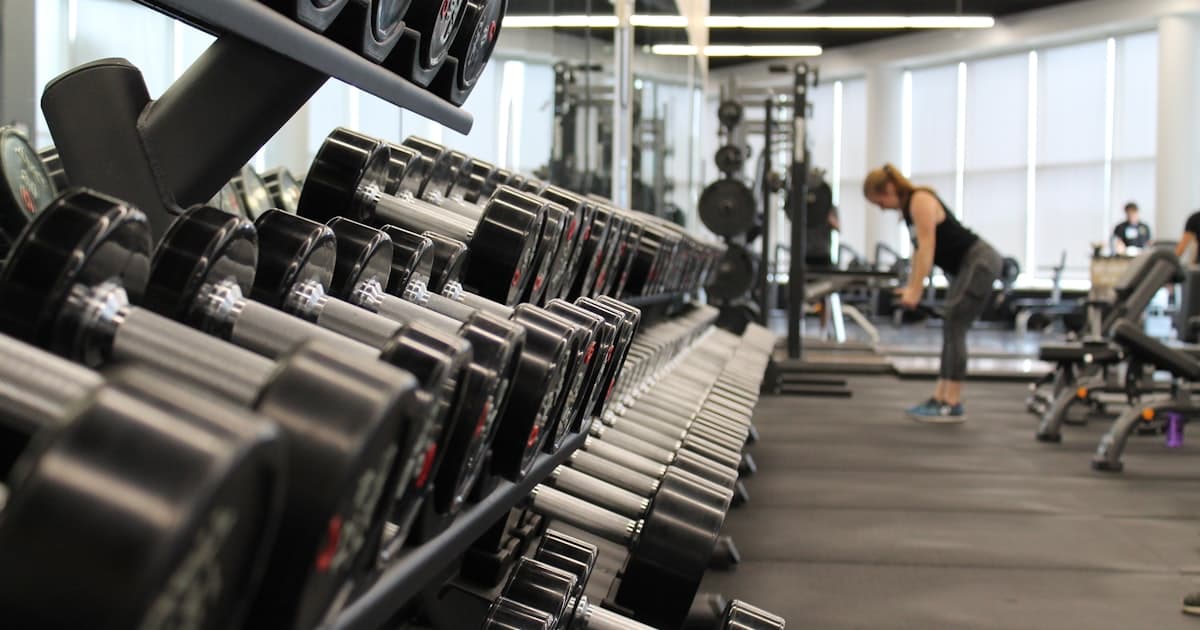
The first time I walked into a real gym -- not a Planet Fitness, not my apartment complex's "fitness center" with two treadmills and a busted cable machine -- I felt like I'd entered a foreign country where everyone was jacked and speaking in code.
Two guys next to the squat rack were having a conversation that went something like: "Bro, I've been running a PPL split but I'm thinking about switching to an upper/lower because my CNS is fried from maxing out last week. Also I think I'm overtraining my anterior delts because my OHP has stalled and I need to deload."
I nodded like I understood. I understood approximately four of those words, and two of them were "bro" and "I."
It took me about a year of consistent gym-going, an embarrassing amount of YouTube watching, and several conversations where I pretended to know what people were talking about before I actually figured out what all these terms meant. Consider this the guide I wish I'd had on day one.
The Exercises
Compound movement. An exercise that works multiple muscle groups and joints at once. Squats, deadlifts, bench press, overhead press, rows. These are the big-ticket items, the ones that give you the most bang for your buck. If someone tells you to "focus on your compounds," they're saying do the major lifts before you spend forty minutes doing bicep curls.
Isolation movement. The opposite -- an exercise that targets one specific muscle. Bicep curls, tricep extensions, lateral raises, leg curls. These are the detail work, the finishing touches. Important, but secondary to compounds. Think of compounds as the walls and roof of a house, and isolation movements as the paint and trim.
OHP. Overhead press. You push a barbell or dumbbells from your shoulders to above your head. It's one of the fundamental compound lifts and it's harder than it looks, which is why you'll see guys loading up the bench press with 225 and then struggling with 95 pounds on OHP. Shoulders are humbling.
RDL. Romanian deadlift. A variation of the deadlift where you keep your legs mostly straight and hinge at the hips, lowering the weight to about mid-shin. It absolutely destroys your hamstrings and glutes in the best way. Also, nobody is entirely sure why it's called "Romanian." It might have something to do with a Romanian weightlifter who did them in front of American coaches in the '90s. The lore is unclear.
Skull crushers. A tricep exercise where you lie on a bench and lower a barbell or dumbbells toward your forehead. The name is both descriptive and cautionary. I've seen a guy's grip slip on these exactly once, and the bar stopped about an inch from his face. He didn't do skull crushers again for six months. Respect the name.
Face pulls. An exercise using a cable machine where you pull the rope attachment toward your face. It works your rear delts and rotator cuff and is basically the single most recommended exercise on the internet for shoulder health. If you go to any fitness forum and describe literally any problem -- shoulder pain, bad posture, your car won't start -- someone will tell you to do face pulls.
The Programming
Split. How you organize which muscle groups you train on which days. The way you split up your workouts across the week. There are approximately eleven thousand ways to do this, and people will argue about the best one until the sun explodes.
PPL. Push, Pull, Legs. One of the most popular splits. Push day you do chest, shoulders, and triceps (pushing movements). Pull day you do back and biceps (pulling movements). Leg day you do... legs. Typically run as six days a week: Push, Pull, Legs, Push, Pull, Legs, rest. It's popular because it makes logical sense and lets you hit everything twice a week.
Underlying figures: CDC physical activity guidelines.
Bro split. The old-school approach: Monday is chest, Tuesday is back, Wednesday is shoulders, Thursday is arms, Friday is legs (or, more accurately for most bro-splitters, Friday is "skip legs and do more chest"). Each muscle gets hammered once a week with a ton of volume. Science suggests hitting muscles twice a week is probably better for growth, but the bro split has built a lot of impressive physiques over the decades, so who am I to argue with results.
Progressive overload. The single most important concept in strength training, and the one that took me the longest to actually understand. It means gradually increasing the demands on your muscles over time -- more weight, more reps, more sets, less rest. Your body adapts to whatever you throw at it, so if you bench press 135 pounds for 3 sets of 10 every Monday for six months, your body will adapt to exactly that and then stop changing. You have to keep pushing the dial forward, even if it's just adding 5 pounds or one extra rep.
Deload. A planned period (usually a week) where you intentionally reduce your training volume or intensity to let your body recover. It feels counterintuitive -- "I'm going to get weaker if I lift less!" -- but deloads are where your body actually catches up on all the repair work it's been putting off. Think of it as taking your car in for maintenance. You're not driving less because you don't like driving. You're driving less so the engine doesn't explode.
CNS fatigue. Central nervous system fatigue. When people say their "CNS is fried," they mean their nervous system is overtaxed from heavy lifting, which makes them feel tired, weak, and generally like garbage even when they've slept enough. It's a real thing, though it's also dramatically overdiagnosed by guys who just didn't sleep well and had too much coffee. Sometimes you're not experiencing CNS fatigue. Sometimes you're just tired.
Volume. The total amount of work you do. Usually calculated as sets x reps x weight, or more casually, just the total number of hard sets per muscle group per week. More volume generally means more growth, up to a point. That point is different for everyone, and finding it is one of the actual skills of long-term training. For reference, most research suggests somewhere between 10-20 hard sets per muscle group per week is the productive range for most people. You can read more about sensible training in my piece on gym etiquette and the unwritten rules.
The Body Talk
Gains. Muscle growth. Progress. The whole point. Used both sincerely and ironically. "I'm making gains" (sincere, said while looking in the mirror). "Guess I'll sacrifice my gains" (ironic, said while eating a donut).
(For a related angle, see Embarrassing Fitness Trends That Actually Worked.)
Natty. Short for natural. Means someone who doesn't use performance-enhancing drugs -- no steroids, no testosterone, no growth hormone. "Is he natty?" is the gym equivalent of asking whether a painting is an original or a print. The answer is always debatable and the debate is always passionate.
Ego lifting. Loading up way more weight than you can handle with proper form, purely because other people are watching (or you think they are). It's the guy bench pressing 225 with his spotter doing a full upright row to help him get the bar up. The guy quarter-squatting 405 and then walking around like he just set a world record. We've all done it. It's always a mistake. It's how injuries happen.
Mind-muscle connection. The ability to consciously focus on and feel the specific muscle you're trying to work during an exercise. Sounds like pseudoscience, is actually legit. When you do a bicep curl and you can genuinely feel your bicep contracting and working through the full range of motion, versus just flailing the weight up -- that's the mind-muscle connection. It makes a real difference, especially for isolation exercises.
DOMS. Delayed onset muscle soreness. That feeling when you sit down on the toilet two days after leg day and your quads stage a formal protest. It typically peaks 24-48 hours after a workout, which is why you feel fine leaving the gym and then can barely walk down stairs the next morning. DOMS is more intense when you're new to training or when you do something your body isn't used to. It's not a reliable indicator of a good workout -- sometimes the best workouts don't leave you sore at all.
Pump. The temporary swelling of muscles during and immediately after a workout, caused by blood rushing into the muscle tissue. Arnold famously compared the pump to... well, something I won't quote here because this is a family-adjacent publication. The point is it feels great, it makes you look bigger temporarily, and it's the reason every gym has mirrors. The pump is the gym's version of beer goggles, except you're checking out yourself.
The Diet Talk
Bulk. An intentional period of eating in a caloric surplus to gain weight, with the goal of building muscle. You eat more than your body burns, lift heavy, and accept that some fat gain comes with the territory.
For the underlying data, see PubMed.
Cut. The opposite. An intentional caloric deficit to lose fat while trying to preserve muscle. You eat less, keep lifting, do some cardio, and become intimately familiar with hunger as a constant companion.
Dirty bulk. Bulking with no regard for food quality. Eating everything in sight. Fast food, pizza, ice cream, protein shakes that are basically milkshakes. You'll gain muscle, but you'll also gain a lot of fat, and the subsequent cut will be brutal. It's fun for about three weeks and then your pants don't fit.
Lean bulk. Bulking with a modest caloric surplus (200-300 calories above maintenance) and mostly clean food. Slower muscle gain, but much less fat gain. Requires more discipline and tracking. Boring but effective.
Macros. Short for macronutrients: protein, carbohydrates, and fat. When someone says they're "tracking macros," they're counting how many grams of each they eat daily instead of just counting total calories. It's a more precise approach to nutrition and it's what most serious gym-goers eventually migrate to. It also turns every meal into a math problem, which is either satisfying or exhausting depending on your personality.
Protein. The building block of muscle. The thing gym bros talk about more than anything else. The general recommendation is somewhere around 0.7 to 1 gram per pound of body weight per day, which sounds achievable until you try to eat 180 grams of protein without any supplements and realize that's basically two entire chickens. This is why protein shakes exist.
The Culture
PR. Personal record. The most weight you've ever lifted on a given exercise. Setting a new PR is one of the genuine joys of training -- this pure, objective proof that you're stronger than you were before. It's also the moment when gym etiquette permits you to make a face that in any other context would be concerning.
Spotter. Someone who stands behind you to help if you fail a lift. Essential for heavy bench press, useful for squats, and the source of some of the most intimate moments between strangers you'll ever witness. Making eye contact with a stranger while he helps you grind out a bench press rep is a bond that transcends normal social interaction.
Gym shark. Both a clothing brand and a general term for the person at your gym who's clearly there as much for the content as for the workout. Identifies by: filming every set, occupying equipment for twenty minutes while resting between takes, and wearing outfits that suggest they're about to compete in something.
Newbie gains. The rapid progress you make when you first start lifting, before your body adapts and progress slows to a crawl. Beginners can add weight to the bar every single session for months. This is intoxicating and also misleading, because it creates the expectation that progress will always be this fast. It won't. Enjoy the newbie gains while they last. They're the honeymoon phase of lifting.
If you're brand new and want a workout that doesn't require any of this vocabulary, check out the no-gym workout guide for something you can do at home while you build up your confidence (and your glossary).
The Unspoken Truths
That said, nobody tells you: every single person in the gym was confused by this stuff at some point. The biggest guy in your gym once stood in front of a cable machine and had no idea which attachment to use. The woman squatting 225 once googled "what is a squat rack" in a Planet Fitness parking lot.
The vocabulary exists because fitness, like every subculture, develops its own language. It's not meant to exclude you, even if it feels that way. And the vast majority of people at the gym will happily explain any of these terms if you just ask. Most gym people are friendly. They're not judging you. They're too busy looking at themselves in the mirror.
Now go forth. Use these terms wisely. And for the love of everything, please don't ego lift.
Further reading and primary sources
Background and primary-source references for the claims and recommendations above. Linked references are intended for readers who want to verify a claim, dig deeper into a topic, or check the underlying data themselves.
- CDC physical activity guidelines — official U.S. Department of Health and Human Services activity guidelines for adults.
- PubMed — National Library of Medicine bibliographic database of peer-reviewed biomedical literature.
- American College of Sports Medicine position stands — ACSM official position stands on exercise prescription and physiology.

About the writer
Daniel Reyes
Senior writer — Fitness, Cars & Sports
Read more from Daniel — full archive, full bio, and contact on their writer page.
Share this story
More from Daniel
Spot a problem with this piece? Email info@luba.media.