How to Pick a Barber That Won't Ruin Your Life
A bad haircut follows you around for weeks like a personal shame cloud. Here's how to find a barber who actually listens, knows what they're doing, and won't send you home looking like you lost a bet.
· 12 MIN READ
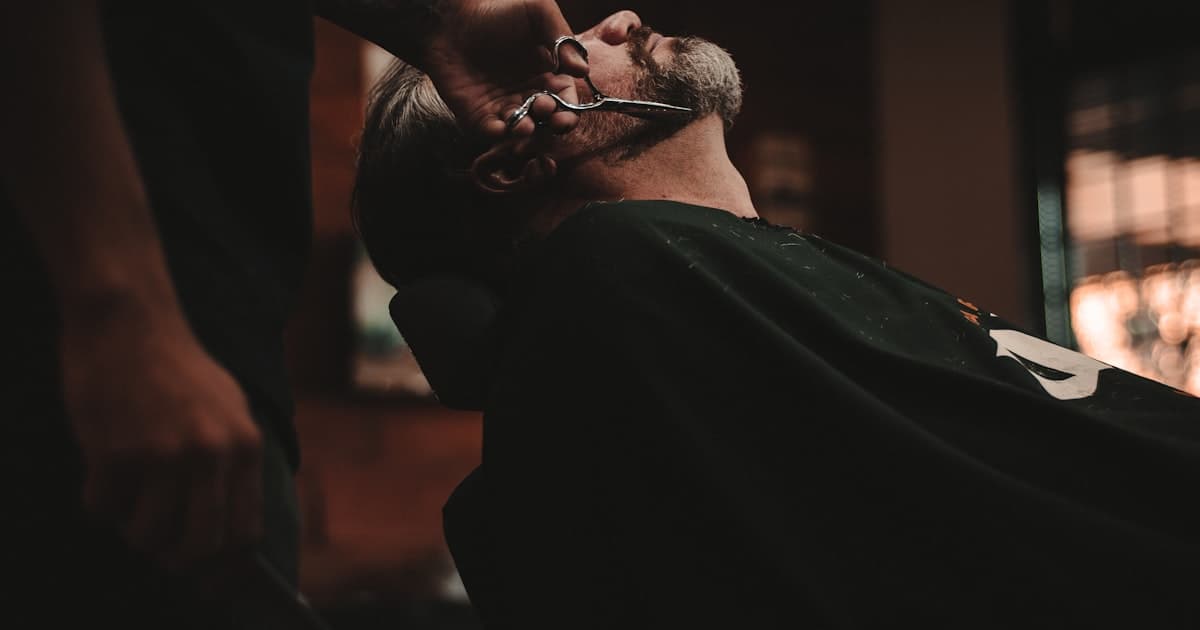
In 2023, I walked into a barbershop I'd never been to, sat down in the chair, and said the four words that have destroyed more men's hairlines than genetics: "Just clean it up."
Forty minutes later I walked out looking like a before photo. The barber had interpreted "clean it up" as "remove as much hair as possible from the sides while leaving a confusing amount on top," giving me a silhouette that can only be described as "mushroom with anxiety." I wore a hat for three weeks. I told people I was going through a "hat phase." Nobody bought it.
That experience -- and the several bad haircuts that preceded it -- taught me that finding a good barber is one of the most important quality-of-life decisions a man can make, and most of us approach it with less research than we'd put into choosing a restaurant for Friday night. We'll spend twenty minutes reading Yelp reviews for tacos but walk into a random barbershop and hand a stranger a pair of scissors and say "do whatever you think."
I've since found my barber. His name is Raul. He is an artist. I would follow Raul to the ends of the earth, or at least to a different neighborhood if he moved shops. Here's everything I learned in the long journey to finding him.
Why This Matters More Than You Think
Your haircut is the single most visible thing about your appearance. More than your clothes. More than your shoes. More than whatever watch you may or may not own. Your hair is the frame for your face, and it's the first thing people register when they look at you.
A good haircut makes you look put-together even in a t-shirt and jeans. A bad haircut makes you look disheveled in a suit. The delta between those two outcomes is entirely dependent on the person holding the clippers, and yet most men will stick with a mediocre barber for years out of inertia, convenience, or the awkward fear of "breaking up" with their current one.
This is madness. You wouldn't keep going to a mechanic who did a bad job on your car. You wouldn't keep ordering from a restaurant that consistently messed up your food. But a barber who gives you a C-minus haircut every four weeks? Apparently that's fine. Apparently we'll just keep going back because the shop is close to our apartment and we don't want to hurt anyone's feelings.
Stop it. Your head deserves better.
How to Actually Find a Good Barber
Start with Instagram. This is the single best tool for finding a barber, and it's not even close. Any barber worth their chair is posting their work on Instagram. Search for barbers in your area, look at their photos, and pay attention to the haircuts that are similar to what you want. Do the fades look clean? Are the lines sharp? Does the hair look natural and intentional, or does it look like it was cut with garden shears and a prayer?
You're not looking for the barber with the most followers. You're looking for the barber whose work consistently looks good on hair types similar to yours. A barber who specializes in thick, curly hair might not be the best choice for thin, straight hair, and vice versa. Finding someone who has experience with your specific hair texture and style is worth more than any number of five-star reviews.
Ask men whose hair looks good. This sounds weird. It's not. If you see a guy at work or at a party whose haircut is consistently excellent, ask him where he goes. Men will tell you. There's no gatekeeping in the barbershop recommendation world. In fact, most guys are flattered that you noticed. "Hey man, where do you get your hair cut?" is a compliment disguised as a question.
I found Raul because my coworker Derek always looked like he'd just stepped off a magazine shoot. I asked Derek. Derek told me. I called Raul the next day. Derek got a better haircut recommendation than any algorithm has ever given me.
Read reviews, but read them right. Yelp and Google reviews are useful, but you need to read between the lines. A barbershop with a 4.5 rating and 200 reviews is probably good. But look at the negative reviews specifically. If multiple people mention the same problem -- rushing, not listening, inconsistent results -- that's a pattern, not a fluke. One bad review from someone who's clearly unreasonable is noise. Three bad reviews about the same issue is a signal.
Go for a consultation (or a low-stakes first cut). Your first visit to a new barber shouldn't be before a wedding, a job interview, or your dating app profile photo shoot. Go for the first time when the stakes are low. Get a simple trim. See how they work. Do they ask questions about what you want? Do they look at your hair and face shape before they start? Do they explain what they're going to do? These are signs of a barber who cares about the outcome, not just the transaction.
Raul spent five minutes looking at my hair from different angles on my first visit, asked me what products I use, and told me he thought a slightly different approach to my usual style would work better with my face shape. He was right. He's always right. That initial conversation told me everything I needed to know.
Red Flags That Should Send You Running
They don't ask you what you want. A barber who starts cutting without a conversation is a barber who's going to give you whatever haircut they feel like giving you. Good barbers ask questions. Great barbers ask follow-up questions. If someone sits you down and picks up the clippers before you've exchanged more than a greeting, stand up and leave. I'm serious. Stand up, say "I just remembered something," and leave. Your hair will thank you.
The shop is empty during peak hours. If it's Saturday at noon and there's nobody waiting, that's not a lucky break. That's a warning. Good barbers have wait times. Good barbers are booked out days or weeks in advance. An empty barbershop during peak hours is the restaurant equivalent of being the only table at dinner -- there's usually a reason.
(More on this in our piece on How to Nail a Job Interview Without Being a Robot.)
They rush. A good men's haircut takes 25-45 minutes, depending on the style. If your barber is done in 12 minutes, they didn't do a good job. They did a fast job. Those are different things. Speed is not a selling point when someone is holding sharp objects near your head.
They don't use a mirror at the end. At the end of every haircut, the barber should hold up a mirror so you can see the back and sides. If they skip this step, they're either confident to the point of arrogance or they don't want you to see what they did. Neither is great.
The tools look questionable. Clippers should be clean and oiled. Combs should be sanitized between clients. The cape should be fresh. The chair should be wiped down. Barbering is a profession with hygiene standards, and a barber who isn't meeting those standards might also be cutting corners (literally) in other ways.
How to Communicate What You Want
This is where most bad haircuts actually originate -- not from a bad barber, but from bad communication. You sit down, you say something vague like "shorter on the sides, keep some length on top," and the barber interprets that through their own aesthetic filter, which may be completely different from yours.
Bring a photo. I know it feels weird. I used to feel weird about it too, like I was some kind of high-maintenance diva for pulling out my phone and showing a picture. Then I got a haircut that looked like nothing I'd asked for, and I started bringing photos every single time. Your barber is not a mind reader. A picture eliminates 90% of the communication gap.
Source for the claims above: Hodinkee — watches.
Use specific language. "Short" means something different to every person on earth. "A number 2 on the sides, faded up to about two inches on top, blended, with a natural part on the left" is specific. You don't have to know clipper guard numbers to be specific -- "about half an inch on the sides" works too. The point is to give your barber something measurable instead of something interpretive.
Describe what you don't want. Sometimes it's easier to define the boundaries. "I don't want to see skin on the sides" or "I don't want it to look like a helmet" or "the last barber took too much off the back and I looked like I was in the military" -- these constraints help your barber understand the limits of your comfort zone.
Speak up during the cut. If something looks wrong while it's happening, say something. Politely, obviously -- "Hey, could we keep a little more length on that side?" is not an insult. It's a collaboration. Waiting until the end to mention that you didn't want the sideburns that short is too late. The sideburns are gone. They're on the floor. They're not coming back for three weeks.
The Loyalty Question
Once you find a good barber, the question becomes: how loyal should you be?
Very loyal.The reason: A barber who cuts your hair regularly learns your hair. They learn how it grows, where it cowlicks, how it sits after a month versus after two months, what length works and what doesn't. This accumulated knowledge is incredibly valuable. Every haircut gets better because each one builds on the last. A new barber, no matter how skilled, is starting from scratch every time.
Loyalty also gets you priority. Good barbers are busy. If you're a regular who comes every three to four weeks, most barbers will work to accommodate your schedule. They'll squeeze you in before a vacation. They'll stay a few minutes late. They remember your name, your style, and whether you like to talk or sit in comfortable silence. This relationship is worth cultivating.
That said, loyalty doesn't mean suffering in silence. If your barber's quality slips -- if they start rushing, if you're consistently less happy with the results -- it's okay to have a direct conversation about it. "Hey, the last couple of cuts have felt a little different. Can we go back to what we were doing before?" Most good barbers will appreciate the feedback. If they don't, it might be time to start looking.
What to Pay (and What to Tip)
This varies enormously by city and by barber, but here's a rough framework.
A standard men's haircut at a good barbershop in a major city runs $30-$60. In smaller cities and suburbs, $20-$40. High-end barbers in expensive markets might charge $75-$100+. You get what you pay for, to a point -- a $50 haircut from a skilled barber is usually noticeably better than a $15 haircut at a walk-in chain, but a $100 haircut isn't necessarily twice as good as a $50 one.
Tip 20%. Standard for service industry. On a $40 haircut, that's $8. If your barber gave you an exceptional cut -- the kind where you look in the mirror and think "damn, I look good" -- tip 25-30%. That $10-12 tip on a $40 cut is a rounding error in your budget and a meaningful gesture to your barber.
If money is tight, a decent haircut every four to five weeks is better than a cheap haircut every two weeks. Frequency matters less than quality. A good cut grows out gracefully. A bad cut grows out into a worse cut.
The Relationship
Finding a good barber is finding a relationship. I know how that sounds. I'm saying it anyway because it's true. Raul knows more about my life than some of my friends. I've sat in his chair and talked about job changes, breakups, apartment moves, and that time I thought about getting on dating apps and he talked me out of the worst profile photo I'd ever considered. The barbershop is one of the last truly social spaces -- a place where men sit, talk, and connect without pretense.
Your barber makes you look good. A good barber makes you feel good. And after you leave Raul's chair looking like a million bucks, you'll feel confident enough to tackle all those apartment upgrades you've been putting off.
Find your Raul. It might take a few tries. A few bad haircuts. A few awkward "it's not you, it's me" moments as you leave a barbershop for the last time. But when you find the right one, you'll know. And your hair will finally look the way it's supposed to.
Further reading and primary sources
Background and primary-source references for the claims and recommendations above. Linked references are intended for readers who want to verify a claim, dig deeper into a topic, or check the underlying data themselves.
- Hodinkee — watches — watch journalism with manufacturer documentation and historical reference.
- GQ style section — established menswear coverage with archival depth.
- Esquire style — Esquire menswear and grooming editorial archive.

About the writer
Jordan Shaw
Senior writer — Culture, Style & Relationships
Read more from Jordan — full archive, full bio, and contact on their writer page.
Share this story
More from Jordan
Spot a problem with this piece? Email info@luba.media.