Best Board Games for Guys' Night That Aren't Monopoly
Monopoly has ended more friendships than borrowed money and unreturned texts combined. Here are the board games that'll actually make guys' night legendary -- with less flipped tables and more genuine trash talk.
· 12 MIN READ
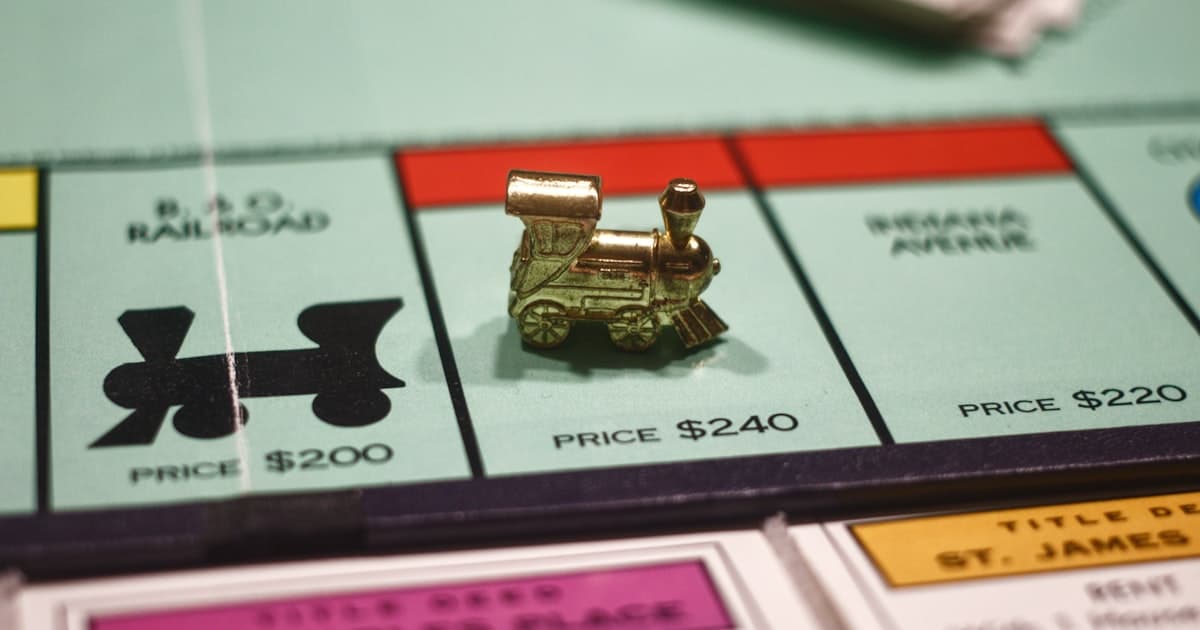
I need to tell you about the night my friend Derek flipped a Monopoly board so hard that the little metal dog hit a ceiling fan blade and ricocheted into a bowl of queso. It was 2019. Derek had been in jail for six consecutive turns while his buddy Marcus was collecting $200 every time he passed Go like a trust fund kid on autopilot. The little iron -- which Derek had also wanted but lost to Marcus in a pre-game negotiation I can only describe as hostile -- was sitting on Boardwalk with a hotel on it. Derek landed on it. Derek owed $2,000 in fake money. Derek chose violence.
The queso was ruined. The ceiling fan had a dent. And that was the last time any of us played Monopoly, which, honestly, was the best thing that ever happened to our friend group.
Game designers say it openly even if casual players will not: Monopoly, by modern game-design standards, is poorly engineered. Winner is functionally decided in the first twenty minutes by the player who lands on the best monopoly group, and the remaining three hours are spent slowly confirming the result. Modern boardgame critics — Shut Up & Sit Down, The Dice Tower, BoardGameGeek's top-100 list — uniformly rank it outside the top 5,000 games published. The original 1935 design was a propaganda tool against monopolist economics; the irony is that the game it became rewards the same behavior it set out to critique.
Underlying figures: S&P SPIVA scorecards.
There are better games. So many better games. Games that create actual moments, actual competition, actual stories you'll tell for years. Games where the outcome isn't determined by dice rolls and the cruel geography of a board designed in 1935. Games that don't take four hours and a therapy session.
Here are the ones that have become permanent fixtures at our guys' nights.
Catan: The Gateway Drug
I'm going to start with the obvious one because if you haven't played Settlers of Catan yet, you're missing the single best "first step beyond Monopoly" game in existence. The pitch is simple: you're building settlements on an island, trading resources with other players, and trying to be the first to ten points.
What makes it great for guys' night is the trading. Every turn becomes a negotiation. "I'll give you two wheat for one ore." "Absolutely not, your wheat is garbage." "My wheat is premium wheat, you philistine." It turns a table of dudes who normally communicate in grunts and fantasy football takes into smooth-talking diplomats. My friend Jake once traded three sheep for literally nothing in return because another player just asked really confidently. We still bring it up.
Games take about 60-90 minutes, which is the sweet spot. Long enough to feel like you played something real, short enough that nobody starts checking their phone or contemplating the void.
Codenames: The Verbal Sparring Match
This is a team game where one person gives one-word clues to get their teammates to guess specific words on a grid. It sounds boring when you explain it. It is not boring when you play it.
What happens in practice is beautiful chaos. Your clue-giver says "animal" and gestures at the board with the intensity of a man defusing a bomb. You and your teammates stare at the grid. There's "horse." There's "bat." There's also "dog," but that belongs to the other team. Someone guesses "bat." It was right. The clue-giver does a tiny fist pump. Then someone else guesses "tiger," which isn't even on the board, and the clue-giver looks at them like they just suggested the earth is flat.
Codenames scales from 4 to 8 players, which makes it perfect when guys' night grows beyond the core group. It's also one of those games where being clever is more important than being strategic, which means the quiet dude who never talks suddenly becomes the MVP because he gave "ocean" as a clue and got his team to guess "wave," "blue," and "ship" in one turn. Legendary.
Ticket to Ride: Surprisingly Cutthroat
Don't let the train theme fool you. Ticket to Ride is about claiming railway routes across the United States (or Europe, or wherever the expansion takes you) and it gets ruthlessly competitive in a way that sneaks up on you.
The game is simple to learn -- collect cards, claim routes, connect cities -- but the strategy has teeth. Do you go for the long cross-country routes that score big points but require a ton of cards? Or do you take short routes and try to complete as many destination tickets as possible? And what do you do when your buddy Dave takes the route from Nashville to Atlanta that you desperately needed, not because he needed it, but because he saw you eyeing it and wanted to watch you suffer?
Dave did that to me. Dave always does that. Dave is a monster at Ticket to Ride and I respect him for it.
Wavelength: The Argument Generator
For groups that enjoy debating low-stakes opinions — which is most of what a typical game night devolves into — Wavelength is the gold standard. One player sees a dial hidden behind a screen and gives a clue that falls on a spectrum between two opposites: hot-to-cold, underrated-to-overrated, good-pet-to-bad-pet. The team argues out where the clue actually lands. Wavelength won Mensa Select in 2020 and remains in BoardGameGeek's top 200 party games.
So the clue-giver sees that the dial is about 70% toward "bad movie" on a scale of "good movie to bad movie," and they say "Transformers: Age of Extinction." Now the group has to debate: is that a solidly bad movie or a catastrophically bad movie? Is it 70% bad or 90% bad? This leads to genuine arguments about the artistic merit of Michael Bay films, which is the kind of conversation that could only happen at 11 PM with a group of guys who've had three beers each.
My favorite Wavelength moment was when the spectrum was "things that are round to things that are not round" and the clue-giver said "a burrito." The debate lasted fifteen minutes. People made diagrams. Someone cited the mathematical definition of a cylinder. It was the most engaged I've seen grown men get about geometry since high school.
Secret Hitler: Trust Issues in a Box
This is a hidden identity game where some players are secretly fascists trying to get Hitler elected, and the rest are liberals trying to stop them. Yes, it sounds intense. It is. In the best possible way.
(For related context, see The Funniest Sports Moments That Had Entire Stadiums in Tears.)
The magic of Secret Hitler is that it forces you to look your best friends in the eye and try to figure out if they're lying to you. And they are. They absolutely are. Your buddy who you've known for fifteen years, who was the best man at your wedding, who held your cat when you moved apartments -- that man will look you dead in the face and say "I am definitely a liberal" while he is, in fact, literally Hitler.
The paranoia ramps up as the game progresses. Alliances form and crumble. Accusations fly. Someone who was trusted five minutes ago is suddenly suspicious because they discarded the wrong policy. It's a social deduction game that basically turns your living room into a political thriller, and the debrief afterward ("I KNEW you were lying when you said you discarded a fascist policy") is almost as fun as the game itself.
Fair warning: this game requires a minimum of five players and peaks at seven to ten. If your guys' night is only three or four people, save this one for the bigger gatherings.
Azul: The Quiet Confidence Play
Azul is a tile-drafting game where you're creating mosaic patterns, and I can already hear some of you clicking away. "Mosaic patterns? At guys' night? What are we, a craft circle?" Stay with me.
Azul is gorgeous to look at, dead simple to learn, and has this quiet, vicious competitiveness that creeps in around turn three. You start picking tiles because they look nice on your board, and then suddenly you realize you can take the tiles your opponent needs, sticking them with penalty points. The game becomes less about building your own mosaic and more about sabotaging everyone else's, and you do it all with a serene smile on your face.
It plays in about 30-45 minutes, which makes it perfect for a warm-up game or a "let's do one more" closer. My group has played it as a palate cleanser between heavier games, and it always delivers. Plus, the tiles are chunky and satisfying to handle, which sounds like a weird thing to praise but matters when you're holding game pieces for an hour.
Pandemic: You're All Going to Die (Together)
This is the only cooperative game on the list, meaning you're all working together instead of against each other. You're a team of specialists trying to cure four diseases before they wipe out humanity. It's stressful, it's collaborative, and it will test your group's ability to communicate under pressure.
What I love about Pandemic at guys' night is how it reveals group dynamics. You immediately find out who the natural leader is (he's quarterbacking every decision), who the contrarian is ("what if we DON'T cure the disease in Asia first?"), who the quiet strategist is (he's been staring at the board for three minutes and is about to drop the perfect plan), and who the wild card is ("what if I just go to South America by myself and see what happens?").
You'll lose a lot. The game is hard. But when you win -- when you cure that last disease with one card left in the deck and everyone at the table erupts -- it's a feeling that competitive games can't replicate. You did it together. Now open another beer and bask in the glow of saving fictional humanity.
Coup: Five Minutes of Pure Bluffing
If you want a game that plays in five minutes, requires zero setup, and generates more betrayal per minute than any other game in existence, Coup is your answer. Everyone gets two cards that give them secret roles, and you spend the game bluffing about what roles you have, calling other people's bluffs, and getting eliminated when someone catches you lying.
Coup is perfect for when guys' night is winding down and nobody wants to commit to a full game. "One more round of Coup" has turned into forty-five minutes of nonstop rounds more times than I can count. It's addictive, it's fast, and it's the purest distillation of "look your friend in the eye and lie to him" that exists in board gaming.
Exploding Kittens: Dumb Fun, Best Fun
Sometimes you don't want strategy. Sometimes you don't want social deduction or resource management or anything that requires more than two brain cells. Sometimes you want to play a card game about kittens that explode, and there's nothing wrong with that.
Exploding Kittens is a card game (not technically a board game, sue me) where you draw cards and try not to draw an exploding kitten. That's basically the whole game. You play cards to skip turns, peek at the deck, or force other players to draw. It's chaotic, it's dumb, it's laugh-out-loud funny when your friend draws an exploding kitten for the third time in a row and makes a noise that can only be described as a deflating balloon.
It plays in fifteen minutes, it works with two to five players, and it requires absolutely no explanation beyond "don't draw the kitten." It's the perfect game for when half the group is already a few drinks in and processing complex rules isn't really on the menu.
The Actual Best Part of All of This
Here's what I've figured out after years of doing this: the game itself matters way less than the fact that you're sitting around a table, looking at each other, and doing something together that isn't staring at separate screens. The best guys' nights I've had in the last five years have all involved a table, a game, some food, and zero television.
That sounds cheesy. I don't care. It's true.
If you're looking for more ways to turn a regular night in into something actually memorable, I've got recommendations for video games that help you decompress when you're flying solo, and if you really want to level up the hosting game, here's how to throw a dinner party that doesn't suck -- because nothing pairs with board games like food that's actually good.
Now go buy one of these games, text the group chat, and retire Monopoly for good. Derek's ceiling fan will thank you.
Further reading and primary sources
Background and primary-source references for the claims and recommendations above. Linked references are intended for readers who want to verify a claim, dig deeper into a topic, or check the underlying data themselves.
- S&P SPIVA scorecards — S&P Dow Jones Indices' semi-annual scorecard comparing active funds against benchmarks.
- IRS publications — official U.S. Internal Revenue Service publications on tax treatment of every account type.
- Bureau of Labor Statistics — official U.S. labor, wage, and inflation data.

About the writer
Marcus Hale
Senior writer — Tech & Money
Read more from Marcus — full archive, full bio, and contact on their writer page.
Share this story
More from Marcus
Spot a problem with this piece? Email info@luba.media.