The Art of the Road Trip: Planning an Epic Drive Across America
I've driven coast to coast three times and taken more wrong turns than I'd like to admit. Here's everything I've learned about planning a road trip that's actually fun and doesn't end in a breakup.
· 11 MIN READ
The first time I drove across the country, I was 23, riding shotgun in a 2004 Honda CR-V with 187,000 miles on it, a cooler full of gas station sandwiches, and exactly zero planning beyond "let's go west." My buddy Jake was driving. The AC died somewhere between Flagstaff and Kingman, Arizona, and we spent four hours crawling through the desert at 108 degrees with the windows down, which is basically like opening the door of a convection oven and sticking your face in. Jake kept saying "it's a dry heat" and I kept fantasizing about pushing him out of the moving vehicle.
That trip was a disaster in at least a dozen ways. We slept in the car in a Walmart parking lot in Amarillo. We ate gas station hot dogs that I'm still not sure were fully cooked. We got into an argument about whether Nebraska was actually boring or just misunderstood (it's boring, Jake, and you know it).
It was also the best week of my life. And I've been chasing that feeling ever since.
Why Road Trips Beat Flying
I know the argument. "Why would you drive 40 hours when you could fly for five?" Because flying gets you from point A to point B, and a road trip gets you everything in between. The roadside diner in rural Tennessee that serves the best pulled pork you've ever tasted. The overlook in Montana you'd never find on Google. The conversation you have at 2 AM on a straight stretch of I-40 when the radio cuts out and it's just you and whoever's riding with you and the stars.
Flying is efficient. Road trips are alive. You see the country change under your wheels -- the flat wheat fields of Kansas slowly crumpling into the Rocky Mountain foothills, the red mesas of New Mexico giving way to Arizona cactus sprawl. You can't get that at 35,000 feet watching a tiny plane icon inch across a screen.
Also, and I cannot stress this enough, nobody has ever told a great story that started with "so we were boarding our Southwest flight."
Pick Your Route Like It Matters (Because It Does)
The route is the skeleton of the whole trip, and most people blow this decision by just plugging their destination into Google Maps and following the fastest path. The fastest path is the interstate. The interstate is truck stops and Cracker Barrels and scenery that looks like someone copy-pasted the same exit ramp for 800 miles.
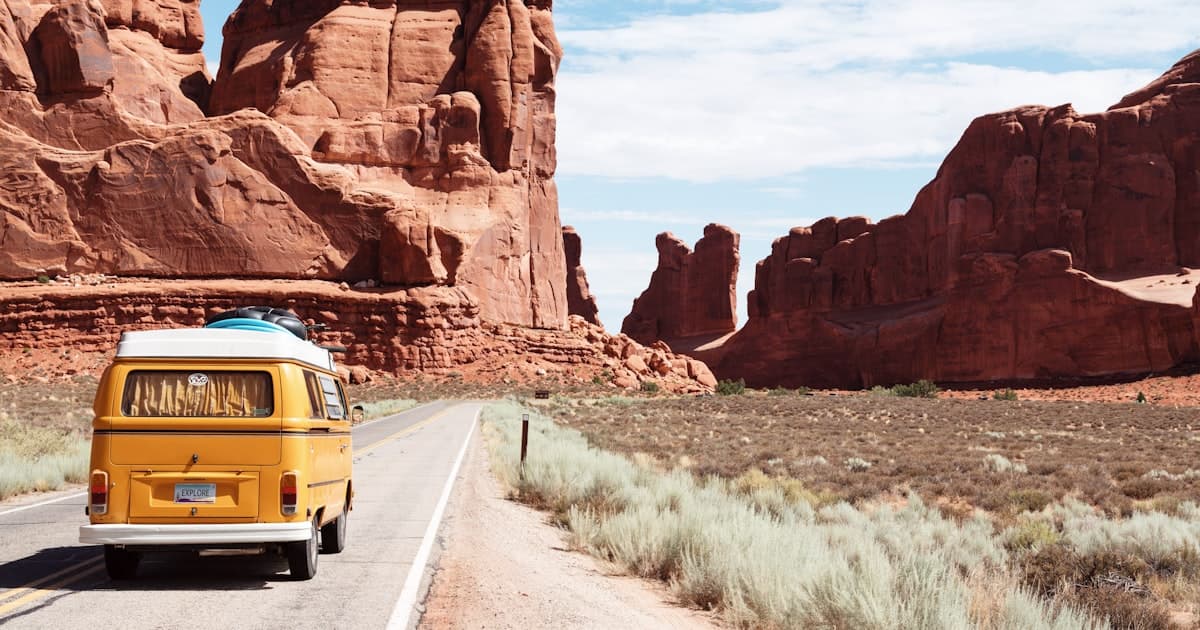
If you want the classic American road trip origin story, Route 66 from Chicago to Santa Monica is still undefeated. It's kitschy, it's nostalgic, and it passes through some genuinely stunning stretches of desert between Albuquerque and Flagstaff. The Pacific Coast Highway from San Francisco to San Diego is the most beautiful drive I've ever done -- take it slow, stop at Big Sur, and for the love of everything pull over at McWay Falls. The Blue Ridge Parkway through Virginia and North Carolina is fall foliage heaven and has some of the best mountain BBQ joints in the country tucked into towns with populations under 500.
Do yourself a favor: take the scenic route. Add the extra day. You'll never regret the detour, but you'll always regret the interstate shortcut.
Your Car Matters More Than You Think
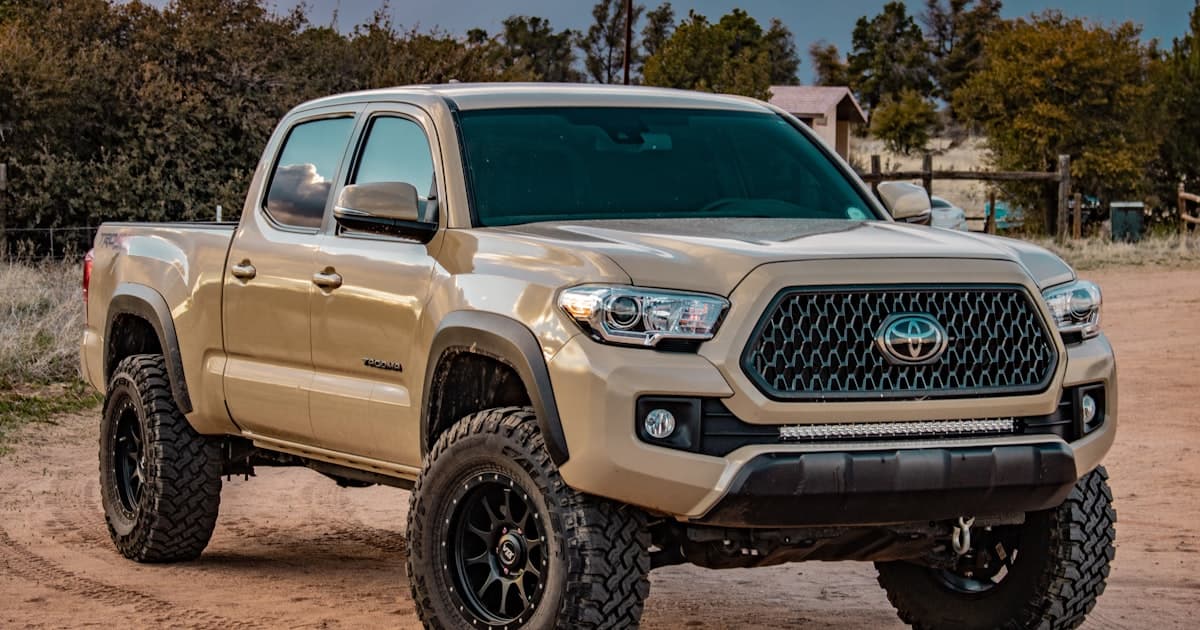
I've done cross-country trips in a Honda CR-V, a friend's Ford F-150, and a rented Toyota Camry. Here's what I learned: comfort beats everything. Speed doesn't matter when you're on a two-lane highway through Wyoming doing 55 behind a hay truck. Horsepower doesn't matter when you're sitting in the same seat for 10 hours. What matters is legroom, seat cushioning, a decent stereo, and enough cargo space that you're not sitting with a duffel bag on your lap. If you're into the vehicles that make a statement on the open road, check out our list of legendary cars that make gearheads lose their minds -- though I'll admit, most of those are better for weekend canyon runs than a 3,000-mile haul.
(Reference: NHTSA recall database.)
Fuel economy is the sleeper stat. The difference between a car that gets 22 mpg and one that gets 32 mpg is roughly $400 on a coast-to-coast trip. That's real money. That's four nights in decent motels.
Check your tires, check your oil, and for the love of god make sure your spare isn't flat. I know a guy who found that out in the middle of Nevada. He does not like to talk about it.
(We covered the related territory in Best Weekend Getaways That Won't Destroy Your Wallet.)
Packing: The Art of Bringing Less
Here's what you think you need: five outfits, hiking boots, a portable grill, a hammock, three jackets, binoculars, and a journal. Here's what you actually need: three outfits you can mix and match, one pair of comfortable shoes, a phone charger, a cooler, sunglasses, a first-aid kit, and a paper map as a backup because GPS does not work in large chunks of rural America. I learned that one the hard way outside of Missoula when my phone decided Montana simply did not exist.
Bring a pillow from home. I don't care if it takes up space. When you're sleeping in a questionable motel in Tucumcari, New Mexico, that pillow is the difference between sleeping and staring at the ceiling wondering if the stain above you is water damage or something worse.
The Playlist Is Not a Suggestion, It's a Covenant
The road trip playlist might be the single most important piece of pre-trip planning. Get this wrong and you'll be listening to someone's "chill vibes" playlist through Kansas and you will lose your mind.
Here's how we do it: one shared playlist, built collaboratively before the trip. Everyone adds songs. The mix should swing between high-energy bangers for the daylight hours and mellower stuff for the golden-hour stretches. You need some classic rock for the desert (Fleetwood Mac through Arizona just hits different), some hip-hop for the highway, and at least one guilty pleasure everyone pretends to hate but actually loves.
The rule: everyone gets one skip per hour. Use it wisely. Burn it on the first song and you're stuck with whatever comes next. We've almost had fistfights over this rule, which means it's working exactly as intended.
Eat Local or Don't Eat at All
If you stop at Applebee's on a road trip, I genuinely don't know what to say to you. You're driving through towns that have been perfecting regional food for a hundred years. There is a BBQ shack or a family diner or a taco truck within 10 miles of you at all times in this country.
My method: pull up Google Maps, search "restaurant," and sort by ratings. Anything with 200+ reviews and a 4.5+ in a town you've never heard of is almost always incredible. That's how I ended up at a place called Martin's Bar-B-Que Joint outside of Nashville. I ordered a whole hog plate and a side of mac and cheese, and I sat at a picnic table in the parking lot, and I had what I can only describe as a religious experience. Just me, a styrofoam plate, and the best smoked pork that has ever existed. I still think about that meal. I think about it a lot.
Skip the chains. Follow the smoke.
Where to Sleep: The Honest Breakdown
I've done hotels, camping, and sleeping in the car. The reality: about all three.
Hotels and motels are the move if you value your back and a hot shower. Budget $60-100 a night for something clean enough that you won't think about it. The independent motels with the neon signs are usually cheaper and more interesting than the Holiday Inn, and half of them have been there since the '50s. There's character in those places.
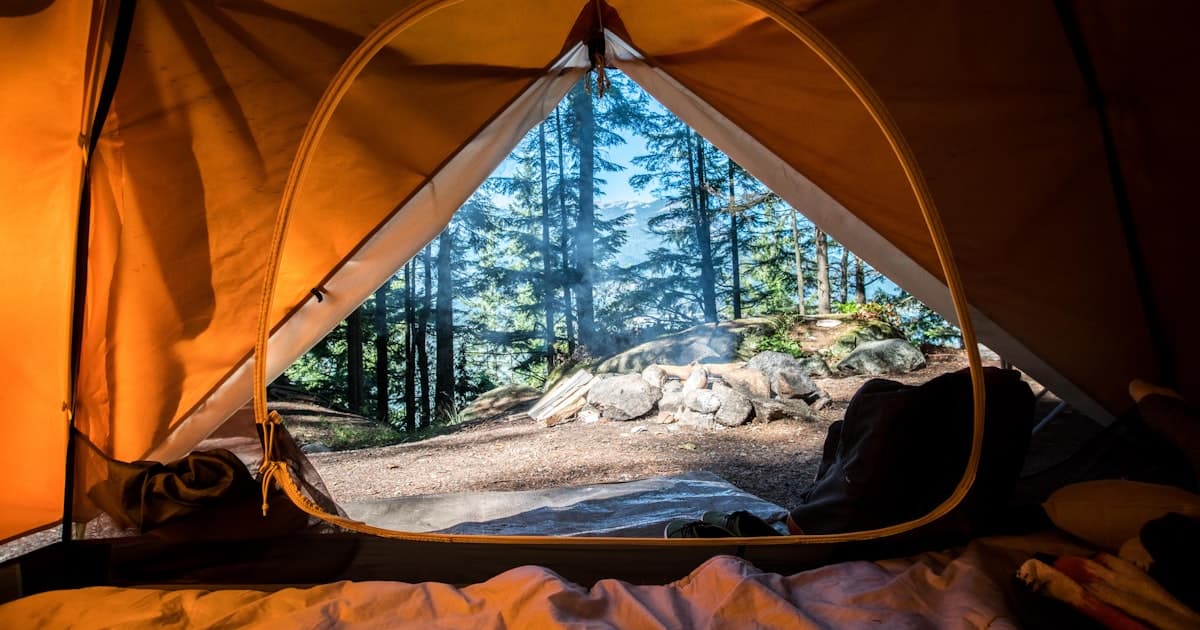
Camping is great if you're into it, but it adds complexity -- gear, setup, finding a site. If you're already driving 8 hours a day, the last thing you want is to spend 45 minutes setting up a tent in the dark while mosquitoes treat you like a buffet. Save camping for the nights when you're near a national park and can actually enjoy it.
For verification, see IIHS vehicle ratings.
Sleeping in the car is free and miserable. I've done it four times. Every time, I woke up at 4 AM with a crick in my neck and the deep, hollow regret of a man who should have just paid for the motel. It's fine in an emergency. It is not a strategy.
Hidden Gems That Are Worth the Detour
Every great road trip has a few stops that weren't in the plan. Here are some that earned their place in my permanent rotation:
(More on this in our piece on Best Used Cars Under $15K That Won't Leave You Stranded.)
Wall Drug in South Dakota. You'll see the signs for 300 miles before you get there. It's absurd. It's a tourist trap. Go anyway. Get the five-cent coffee and the free ice water and wander around for an hour. It's exactly as ridiculous as advertised, and that's the point.
Cadillac Ranch outside Amarillo, Texas. Ten Cadillacs nose-down in a field, covered in spray paint. Bring a can and add your own. It's the most unexpectedly joyful 20 minutes of your trip.
Marfa, Texas. A tiny art town in the middle of the desert that has no business being as cool as it is. Go for the Prada Marfa installation, stay for the mysterious Marfa lights at dusk. I still can't explain what I saw out there, and I've stopped trying.
Salvation Mountain near Niland, California. A massive, hand-painted mountain covered in Bible verses and folk art, built by one man over 28 years. You don't have to be religious to find it moving. It's the kind of thing that only exists because someone decided to build it, and nobody told them to stop.
Budget Like a Realist
A road trip is cheaper than you think, but not as cheap as you hope. Here's a realistic daily breakdown: gas runs $40-70 depending on your car and how far you're driving. Food is $25-50 if you mix gas station breakfasts with sit-down dinners. Lodging is $0-100 depending on your spine's tolerance. Activities and random stops: $10-30.
All in, you're looking at $100-200 per day. A week-long coast-to-coast trip lands somewhere between $700 and $1,400 for one person, less if you're splitting gas and a room. That's significantly cheaper than flying, renting a car, and booking hotels at your destination -- and you get 10 times the experience.
The Unwritten Rules
Every road trip operates on a set of laws that are never formally agreed upon but are universally understood. Violate them at your own risk.
Driver picks the music. This is non-negotiable. You are piloting a two-ton machine at 75 miles per hour. You get to pick the soundtrack. If you don't like it, learn to drive.
Bathroom breaks are never questioned. If someone says they need to stop, you stop. No comments about how we "just stopped 40 minutes ago." Hydration happens. Consequences follow.
No work emails. You're on a road trip. Whatever it is can wait. If it can't wait, you shouldn't have left. Put the laptop in the trunk where it belongs.
Split everything roughly, not exactly. Nobody wants to hear "well, technically my sandwich was $8.50 and yours was $9.75" at a gas station in Oklahoma. Just take turns. It'll even out.
And the most important one: when someone spots something weird on the side of the road and says "pull over," you pull over. That's the whole point. You're not on a schedule. You're on a road trip. The weird stuff is the good stuff.
Now go gas up the car.
Further reading and primary sources
Background and primary-source references for the claims and recommendations above. Linked references are intended for readers who want to verify a claim, dig deeper into a topic, or check the underlying data themselves.
- NHTSA recall database — official U.S. government recall + safety-defect lookup, by VIN or model.
- IIHS vehicle ratings — Insurance Institute for Highway Safety crash-test and safety ratings.
- EPA fuel economy database — official EPA fuel-economy and emissions data for every model year.

About the writer
Daniel Reyes
Senior writer — Fitness, Cars & Sports
Read more from Daniel — full archive, full bio, and contact on their writer page.
Share this story
More from Daniel
Spot a problem with this piece? Email info@luba.media.