Podcasts Worth Your Commute (That Aren't Joe Rogan)
You've listened to every episode of the big shows and your algorithm is broken. Here are the podcasts across true crime, business, comedy, sports, science, and history that deserve your ears — and that nobody at work is talking about yet.
· 12 MIN READ
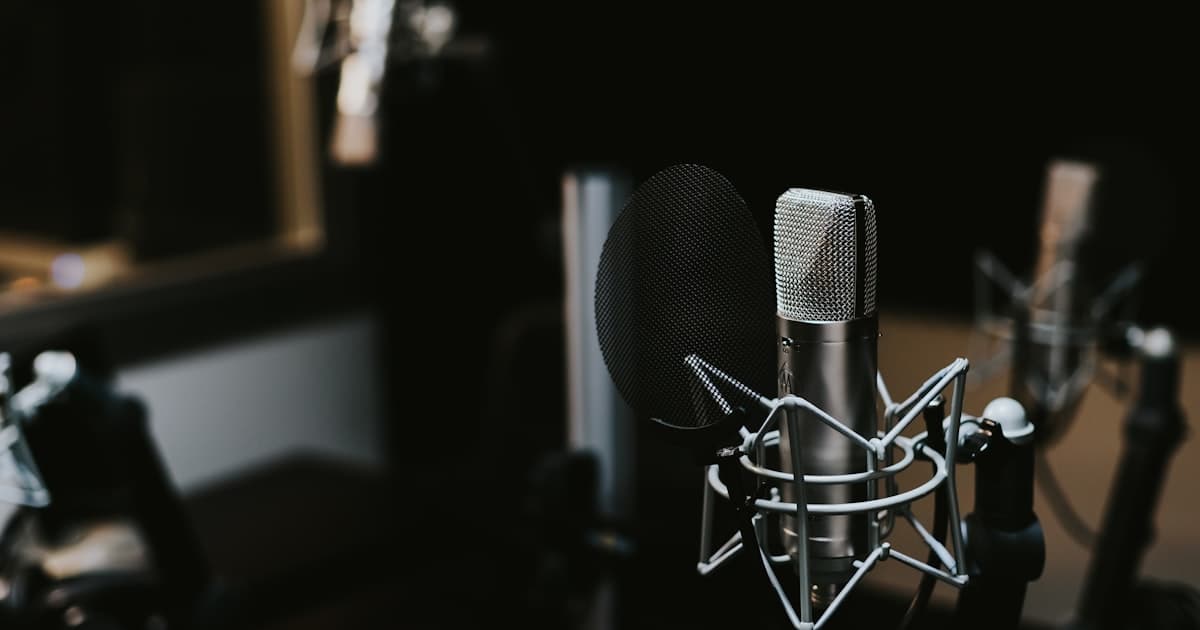
I have a 38-minute commute each way. That's roughly 76 minutes a day, five days a week, 50 weeks a year. That's 6,333 minutes — or 105 hours — of annual windshield time. I know this because I calculated it during a particularly brutal stretch of traffic on I-95 while a podcast host was reading his fourth ad for a mattress company.
Background reading: Britannica.
That's when I realized I'd been wasting a genuinely stupid amount of listening time on podcasts I didn't even like anymore. I was hate-listening. You know the feeling. The host says something that makes you grip the steering wheel a little tighter, and instead of turning it off, you keep going because apparently you enjoy being annoyed at 7:45 in the morning.
I decided to burn it all down and start fresh. Unsubscribed from everything. Every single show. Cleared the queue like I was moving out of an apartment and throwing away furniture I'd been pretending to like for years. Then I went hunting for stuff that was actually good.
It took months of trial and error — a lot of "this is incredible" and an equal amount of "why does this have four and a half stars" — but I came out the other side with a rotation that makes my commute the best part of my day. Which is sad, maybe, but also kind of great.
Here's what survived.
True Crime (That Isn't Serial, Finally)
Serial was phenomenal. We all listened to it. We all had opinions about Adnan. That was a decade ago. If your true crime diet is still just the top ten on Apple Podcasts, you're eating fast food when there's a whole restaurant district you haven't explored.
Casefile True Crime is the one that converted me from casual listener to full-on addict. It's an Australian show, narrated by an anonymous host with a voice that sounds like it was designed in a lab to tell you terrible things in a calm and measured way. No banter, no co-hosts cracking jokes over crime scene details, no fifteen-minute tangents about the host's weekend. Just meticulous, deeply researched storytelling. The multi-part episodes — the East Area Rapist series, the Silk Road episodes, the EAR/ONS case — are some of the best audio storytelling I've ever heard in any format.
Criminal is the opposite energy and I love it just as much. Phoebe Judge hosts, and her approach is less "here's a gruesome murder" and more "here's a weird, fascinating story that involves crime in some way." One episode is about a woman who stole a high-end rental car and just... kept driving. Another is about a parrot who may have witnessed a murder. The episodes are short — usually under 30 minutes — which makes them perfect for one-way commutes.
They Walk Among Us is Casefile's British cousin. Same anonymous narrator, same obsessive research, but focused on UK cases. There's something about the understated delivery combined with genuinely horrifying stories that hits different. The episode about the Wests still lives in my head rent-free, and I listened to it six months ago.
Business and Money (Without the LinkedIn Energy)
I need to be careful here because most business podcasts make me want to drive into a guardrail. The "hustle culture" shows where some guy who sold a drop-shipping course for $47 lectures you about mindset for ninety minutes — I'd rather listen to static.
But there are a few that are genuinely worth your time.
Acquired is the gold standard. Ben Gilbert and David Rosenthal do deep dives into how major companies became major companies, and each episode is basically a three-hour business school class that's somehow actually entertaining. Their episodes on LVMH, Costco, and Berkshire Hathaway are legitimately riveting. Three hours sounds long, but I routinely get home and sit in my driveway to finish them. My neighbors probably think I'm having a crisis.
Business Wars takes two rival companies and tells their story like a drama. Nike vs. Adidas. Netflix vs. Blockbuster. Marvel vs. DC. Each one runs about six episodes and plays out like a limited series. It's the business podcast equivalent of those sports documentaries that will ruin your entire weekend — you tell yourself you'll listen to one episode and then suddenly you've mainlined the whole thing.
Plain English with Derek Thompson is the one I recommend to people who think they don't like business podcasts. It's not really a business podcast — it's more of a "here's something happening in the economy or culture, and here's what's actually going on under the surface" show. Short episodes, clear explanations, zero jargon. Thompson has a gift for making complicated things feel obvious, which is the hardest thing in the world to do well.
Comedy (That's Actually Funny)
Comedy podcasts have a problem: most of them are just two comedians talking about nothing for ninety minutes and banking on their chemistry to carry it. Sometimes it works. Usually it doesn't. I don't need to hear about your trip to Whole Foods, man. Write some jokes.
Conan O'Brien Needs a Friend is the exception that obliterates the rule. Conan is genuinely one of the funniest humans alive, and the dynamic between him, his assistant Sona, and producer Matt is the kind of comedy you can't script. The episodes where he's clearly trying to make Sona break are my favorite. But even beyond the banter, his actual interviews are fantastic — the Timothy Olyphant episodes are legendary, and the Will Ferrell ones might be even better.
The Dollop is an American history podcast hosted by two comedians, and it's in the comedy section because it's the hardest I've ever laughed in my car. Dave Anthony reads a bizarre true story from history to Gareth Reynolds, who has no idea what's coming. The episode about the Rube Waddell (an early 1900s baseball pitcher who would leave games to chase fire trucks) had me laughing so hard I missed my exit. Twice. On the same episode.
Fly on the Wall with Dana Carvey and David Spade is peak nostalgia if you grew up on SNL. They bring on former cast members and talk about the behind-the-scenes chaos of the show. The stories are insane. There's an episode where they discuss a sketch that almost got someone fired, and the way they tell it — interrupting each other, doing impressions, completely losing the thread of the story — feels like eavesdropping on a conversation you were never supposed to hear.
(More on this in our piece on How to Nail a Job Interview Without Being a Robot.)
Sports (Beyond the Hot Take Machine)
Sports talk radio is a disease. I say this with love. But I cannot listen to another debate about whether someone is "clutch" or hear the phrase "on balance" one more time without losing my mind.
These shows are better.
Against All Odds isn't about gambling despite the name — it's about the stories behind the wildest upsets, comebacks, and moments in sports. Each episode picks one event and goes deep. Not surface-level "can you believe that happened" stuff. The actual details. The context. The human part. The Leicester City Premier League episode is the best single podcast episode about sports I've ever heard.
No Dunks (formerly The Starters) is for basketball fans who want smart, funny NBA coverage without the screaming. Five guys, all with distinct personalities, breaking down the league in a way that feels like talking hoops with your funniest friends. They've been doing this together for over a decade and the chemistry is effortless.
The Ringer's sports pods — specifically The Rewatchables when they do sports movies — are in a category of their own. Bill Simmons can be polarizing, but when he's in his wheelhouse (sports, movies, ranking things unnecessarily), he's very good at what he does. The Rewatchables episode on Heat — the De Niro film, not the basketball team — is three guys having the exact conversation you'd have with your buddies after watching it, except they're funnier and more prepared.
Science and Learning (For People Who Aren't Scientists)
I was never a science guy. Got a C+ in chemistry and considered it a personal victory. But the right science podcast can make you feel like you're learning without the sensation of being in a classroom, which is key.
Radiolab is probably the best-produced podcast in existence. The sound design alone is worth listening for — they layer audio in ways that make stories feel three-dimensional. The episode about the woman who can see millions more colors than normal humans kept me thinking for days. They take big, abstract questions — what is color, what is time, what makes us who we are — and make them feel urgent and personal. Some episodes are a decade old and still hold up perfectly.
Ologies with Alie Ward is the one I recommend first to people who think science is boring. Each episode, she interviews an expert in a different "-ology" — volcanology, mycology, thanatology (the study of death), whatever. What makes it work is that Alie asks the questions a normal person would ask, not the questions a journalist thinks they should ask. There's an episode about scatology — the study of feces — that is somehow one of the most fascinating things I've ever listened to. I don't know what that says about me.
Stuff You Should Know has been running since 2008 and there's a reason it's still going. Josh and Chuck pick a topic — how landfills work, the history of the electric chair, why yawning is contagious — and just explain it. That's the whole show. No gimmicks. And it's one of the most reliable sources of "huh, I didn't know that" moments in all of podcasting. Perfect for medium-length commutes.
History (That Reads Like Fiction)
History podcasts are having a moment, and honestly it's the best thing to happen to the genre since Ken Burns discovered slow panning over photographs.
Hardcore History with Dan Carlin is the obvious one, but I'm including it because if you haven't listened to it yet, you need to fix that immediately. His multi-part series on World War I (Blueprint for Armageddon) is legitimately one of the greatest pieces of audio content ever made. It's like twenty hours long. I don't care. Listen to it. Carlin doesn't just tell you what happened — he puts you in the trench, in the room, in the moment. You will develop feelings about the Battle of Verdun. Strong ones.
Revolutions by Mike Duncan is the more academic cousin. He picks a revolution — English, American, French, Haitian, and eventually the Russian Revolution — and does an entire series on it. Dozens of episodes per revolution, each one building on the last. It's basically a free college course narrated by someone who's genuinely passionate about the subject. The French Revolution series alone is worth the price of admission (which is zero dollars, so the bar is admittedly low).
Fall of Civilizations is the hidden gem on this entire list. Each episode covers the rise and fall of a single civilization — the Roman Empire, the Aztecs, the Bronze Age collapse, the Khmer Empire. The episodes are long, sometimes three or four hours, but they're produced like documentaries. The narration is contemplative and almost poetic, and there's something about hearing how entire civilizations rose and then crumbled that puts your bad day at work in perspective.
How I Actually Organize This Mess
I rotate by mood and commute length. Short drive? Criminal or Stuff You Should Know. Long drive? Acquired or Hardcore History. Bad day? Conan or The Dollop. Want to feel smart? Radiolab or Ologies. Want to feel existential dread about the fragility of human civilization? Fall of Civilizations, baby.
The trick is treating your podcast queue like a playlist, not a to-do list. You don't have to be current on everything. You don't have to listen to every episode. Nobody's grading you. The second a show starts feeling like homework, drop it. Life's too short, and there are too many good shows out there to spend your commute on something you're tolerating.
I've also gotten better about what I consume in general, not just podcasts. I wrote about how I dealt with streaming service fatigue a while back, and a lot of the same principles apply here: be intentional, rotate instead of subscribing to everything, and don't be afraid to cut things that aren't working anymore.
Your commute doesn't have to be dead time. Mine used to feel like something I endured. Now it's 76 minutes a day that I actually look forward to. All it took was unsubscribing from everything, spending three months finding the right shows, and accepting that I'm the kind of person who gets emotional about the fall of the Bronze Age in traffic.
I'm fine with it.
Further reading and primary sources
Background and primary-source references for the claims and recommendations above. Linked references are intended for readers who want to verify a claim, dig deeper into a topic, or check the underlying data themselves.
- Britannica — encyclopedic reference for historical and cultural background.
- Library of Congress — U.S. Library of Congress historical archives and primary sources.
- National Archives — U.S. National Archives primary historical documents.

About the writer
Jordan Shaw
Senior writer — Culture, Style & Relationships
Read more from Jordan — full archive, full bio, and contact on their writer page.
Share this story
More from Jordan
Spot a problem with this piece? Email info@luba.media.